
Post-Shot xG (xGOT): What It Is and Why It Matters
Post-shot expected goals (xGOT) measures the quality of a shot after it leaves the boot. We explain xGOT vs xG, how it is calculated, and how to use it.
 Tap to enlarge
Post-shot xG (xGOT) is the expected-goals model applied at the moment a shot has been struck and is on target. Unlike pre-shot xG, which measures chance quality, xGOT measures the quality of the on-target outcome — useful for separating finishing skill from chance creation and for grading goalkeepers.
xG vs xGOT — what is the difference?
Expected goals (xG) is calculated at the moment a shot is taken, using inputs like distance, angle, body part, assist type, and game state. It measures the quality of the chance — how likely an average player would be to score from that position.
Post-shot xG, also called xG on target (xGOT), is calculated at the moment the ball leaves the foot or head and is heading on target. It uses the trajectory of the shot — its placement in the goal frame, its speed, its swerve — as additional inputs. xGOT measures the quality of the on-target shot, not the chance itself.
The implication: a player who consistently produces xGOT > xG is finishing well above what an average shooter would do. A goalkeeper who concedes goals worth less xGOT than the goals scored is performing below average.
xG = how good was the chance? xGOT = how well was the on-target shot struck? The difference between the two is finishing signal.
How is xGOT calculated?
xGOT models are built on shot-event data with the addition of end-location coordinates. The two best-known providers are StatsBomb (with the StatsBomb 360 frame) and Opta (with on-ball event data).
Inputs typically include the same pre-shot variables — distance, angle, body part, big chance flag — plus the placement within the goal frame (corners are higher xGOT than centre), shot velocity (where available), and on-ball context like whether the goalkeeper had been screened.
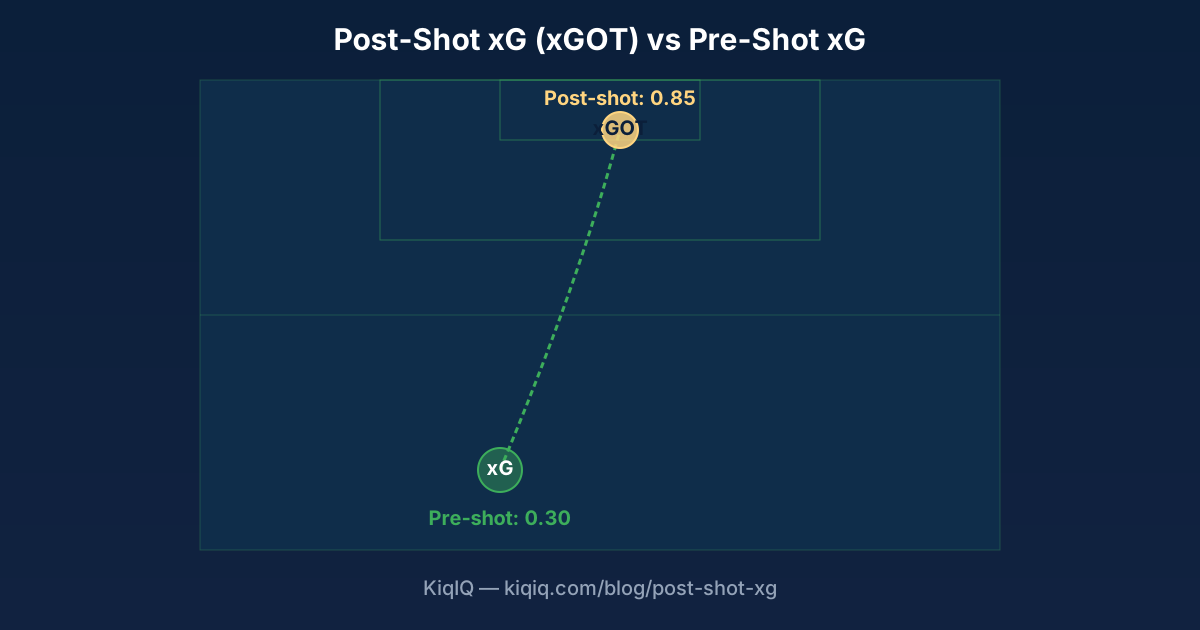
The output is a probability between 0 and 1. A close-range shot blasted into the top corner with the goalkeeper unsighted might have a pre-shot xG of 0.30 and a post-shot xGOT of 0.85 — signalling an excellent strike on a moderate chance.
Why finishers want their xGOT > xG
A striker overperforming xGOT is hitting their on-target shots into harder-to-save areas than the model expects. Sustained over a season, this is a strong signal of finishing skill.
Underperformance can mean two things. Either the striker is hitting the goalkeeper too often (low xGOT relative to xG), or they are striking the ball well but the goalkeepers are saving it (xGOT-goals gap). The latter is variance and tends to regress; the former is technique.
- Across full seasons, top European strikers settle around xGOT ≈ 1.0 × xG with the best finishers consistently 5–15% above
- A xGOT-Goals gap > 3 over a season for a high-volume striker suggests either bad luck or strong opposition goalkeepers
- Useful for fantasy football: target high-xGOT strikers whose goal returns are lagging
Why goalkeepers are evaluated on xGOT
Pre-shot xG tells you nothing about goalkeeper performance — it is identical regardless of who is in goal. Post-shot xGOT, by contrast, measures the difficulty of the actual on-target shot. The "Goals Prevented" stat is xGOT minus goals conceded.
A goalkeeper with positive Goals Prevented is saving more than the average keeper would have. Negative Goals Prevented over a long sample suggests genuine underperformance.
The metric is the foundation of the FIFA Best Goalkeeper award conversation and a key input in scouting models for replacing a goalkeeper.
Limitations and pitfalls
xGOT models are still estimates. They do not perfectly capture shot velocity (most public data lacks ball-tracking), they cannot fully account for goalkeeper position, and they smooth over deflections.
Use xGOT for trend analysis over multi-match samples, not single-match verdicts. A 0.4 xGOT chance saved by an outstanding goalkeeper still counts the same as the same chance fluffed straight at them.
Frequently asked questions
- Is xGOT the same as post-shot xG?
- Yes. Post-shot xG and xGOT (xG on target) are the same metric — the expected-goals value of a shot at the moment it leaves the boot, conditional on being on target. They are used interchangeably across StatsBomb, Opta, and Understat.
- How is xGOT different from xG?
- xG is calculated pre-shot from the chance characteristics (distance, angle, body part). xGOT is calculated post-shot using shot trajectory and end-location, conditional on being on target. xG measures chance quality; xGOT measures on-target shot quality.
- What is a good xGOT score for a striker?
- For top-five-league strikers, xGOT typically settles around 1.0× xG over a season. Elite finishers like Erling Haaland and Harry Kane average 1.05–1.15× — sustained overperformance against the model. Single-season spikes above 1.20× usually regress.
- How do clubs use xGOT in scouting?
- Clubs use xGOT-vs-goals gap as one of several signals when valuing strikers and goalkeepers. A striker with persistent xGOT > xG and an injury-induced goal drought is an undervalued asset; a goalkeeper with consistently negative Goals Prevented is a relegation risk.
References
- Expected Goals (xG) Explained · Opta
- Post-Shot xG (xGOT) Methodology · StatsBomb
- Goalkeeper Performance and Goals Prevented · FBref
- Understat · xG and xGOT for every shot · Understat
Key terms in this article
Ask KiqIQ a follow-up
Get a live, data-driven answer powered by api-football + KiqIQ's Poisson model. Try one of these prompts or write your own.
Try the calculators
Apply the concepts from this article with KiqIQ's free calculators.
Part of pillar
Data and Systems
See every article in this knowledge pillar →
Related
Reviewed by a KiqIQ editor before publication. Spotted an error? Email editor@kiqiq.com. We follow our Corrections Policy.