
Does Goalkeeper Height Predict Performance? What the 2023-24 UCL Data Says
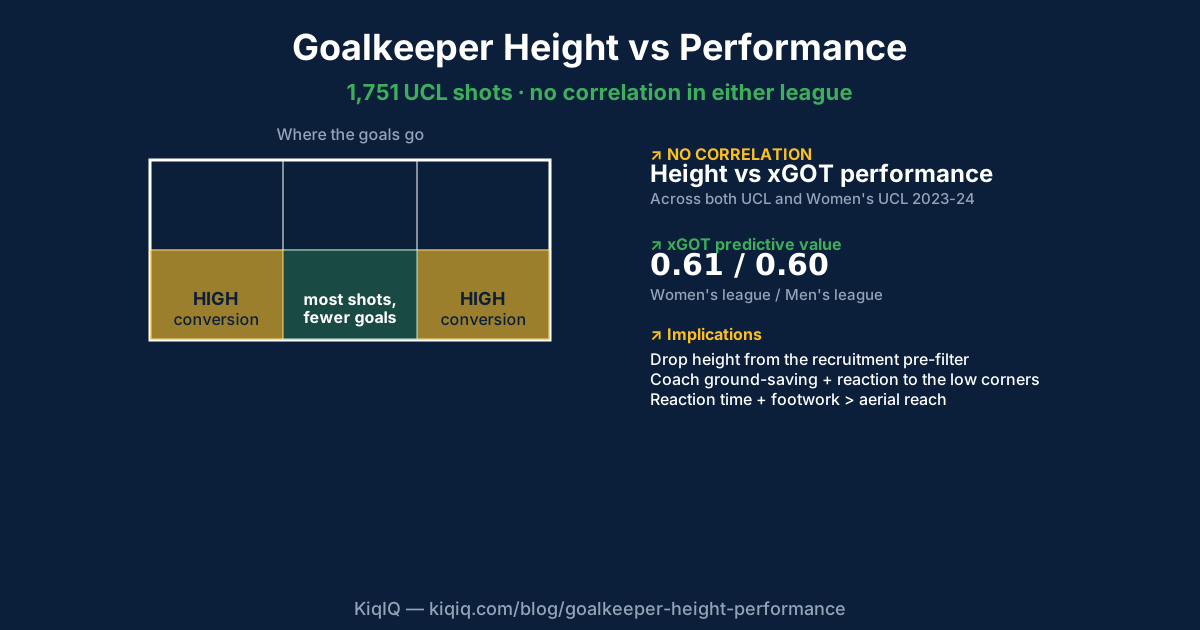
A study of 1,751 shots from the 2023-24 UEFA Champions League and Women's Champions League found no correlation between goalkeeper height and shot-stopping performance — for either gender.
 Tap to enlarge
Goalkeeping at the elite level has trended steadily upward in average height — the median Premier League keeper is taller than they were a decade ago, and the recruitment template at most top clubs prefers 190cm+ candidates. A 2024 peer-reviewed study using shot-by-shot data from the 2023-24 UEFA Champions League (men's and women's) ran the obvious test and produced an inconvenient finding: across 1,751 shots on goal, goalkeeper height showed no significant correlation with shot-stopping performance as measured by expected goals on target (xGOT). The signal was the same in both leagues. The recruitment heuristic that taller is better isn't supported by the data.
What the study measured
The dataset is 1,751 shots on goal across both Champions League competitions in 2023-24. Each shot is tagged with whether it became a goal, the zone of the goal it was directed at, and an xGOT value — the probability that an average top-level keeper would concede that specific shot given its trajectory and placement. xGOT differs from xG: it conditions on the shot already being a shot on target, isolating shot-stopping skill from chance creation.
Goalkeepers' height was the candidate explanatory variable. The headline correlation between height and shot-stopping over-performance (i.e. conceding fewer goals than the xGOT model predicts) was statistically indistinguishable from zero in both the women's and men's competitions. The predictive value of xGOT itself — i.e. how well the model anticipated which shots became goals — was 0.61 ± 0.29 for the women's league and 0.60 ± 0.29 for the men's, almost identical.
No statistically significant correlation between goalkeeper height and shot-stopping performance in either league. xGOT predictive value: 0.61 (women) vs 0.60 (men).
Where the goals actually came from
The shot-direction analysis surfaced a clearer pattern. The "low centre" zone of the goal received the highest share of shots on target across the dataset — strikers prefer the body-line low strike, which the keeper has to react to with their feet rather than dive across. But the highest goal-conversion zones were "low left" and "low right" — the bottom corners. These are the shots that beat goalkeepers most often.
That distribution has tactical implications for both attackers and goalkeeper coaches. For attackers, the bottom corners remain the highest-yield placement target despite being the most-coached defensive zone. For goalkeeper coaches, ground-saving technique to the low-corner zones is doing more of the shot-stopping work than aerial coverage, which most height-led recruitment models implicitly prioritise.
Why height shouldn't lead the recruitment template
The intuition that taller keepers cover more goal area is geometrically correct but operationally weak. The goal is 2.44m tall and 7.32m wide. A 195cm keeper with arms extended covers an aerial reach barely 5cm taller than a 190cm one, and the marginal aerial reach is the part of the goal where shots are least frequent. The high-value shot-stopping geography — bottom corners and centrally-low — is decided by reaction time, footwork, and reading angles, not by height.
The combined effect is that the recruitment shortlist filtered by height likely excludes shorter candidates whose shot-stopping fundamentals are excellent in the zones where most goals actually go in. The study's authors conclude explicitly: goalkeeper height should not be regarded as a determining physical characteristic for performance in either competition.
- 1,751 shots analysed across the 2023-24 UCL and UWCL seasons.
- No correlation between keeper height and xGOT over-performance in either league.
- Low centre received the most shots on target; low left + low right conceded the highest goal share.
- Reaction + footwork drive bottom-corner shot stopping, not aerial reach.
- Recruitment implication: height as a pre-filter excludes candidates whose stoppable-zone skills may be stronger.
What the finding doesn't say
Height does still help with crosses, set-piece coverage, and one-v-one aerial duels — situations the xGOT-on-shots framework doesn't capture. A goalkeeper's total contribution includes those phases, and the study isn't a comprehensive verdict on every facet of the position. What the study does say, and supports cleanly, is that the specific question of "does this keeper save more shots than the model expects?" doesn't depend on whether the keeper is 188cm or 198cm.
For analytics-led recruitment teams, the practical implication is to drop height from the shortlist filter stage and re-evaluate previously-rejected shorter candidates on the actual shot-stopping signal. For coaching staff, the implication is that ground-saving and reaction-time training are where the marginal goal saves live.
Frequently asked questions
- Do tall goalkeepers perform better at shot-stopping?
- A 2024 peer-reviewed study of 1,751 shots from the 2023-24 UEFA Champions League and Women's Champions League found no significant correlation between goalkeeper height and shot-stopping performance as measured by expected goals on target (xGOT). The finding held in both leagues.
- What is xGOT?
- Expected goals on target (xGOT) is the probability that an average top-level goalkeeper would concede a given shot once it's on target, based on the shot's trajectory and placement. It separates shot-stopping ability from chance creation, allowing keeper performance to be measured against expectation.
- Which goal zones concede the most goals?
- The "low left" and "low right" corner zones concede the highest share of goals from shots on target. The "low centre" zone receives the highest share of shots on target overall but converts at a lower rate than the bottom corners.
- Should clubs filter goalkeeper recruitment by height?
- The 2024 UCL study concluded explicitly that goalkeeper height should not be regarded as a determining physical characteristic for performance. Height can still help with crosses and aerial duels, but for shot-stopping specifically, the data does not support height as a recruitment pre-filter.
References
- Frontiers — Goalkeeper height and performance in elite UCL competition (2024) — Frontiers in Sports and Active Living
- Statsbomb — Expected goals on target (xGOT) explained — StatsBomb
Key terms in this article
Ask KiqIQ a follow-up
Get a live, data-driven answer powered by api-football + KiqIQ's Poisson model. Try one of these prompts or write your own.
Part of pillar
Performance Science
See every article in this knowledge pillar →
Related
Reviewed by a KiqIQ editor before publication. Spotted an error? Email editor@kiqiq.com — we follow our Corrections Policy.