
How to Be a Good Goalkeeper: The Skills, Drills, and Mindset
Becoming a good goalkeeper takes more than reflexes. We break down the eight technical skills, the cognitive demands, the training drills, and the mental traits that separate elite keepers.
 Tap to enlarge
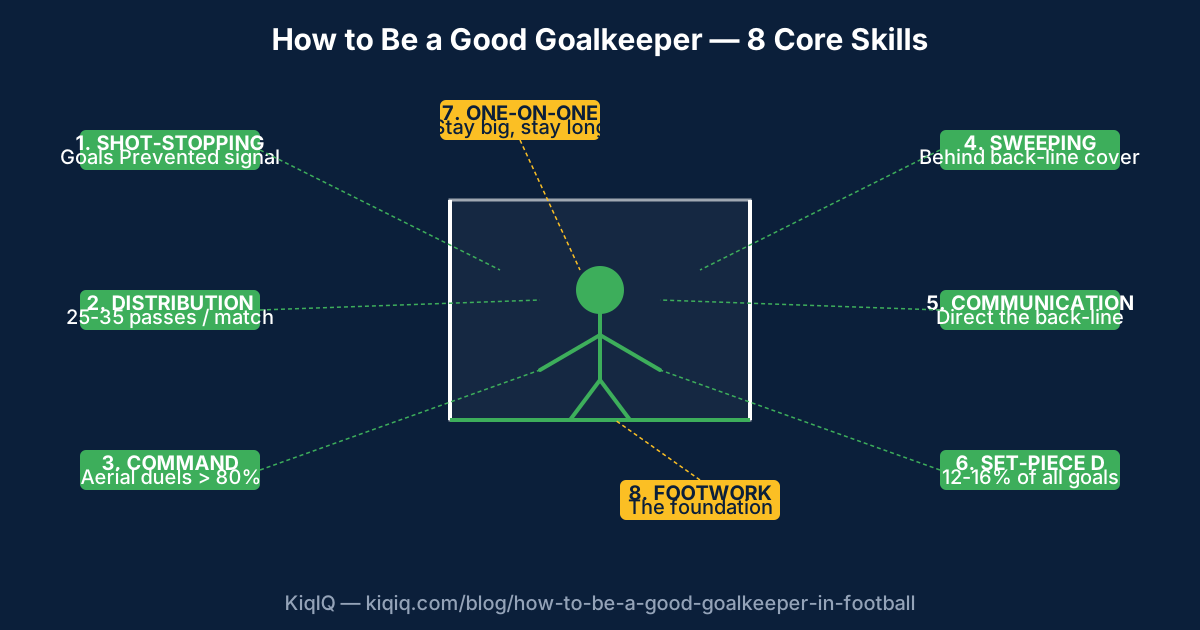
A good goalkeeper combines eight core skills: shot-stopping, distribution, command of the area, sweeping behind the back-line, communication, set-piece defending, one-on-one technique, and footwork. Modern goalkeeping has shifted heavily toward distribution and sweeper duties — Alisson, Ederson, and Manuel Neuer redefined the position. Reflexes alone are no longer enough.
The eight goalkeeper skills
Modern goalkeeper coaching breaks the position into eight skill domains. Each is trainable and each contributes to the value a keeper adds to a side:
- Shot-stopping. The classic. Reading the striker's body shape, getting set, diving with technique, parrying away from the danger area. Measured by Goals Prevented (xGOT − goals conceded).
- Distribution. Throwing, short kicks, long kicks, drop-kicks. Modern keepers attempt 25-35 passes per match and complete them at 80%+ rates. The build-up keeper is a tactical asset.
- Command of the area. Claiming crosses, controlling the 6-yard box, calling for marking adjustments. Aerial duel win rate above 80% is elite.
- Sweeping. Acting as a defender behind the back-line. Reading through-balls, sprinting off the line, clearing safely. Manuel Neuer's defining skill at Bayern.
- Communication. Constant verbal direction of the back-line and midfield. Marking calls, pressing triggers, line-height instructions.
- Set-piece defending. Positioning on corners and free-kicks, when to come for the cross vs stay on line, organising the wall.
- One-on-one technique. Closing down the angle, staying on the feet as long as possible, making the body big. Distinct skill from regular shot-stopping.
- Footwork. Lateral shuffles, diving recovery, crossover steps. The foundation that makes everything else possible.
Pre-2010, ~70% of goalkeeper coaching time went to shot-stopping. Post-2015, ~50% goes to distribution and sweeping. The position has been re-engineered.
Shot-stopping fundamentals
Three habits separate good shot-stoppers:
- Pre-set position. Be balanced, knees slightly bent, hands at hip-height before the shot is struck. Keepers who are still moving when the ball is hit save fewer.
- Read the body shape, not the ball. Watch the striker's plant foot and hip rotation — they telegraph the shot direction before contact.
- Parry to the side, not the centre. A push-back into the danger area sets up rebounds. Top keepers steer parries to the touchline or behind for corners.
Distribution — the modern revolution
A keeper who can pass starts attacks an opponent's mid-block can't prevent. Three distribution patterns:
- Short to the centre-back. Foundational. Even Sunday-league keepers should master a 15m firm-foot pass to a CB.
- Switch to the wing. A 30-40m diagonal to the opposite full-back bypasses the press entirely. Ederson's signature.
- Direct long ball with intent. Not a hopeful punt — a targeted long kick to a striker drifting wide or a midfielder on a third-man run. Alisson's 2018 Mané assist remains the canonical example.
Sweeping — the Manuel Neuer template
A sweeper-keeper plays a high defensive line by being willing to come 30+ metres off their goal line to clear through-balls. Three required attributes: pace (a slow keeper sweeping is a goal conceded), reading (anticipate the through-ball before the striker does), and decision-making (clear or play, never hesitate).
Neuer redefined this from 2014 onwards. The trade-off: the team can press higher (because the space behind is covered), but a single sweeping error is highlighted dramatically. Most of the elite high-press teams since (Liverpool with Alisson, City with Ederson, Bayern with Neuer/Sommer/Ulreich) have a sweeper-keeper as the foundation.
Set-piece defending
12-16% of all goals come from set pieces. The keeper is the defining figure. Three set-piece principles:
- Position by intent. On a corner, stand near the back post if you intend to come for the cross; stay central if you intend to stay on line. Don't mix.
- Wall organisation. On a free kick, signal the number of players in the wall, position them, then step out to your set position. Don't organise from the line.
- Communication wins corners. Call zonal vs man-marking adjustments visibly. Silent goalkeepers concede more from set pieces.
Training the goalkeeper
A typical week for a senior keeper includes: 3 sessions of shot-stopping repetitions, 2 of distribution drills, 1 of crossing/aerial work, 1 of integrated team training in their goal. At youth level, the same proportions apply but with more time on footwork and fewer high-velocity shots (which can cause repetitive-strain injuries).
Match-day preparation: study the opposition striker's preferred finish (top-bin or near-post? curl or driven?), set-piece routines, and likely 1v1 patterns. Top keepers walk into matches with a specific opponent-tailored plan.
The mental side
Goalkeepers face a unique cognitive demand: 89 minutes of low engagement, then a sudden moment requiring perfect technique. This is closer to anaesthesiology or air-traffic control than to most other footballer positions.
Three mental traits define the great ones: forgetfulness (forgetting a goal conceded immediately to focus on the next save), lone presence (accepting that one error is highlighted while a hundred saves go unmentioned), and steady confidence (not letting team errors infect their own performance).
Frequently asked questions
- What skills does a good goalkeeper need?
- Eight core skills: shot-stopping, distribution, command of the area, sweeping behind the back-line, communication, set-piece defending, one-on-one technique, and footwork. Modern goalkeeping prioritises distribution and sweeping more heavily than the classic shot-stopping focus of pre-2010 football.
- How has goalkeeping changed in modern football?
- Pre-2010, roughly 70% of goalkeeper coaching time went to shot-stopping. Post-2015, about 50% goes to distribution and sweeping. The high-press tactics adopted by top clubs require keepers who can play out from the back and act as defenders behind a high line. Manuel Neuer, Ederson, and Alisson redefined the position.
- How do you stop a penalty as a goalkeeper?
- Studies of elite penalty saves identify three keys: read the run-up (long, settled run-ups bias the corner; short or stuttered run-ups bias placement), watch the plant foot at strike (it points at the target side ~70% of the time), and stay big — make a small dive late rather than a large dive early. Recent rule changes require at least one foot on the line at the moment of strike.
- How can young goalkeepers develop fastest?
- Three priorities for under-16 goalkeepers: footwork drills (lateral shuffles, recovery dives) form the foundation everything else builds on; distribution practice (short and medium passes, no high-velocity shots) develops the modern goalkeeper skillset; and outfield positional play one or two sessions a week builds the field-reading that sweeping requires.
References
- Goalkeeper Performance Metrics — Goals Prevented — StatsBomb
- The Evolution of the Sweeper-Keeper — The Athletic
- UEFA Goalkeeper Coaching Curriculum — UEFA
- Penalty Save Research — Journal of Sports Sciences
Key terms in this article
Ask KiqIQ a follow-up
Get a live, data-driven answer powered by api-football + KiqIQ's Poisson model. Try one of these prompts or write your own.
Part of pillar
Player Development
See every article in this knowledge pillar →
Related
Reviewed by a KiqIQ editor before publication. Spotted an error? Email editor@kiqiq.com — we follow our Corrections Policy.