
What Is a Nutmeg in Football? Origin, Technique, and Famous Examples
A nutmeg is when a player passes the ball through an opponent's legs and reclaims possession on the other side. We explain the origin of the term, the technique, and famous nutmeg moments.
 Tap to enlarge
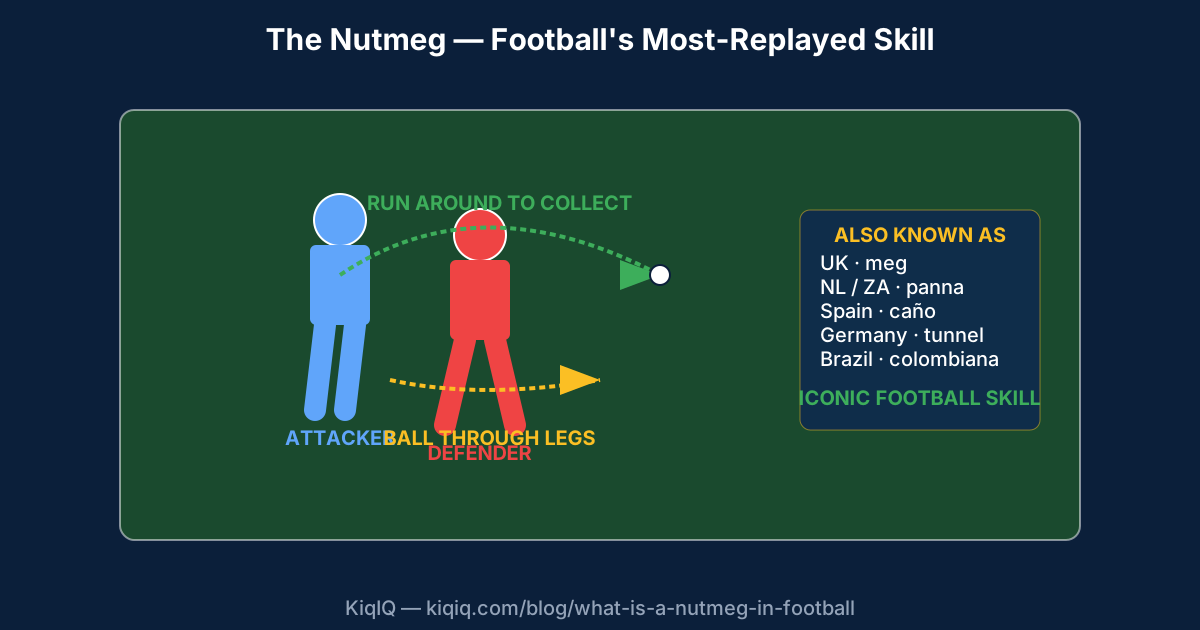
A nutmeg is a football skill where a player threads the ball through an opponent's legs and reclaims possession on the other side. The term has been part of football slang since the early 20th century, with disputed origins. Nutmegs are culturally celebrated as one of football's most humiliating moments for the defender — and one of its most-replayed skill moments for the attacker.
What exactly is a nutmeg?
A nutmeg has three components:
- The ball passes through the opponent's legs. The ball must travel between the defender's feet — not just past them.
- The same player who initiated the move collects the ball. Otherwise it's a team pass through legs, not a nutmeg.
- The opponent is typically caught flat-footed. Nutmegs work because the defender's stance creates a gap they cannot close in time.
The most-used alternative names: "meg" (UK), "panna" (Netherlands / South Africa), "caño" (Spain), "tunnel" (Germany), "colombiana" (Brazil).
Quick question
What is a nutmeg?
Where does the term "nutmeg" come from?
Three competing theories of origin:
- The "stupid" / "deceived" theory. "Nutmegged" was 19th-century English slang for being deceived or cheated. The football usage transferred from this general slang in the early 20th century.
- The Cockney rhyming slang theory. "Nutmegs" → "legs" through a rhyming-slang chain. The football term derives from this.
- The export-trade theory. 19th-century nutmeg traders allegedly mixed real nutmegs with wooden replicas to deceive buyers — so being nutmegged meant being fooled. Doubtful but oft-quoted.
How to do a nutmeg
Three common technical approaches:
- The classic push-through. Use the inside of the foot to push the ball forward through the opponent's legs at close range. Run around them to collect.
- The chip nutmeg. Lift the ball over the defender's outstretched leg and drop it through the legs. Used when the defender's stance is open.
- The body-feint nutmeg. Show the ball to one side, then push it through the legs the other way. The feint creates the gap.
- The pass-and-go nutmeg. Pass the ball through opponent's legs to a teammate, then keep running for the return pass. (Stretches the strict definition slightly.)
Famous nutmeg moments
Some of football's most replayed nutmegs:
- Diego Maradona vs Peter Reid (1986 World Cup). Part of the legendary "Goal of the Century" run; Maradona's nutmeg of Reid is one frame of the longer sequence.
- Lionel Messi (multiple). Has nutmegged dozens of high-profile defenders; his nutmeg of Boateng in the 2015 Champions League semi-final is iconic.
- Cristiano Ronaldo (multiple). Has nutmegged Pepe, Casemiro, and other elite defenders in training and competitive matches.
- Zinedine Zidane. His Marseille turn frequently incorporated implicit nutmeg motions.
- Rabona-nutmeg combo. Several players have combined a rabona kick with a nutmeg in the same move (Ronaldinho, Quaresma).
The Panna culture
In Netherlands and South Africa, "panna" — derived from the Surinamese word for "gate" — is a deeper football-cultural concept:
- Panna competitions. 1v1 street football tournaments where the goal is specifically to panna (nutmeg) your opponent. Panna ends the round instantly.
- Panna leagues. Organised Panna leagues in Netherlands, South Africa, and South America. Some players turn full-time pro.
- Cultural status. A panna is a much higher status than a regular nutmeg — it's the highest expression of skill.
Why nutmegs matter culturally
Three reasons nutmegs are over-celebrated relative to their tactical importance:
- The defender is uniquely embarrassed. A nutmeg is one of the few skills that visibly humiliates the opponent in a way other moves don't.
- It is camera-friendly. Nutmegs replay perfectly — the ball threading through legs is instantly recognisable.
- Skill > efficiency narrative. Nutmegs represent the artistic side of football vs the pragmatic / tactical side. A nutmeg has cultural value beyond its goal-creating utility.
Frequently asked questions
- What is a nutmeg in football?
- A nutmeg is a skill where a player threads the ball through an opponent's legs and reclaims possession on the other side. It has three components: the ball goes through the legs, the same player collects it, and the opponent is typically caught flat-footed. Alternative names include meg (UK), panna (Netherlands / South Africa), caño (Spain), and tunnel (Germany).
- Where does the term "nutmeg" come from?
- The most-cited theory: 19th-century English slang for being "deceived" or "cheated" — "nutmegged" meant fooled. The football usage transferred from this general slang in the early 20th century. Other theories include Cockney rhyming slang ("nutmegs" → "legs") and the disputed nutmeg-export-trade theory.
- Who is famous for nutmegs in football?
- Diego Maradona, Lionel Messi, Cristiano Ronaldo, Zinedine Zidane, and Ronaldinho are among the most-famous nutmeggers. Messi's nutmeg of Jérôme Boateng in the 2015 Champions League semi-final is one of the most replayed nutmeg moments. The Dutch / Surinamese "panna" street-football culture has also produced legendary nutmeg specialists.
- What is panna in football?
- Panna is the Surinamese / Dutch word for nutmeg, used in 1v1 street-football culture especially in the Netherlands and South Africa. In organised panna competitions, scoring a nutmeg ends the round instantly — making panna a higher-status skill than a regular nutmeg in those scenes. Several players in the panna scene are full-time professionals.
References
- The FA · Football Skills Library · The FA
- IFAB Laws of the Game · IFAB
- Panna Knock Out · World Championship · Panna Knock Out
- Oxford English Dictionary · Etymology of "Nutmeg" (sport) · Oxford English Dictionary
Key terms in this article
Ask KiqIQ a follow-up
Get a live, data-driven answer powered by our live data feeds + KiqIQ's Poisson model. Try one of these prompts or write your own.
Part of pillar
Football Culture
See every article in this knowledge pillar →
Related
Reviewed by a KiqIQ editor before publication. Spotted an error? Email editor@kiqiq.com. We follow our Corrections Policy.