
What Is a Derby in Football? Local Rivalries Explained
A football derby is a match between two clubs from the same city or region with strong historical rivalry. We define the term, list famous derbies worldwide, and explain why derbies matter culturally.
 Tap to enlarge
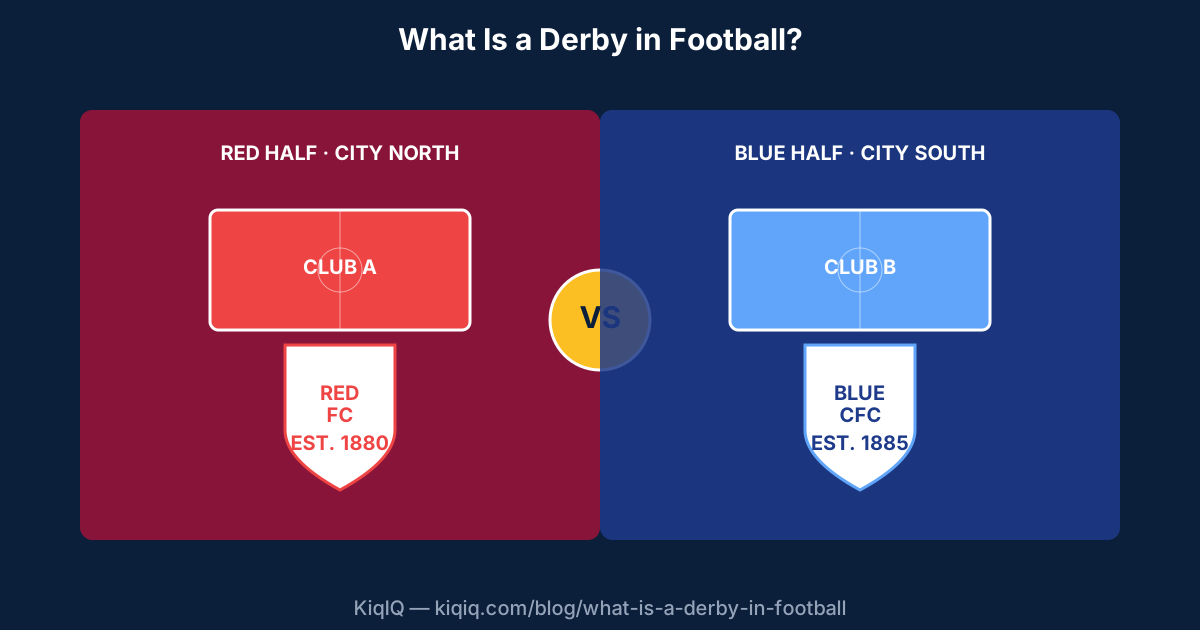
A football derby is a match between two clubs from the same city, region, or with deep historical rivalry. The term comes from Derby, England — a 19th-century town with intense local football matches. Today, derbies are the most culturally charged fixtures in world football: Manchester (United vs City), Liverpool (Liverpool vs Everton), Madrid (Real vs Atlético), Milan (Inter vs Milan), and Buenos Aires (Boca vs River) are the most famous.
What makes a match a "derby"
A derby is broadly defined by proximity + rivalry. The strict definition has three components:
- Geographic proximity. Same city, neighbouring towns, or same region. Most derbies involve clubs less than 20km apart.
- Historical rivalry. Repeated competitive meetings + cultural / class / political divisions between fan bases.
- Cultural charge. A derby fixture has higher stakes than a regular match — historically more cards, more goals, and more fan engagement.
The word "derby" comes from the English town of Derby, where 19th-century town football matches were intense local affairs. The Football League adopted the word.
The most famous derbies in the world
Iconic derbies organised by region:
- Manchester Derby (England). Manchester United vs Manchester City. Key recent narrative: City's rise post-2008 Sheikh Mansour ownership.
- Merseyside Derby (England). Liverpool vs Everton. The "friendly derby" historically — both clubs share Stanley Park; many families have mixed allegiances. Hostility has increased since the 1980s.
- El Clásico (Spain). Real Madrid vs Barcelona. Not strictly a derby (different cities), but the most-watched club fixture on Earth — political (Catalan vs Castilian) and footballing rivalry.
- Madrid Derby (Spain). Real Madrid vs Atlético Madrid. Class divide — Real historically the establishment, Atlético the working-class side.
- Derby della Madonnina (Italy). Inter Milan vs AC Milan. Both share the San Siro stadium.
- Derby della Capitale (Italy). Roma vs Lazio. Politically charged historically.
- Old Firm (Scotland). Celtic vs Rangers. The most religiously-charged derby in football — Celtic Catholic / Irish, Rangers Protestant / Unionist.
- Superclásico (Argentina). Boca Juniors vs River Plate. Often cited as the most intense derby in world football.
- Kassam (Turkey). Galatasaray vs Fenerbahçe. The Istanbul derby. Famously hostile.
- O Clássico (Portugal). Benfica vs Porto. Northern vs southern Portugal divide.
Why derbies matter culturally
Three reasons derbies are the highest-stakes fixtures in football:
- Fan investment is generational. Derbies pre-date most fans by decades or centuries. Family allegiance is inherited; switching sides is socially difficult.
- The result reverberates beyond the league table. A derby loss colours the entire season for fans regardless of where the team finishes.
- Tactical caution. Derby matches historically have more red cards and fewer goals (especially historically) — managers play conservatively because the cost of losing is so high.
Derby vs ordinary local fixtures
Not every same-city or same-region fixture is a derby. The distinction is rivalry intensity:
- Derby: sustained competitive meetings + cultural divisions + heightened fan engagement. (Manchester United vs City, Liverpool vs Everton.)
- Local fixture: geographic proximity but limited historical rivalry. (Brentford vs Fulham — both London, modest rivalry.)
- One-sided derby: historical rivalry where one club has dominated for decades. The "rivalry" is more nostalgic than competitive. (Real Madrid vs Atlético for many decades.)
How derby matches differ tactically
Derby matches have measurable statistical differences vs regular fixtures:
- More cards. Average ~1.5x the yellow-card rate of regular fixtures. Tackling intensity is higher.
- Lower scoring (historically). Average ~0.3 fewer goals per match vs the league average — caution dominates.
- Higher attendance. Sell-outs are guaranteed; ticket prices spike.
- Modern shift. In the Premier League era especially, derbies have become more expansive — Manchester Derby and Merseyside Derby now average 3+ goals per fixture.
Famous derby moments
A few moments that defined football derbies:
- 1996 Manchester Derby — Cantona overhead-kick scissor goal. Iconic moment vs Sheffield Wednesday (not strict Manchester Derby) — but Cantona's 1996 1-1 with City was equally famous.
- 1989 Merseyside Derby — Aldridge & Beardsley. The pre-Hillsborough derby — atmosphere remembered as exceptional.
- 2009 Madrid Derby — 0-0 + 11 cards. The most card-laden Madrid Derby in modern history.
- 2018 Boca-River Copa Libertadores Final. River won the final after the second leg was moved to Madrid due to crowd violence in Buenos Aires.
Frequently asked questions
- What is a derby in football?
- A football derby is a match between two clubs from the same city or region with deep historical rivalry. The term comes from the English town of Derby, where 19th-century local matches were intensely contested. Today the most famous derbies include Manchester (United vs City), Merseyside (Liverpool vs Everton), El Clásico (Real Madrid vs Barcelona), and Superclásico (Boca vs River Plate).
- What is the most famous derby in football?
- The Superclásico in Argentina (Boca Juniors vs River Plate) is often cited as the most intense derby in world football. El Clásico (Real Madrid vs Barcelona) is the most-watched. The Manchester Derby and Merseyside Derby are the most famous English derbies.
- Where does the word "derby" come from?
- From the English town of Derby. 19th-century town football matches in Derby were intense local affairs played between rival neighbourhoods or villages. As the Football League formalised in 1888, the word "derby" came to mean any local-rivalry match. The 12th Earl of Derby is a separate origin myth — partially related to The Derby horse race rather than the football term.
- Are derby matches different statistically?
- Yes — derby fixtures historically have ~1.5x the yellow-card rate of regular matches and ~0.3 fewer goals on average due to tactical caution. In the Premier League era, derbies have become more expansive — the Manchester Derby now averages 3+ goals per fixture, similar to recent Merseyside Derbies.
References
- The FA — Local Rivalries and Derby Culture — The FA
- The Athletic — Football Rivalries Atlas — The Athletic
- BBC Sport — Derby Match Histories — BBC Sport
- FIFA — Football Heritage Database — FIFA
Ask KiqIQ a follow-up
Get a live, data-driven answer powered by api-football + KiqIQ's Poisson model. Try one of these prompts or write your own.
Part of pillar
Football Culture
See every article in this knowledge pillar →
Related
Reviewed by a KiqIQ editor before publication. Spotted an error? Email editor@kiqiq.com — we follow our Corrections Policy.