
Where Is Charlton Athletic Football Club? Location, History, Stadium
Charlton Athletic Football Club is in Greenwich, southeast London, with their home at The Valley (27,111 capacity). We cover the location, history, and the iconic stadium.
 Tap to enlarge
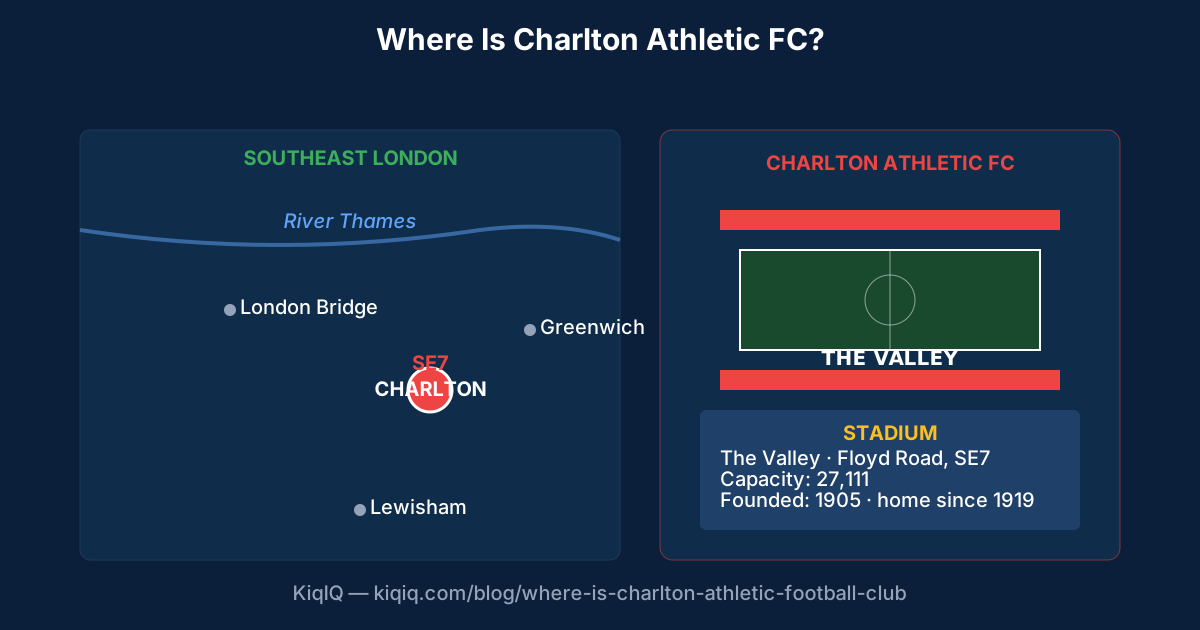
Charlton Athletic Football Club is located in Charlton, Greenwich, southeast London (SE7 postcode area). Their home is The Valley — a 27,111-capacity stadium that has been the club's primary home since 1919, with a brief 1985-92 displacement during a financial crisis. The club was founded in 1905 and currently plays in the EFL Championship as of 2025-26.
Where exactly is Charlton Athletic
Charlton Athletic plays at The Valley, on Floyd Road in the Charlton area of southeast London. The closest train station is Charlton (Southeastern; about 5 minutes' walk). The closest London Underground stations are New Eltham or Greenwich (DLR), both ~15 minutes by bus. The ground is in the SE7 postcode, in the Royal Borough of Greenwich.
The Valley sits about 7 miles southeast of Central London. By car from Trafalgar Square, allow ~25-40 minutes depending on traffic via the Blackwall Tunnel or the A2.
The Valley is the largest dedicated football ground in southeast London. Capacity 27,111. Charlton-only.
The club's history
Charlton Athletic was founded in 1905 by a group of local young men who organised football matches on Siemens Meadow, a piece of waste ground near the Thames. The club joined the Football League in 1921 and reached the First Division (top flight at the time) for the first time in 1936.
Charlton's most successful era was the 1930s-1940s under manager Jimmy Seed: First Division runners-up in 1936-37, FA Cup winners in 1947 (1-0 vs Burnley after extra time at Wembley). The Charlton academy has produced Rio Ferdinand, Joe Gomez, Scott Parker, and many other Premier League regulars.
The Valley — a stadium with a complicated history
The Valley opened in 1919 as Charlton's permanent home. The stadium has had four major eras:
- 1919-1985. Original Valley. Capacity peaked around 75,000 in the 1930s before all-seater conversions reduced capacity. The Valley hosted a record 75,031 attendance for a 1938 FA Cup match vs Aston Villa.
- 1985-1991. The "Exile" — Charlton played at Crystal Palace's Selhurst Park and West Ham's Boleyn Ground due to financial difficulties and stadium-safety concerns. The Valley sat empty.
- 1992-present. Return to The Valley after extensive renovation. The "Valley Party" political movement campaigned successfully for the rebuild.
- 2026 outlook. Owners discussing further expansion to ~33,000 capacity if the club returns to Premier League level.
Recent league history
Charlton's league trajectory in the 21st century:
- 1998-2007. Premier League — peak 7th-place finish in 2003-04 under Alan Curbishley. The longest sustained PL stint in club history.
- 2007-2009. Championship after relegation.
- 2009-2012. League One.
- 2012-2016. Championship.
- 2016-2025. League One + brief Championship returns. Multiple ownership changes.
- 2025-26. Championship.
The Charlton academy
Charlton's youth academy has been disproportionately productive given the club's mid-tier status. Premier League graduates include:
- Rio Ferdinand. Now a Manchester United and England legend. Started at Charlton youth before West Ham.
- Joe Gomez. Liverpool centre-back; came through Charlton.
- Scott Parker. Former England midfielder; Charlton academy graduate.
- Jonjo Shelvey. Liverpool, Newcastle, Nottingham Forest midfielder; Charlton academy.
Local rivalries
Charlton's main rivals in southeast London:
- Millwall. The South London Derby — historically intense, often hostile. Limited recent meetings due to different leagues.
- Crystal Palace. South London Premier League side; less intense than the Millwall rivalry.
- AFC Wimbledon. Newer rivalry as both clubs have crossed paths in League One in recent seasons.
How to visit The Valley
Three practical visit tips:
- Train. Charlton station (Southeastern) is the closest at ~5 minutes' walk. Trains run from London Bridge, Cannon Street, and Charing Cross.
- Bus. Multiple TfL bus routes serve the area; check the Charlton Athletic supporter guide.
- Car. Limited parking near the ground; on-street parking restricted on match days. Public transport recommended.
Frequently asked questions
- Where is Charlton Athletic Football Club?
- Charlton Athletic plays at The Valley, on Floyd Road in the Charlton area of southeast London (SE7 postcode), in the Royal Borough of Greenwich. The closest train station is Charlton (Southeastern services from London Bridge, Cannon Street, Charing Cross). The Valley is about 7 miles southeast of Central London.
- When was Charlton Athletic founded?
- Charlton Athletic was founded in 1905 by a group of local young men who organised football matches on Siemens Meadow, near the Thames. The club joined the Football League in 1921 and reached the First Division (top flight at the time) for the first time in 1936. Their most successful era was the 1930s-1940s, including the 1947 FA Cup win.
- What is the capacity of The Valley?
- The Valley currently has a capacity of 27,111. The all-time attendance record at the ground is 75,031, set in a 1938 FA Cup match against Aston Villa, before all-seater conversions in the 1990s reduced capacity. Owners have discussed a possible expansion to ~33,000 if Charlton return to the Premier League.
- Who has come through the Charlton academy?
- Several Premier League regulars: Rio Ferdinand (Manchester United, England), Joe Gomez (Liverpool), Scott Parker (former England midfielder), Jonjo Shelvey (Liverpool, Newcastle), and many others. The Charlton academy has been disproportionately productive given the club's mid-tier league status.
References
- Charlton Athletic — Official Site — Charlton Athletic
- EFL Championship Database — EFL
- The Valley — Stadium History — Charlton Athletic
- London Football Heritage Project — The FA
Ask KiqIQ a follow-up
Get a live, data-driven answer powered by api-football + KiqIQ's Poisson model. Try one of these prompts or write your own.
Part of pillar
Football Culture
See every article in this knowledge pillar →
Related
Reviewed by a KiqIQ editor before publication. Spotted an error? Email editor@kiqiq.com — we follow our Corrections Policy.