
Tempo in Football: What It Is and How Top Teams Control It
Tempo in football is the pace at which a team plays — passes per minute, vertical progression, transition speed. We break down how it is measured, who controls it, and why it matters.
 Tap to enlarge
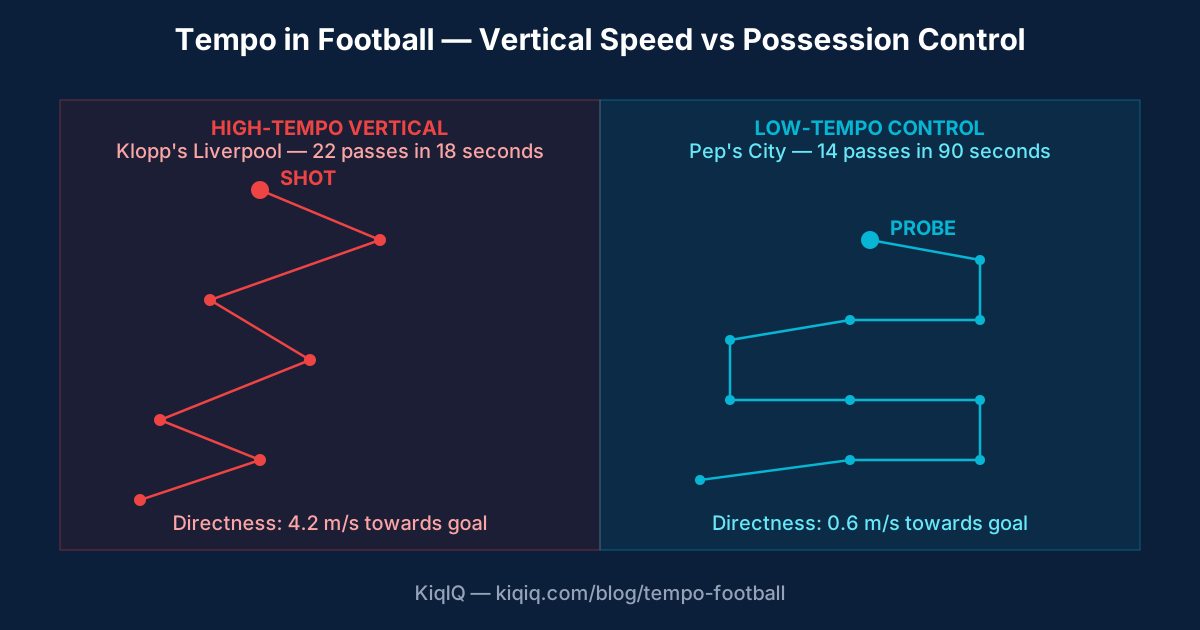
Tempo in football is the pace at which a team plays its possession — measured by passes per minute, average pass speed, and how quickly the ball progresses up the pitch. High-tempo sides like Klopp's Liverpool play vertically and fast. Possession-control sides like Pep's City slow tempo deliberately to draw opponents out.
What "tempo" actually means
Tempo is not the same as fast football. A team that plays 30 short backwards passes per minute can be high-tempo on the ball-passes axis but very slow on the territorial-progression axis. Tempo has two layers:
- Pass tempo — passes per minute of possession. Top sides cluster between 16 and 22 passes per minute when in possession.
- Progression tempo — metres per pass forward, and seconds from possession start to the final-third entry. Counter-attacking sides excel here even with lower pass tempo.
How tempo is measured
The simplest tempo metric is pass count divided by total possession time (per minute). More sophisticated measures use seconds-per-touch (lower = faster) or median pass-receipt-to-next-pass-out time.
Optasports publishes "directness" — metres-progressed-towards-goal divided by total ball travel — and the "pace of attack" metric — seconds from possession recovery to a shot. Both feed the tempo conversation.
High pass tempo + low directness = possession control (Pep City). Lower pass tempo + high directness = direct counter-attacking (Klopp Liverpool).
Who controls tempo and how
Tempo is set by the deepest creative midfielder — the #6 or deep-lying #8. Toni Kroos is the canonical example: his average time-on-ball is high (he holds the ball longer than most) but his pass tempo across the side is decisive. He can choose to slow the rhythm by holding, or accelerate it by hitting a one-touch through-ball.
Goalkeepers contribute too. A keeper who plays out from the back forces the team into low-tempo build-up. A keeper who long-balls hits the directness switch every restart.
Pressing also dictates tempo from the opposing side. A high press forces quick decisions — even a possession-control side becomes high-tempo when it is being pressed.
Why tempo matters tactically
Tempo is the lever you pull when the opponent has set their defensive shape. Three patterns recur:
- Speed up to bypass. When the opposition is mid-press, accelerating tempo with one-touch passes can break the press before it sets.
- Slow down to draw. When the opposition is in a low block, slowing tempo with backwards passes and patient circulation can entice them out of shape.
- Variable tempo. Elite sides switch tempo within possessions. Three slow passes followed by two quick ones is the classic De Bruyne / Modric pattern — lull then strike.
Famous high-tempo and low-tempo sides
High-tempo, vertical: Klopp's Liverpool 2018-19, Bielsa's Leeds, Nagelsmann's Leipzig, Conte's Inter on transition.
Low-tempo, possession-control: Pep's Barcelona, Pep's Manchester City, Spain 2008-2012, Sarri's Napoli, Roberto De Zerbi's Brighton.
Variable: Real Madrid under Ancelotti — they shift tempo dramatically between phases, switching from patient build-up to lightning counters depending on game state.
Tempo and game state
A team's tempo metrics change dramatically with game state. Leading sides slow tempo to bleed clock; chasing sides speed it up. To compare tempo across teams meaningfully, filter to a 0-0 game state or a similar score-tied window.
Tournament knockout football amplifies this — extra-time tempo drops 25-30% on both sides as fatigue and risk-aversion kick in.
Frequently asked questions
- What is tempo in football?
- Tempo is the pace at which a team plays — measured by passes per minute, ball-progression speed, and how quickly possession converts into final-third entries. It is not just "fast football"; high tempo can mean rapid passing within a slow-progression possession (Pep) or quick vertical breaks (Klopp).
- Who controls tempo on the pitch?
- The deepest creative midfielder — the #6 or deep-lying #8 — typically dictates tempo. Toni Kroos was the canonical example. Goalkeepers also influence tempo via their build-up choices, and pressing teams can force opposition tempo to spike.
- How is tempo different from possession?
- Possession is the percentage of the match a team has the ball. Tempo is what they do with it — passes per minute, directness, time per touch. A team can have 70% possession at high tempo (Pep early-City) or 70% possession at low tempo (sterile mid-block teams).
- How do top teams change tempo within a match?
- Three patterns: speed up to bypass a mid-press; slow down to draw a low block out of shape; vary tempo within possessions to disorient the defensive line. Real Madrid under Ancelotti and Manchester City under Pep both shift tempo dramatically based on the score and the opposition shape.
References
- Pace of Attack and Directness Metrics — Opta
- Why Possession Without Tempo Is Useless — The Athletic
- Klopp's Liverpool — Vertical Tempo Analysis — The Analyst
- StatsBomb — Possession Phases and Pace — StatsBomb
Key terms in this article
Ask KiqIQ a follow-up
Get a live, data-driven answer powered by api-football + KiqIQ's Poisson model. Try one of these prompts or write your own.
Try the calculators
Apply the concepts from this article with KiqIQ's free calculators.
Part of pillar
Tactical Intelligence
See every article in this knowledge pillar →
Related
Reviewed by a KiqIQ editor before publication. Spotted an error? Email editor@kiqiq.com — we follow our Corrections Policy.