
Football Pressing Triggers: How Modern Teams Time the Press
Pressing triggers are the visual / spatial cues that tell a team's pressing unit to launch a coordinated press. We break down the 7 most common triggers and how modern coaches use them.
 Tap to enlarge
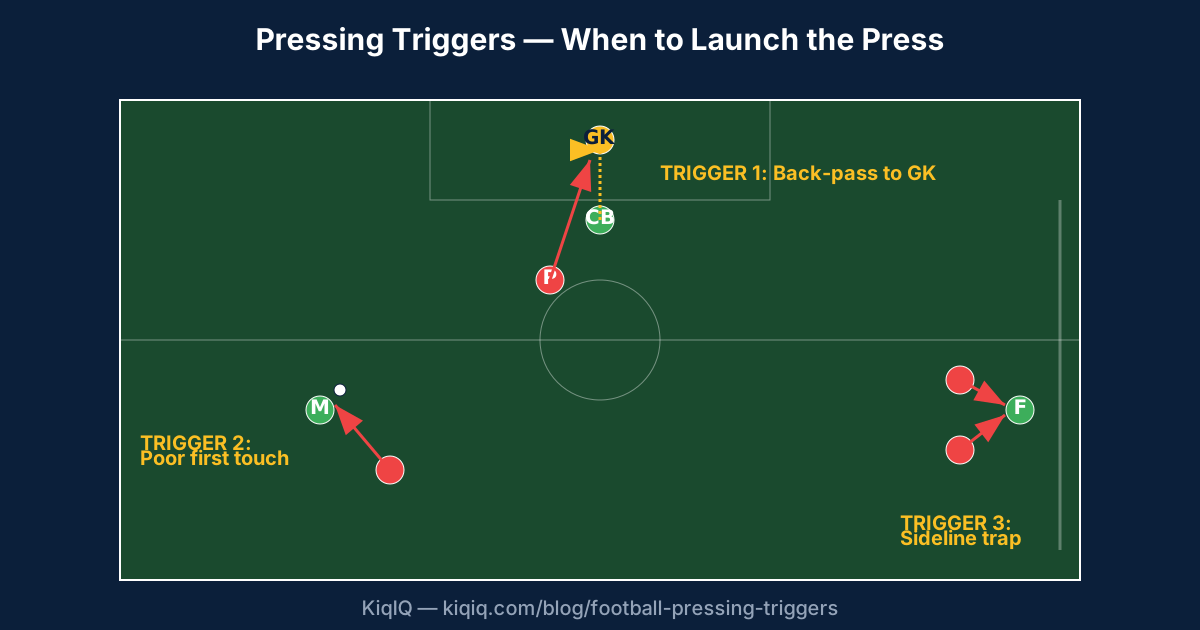
Pressing triggers are the specific visual or spatial cues that signal a team's pressing unit to launch a coordinated press. Without triggers, pressing is uncoordinated and tactically self-defeating. Modern teams (Liverpool, Manchester City, Bayer Leverkusen, RB Leipzig) train 7+ pressing triggers — including back-passes to the goalkeeper, poor first touches, defenders turning towards their own goal, and sideline traps.
What is a pressing trigger?
A pressing trigger is a specific event during play that signals to the pressing team's players: press now. It serves three purposes:
- Synchronisation. All 5-7 pressing players launch simultaneously rather than one at a time.
- Energy efficiency. Players don't waste energy pressing when triggers aren't present.
- High success rate. Triggers indicate moments where the opposition is structurally vulnerable.
Pep Guardiola's teams average 13-14 pressing actions per match. Liverpool under Jürgen Klopp averaged 18-22. Both depended on tightly-trained triggers.
The 7 most common pressing triggers
Modern coaches train players to recognise 7 distinct triggers:
- Back-pass to the goalkeeper. Triggers an immediate front-line press; the goalkeeper has limited options under pressure.
- Poor first touch. A defender or midfielder mis-controls the ball; the press launches in the 1-2 second window.
- Defender turning towards own goal. When a defender receives the ball facing his own goal, his vision is limited; press immediately.
- Sideline trap / touchline pressure. When the ball is near the touchline, the opponent has fewer pass options; the press isolates them.
- Pass to a slower player. A pass to a known weak-passer (target striker, defender) triggers pressure.
- Lofted ball / aerial duel. An aerial ball means the receiver will need a touch to control; press at the moment of touch.
- Player isolation. A player without nearby team-mates becomes a press target.
Pressing trigger schools — Klopp vs Pep
Two influential modern pressing schools differ in trigger emphasis:
- Klopp (Liverpool / BVB) — Gegenpressing. Triggers focus on the moment of ball loss. The 5-second rule: regain possession within 5 seconds of losing it. The trigger is implicit — every loss is a trigger.
- Guardiola (City / Bayern / Barcelona). Triggers are more selective and field-position-dependent. Pressing intensity varies based on where the ball is, scoreline, and time remaining. More patient than Klopp's system.
- Nagelsmann (Leipzig / Bayern / Germany). Hybrid — triggers are explicitly trained but applied flexibly. Sometimes called "structured pressing" because of explicit roles.
- Hansi Flick (Germany). Aggressive trigger-based press; more like Klopp than Pep but less situation-aware than Nagelsmann.
Defensive shape during a press
When triggers fire, the entire team shifts shape:
- Front line. 1-2 forwards close down the ball-carrier; cut passing lanes.
- Wide forwards. Cover the full-backs; prevent simple sideways passes to escape.
- Midfield. Midfielders close the central pass options; mark the deep-lying playmaker.
- Defensive line. Pushes high to compress the space and avoid being played behind by long balls.
- Goalkeeper. Acts as the "11th defender" — comes off his line if the press is bypassed.
When NOT to press
Critical for modern coaches to teach: when pressing should be suspended.
- Late in matches when leading. Energy preservation; switch to mid-block.
- When fitness is low. Fatigued teams press less effectively and are vulnerable to counter-attacks.
- When the opposition has a long-ball outlet. Teams with a target striker can bypass the press.
- When the trigger isn't actually present. Players who press without a trigger create gaps for the opposition.
- When the team is pinned in their own third. Pressing from a low-block start point is energy-inefficient.
Trigger training and pre-match preparation
How modern teams train triggers:
- Pre-match opposition analysis. Identify the opposition's weak passers, slow defenders, and trigger habits.
- Training drills with explicit triggers. Coaches set up scenarios that simulate trigger conditions; players rehearse.
- Video review. Post-match clips highlight where triggers were correctly recognised vs missed.
- Formation-specific triggers. A 4-3-3 has different trigger conditions than a 3-4-3 — coaches train accordingly.
Frequently asked questions
- What is a pressing trigger in football?
- A pressing trigger is a specific visual or spatial cue during play that signals to the pressing team — "press now." Common triggers include back-passes to the goalkeeper, poor first touches, defenders turning towards their own goal, and sideline traps. Without explicit triggers, pressing is uncoordinated and tactically self-defeating.
- How many pressing triggers do top teams train?
- Most modern elite teams train 7+ distinct pressing triggers, including back-passes to the goalkeeper, poor first touches, defender body orientation toward own goal, sideline traps, passes to slow receivers, lofted aerial balls, and player isolation moments. Coaches like Jürgen Klopp, Pep Guardiola, Julian Nagelsmann, and Hansi Flick all use trigger-based pressing systems.
- What is the difference between Klopp's and Pep's pressing?
- Klopp's gegenpressing focuses on the moment of ball loss — regain possession within 5 seconds, every loss is a trigger. Guardiola's pressing is more selective and field-position-dependent — triggers vary by where the ball is, scoreline, and time remaining. Klopp is more aggressive; Pep more patient and situational.
- When should a team NOT press?
- Five situations: (1) late in matches when leading (preserve energy); (2) when fitness is low (fatigued teams press less effectively); (3) when the opposition has a long-ball outlet bypassing the press; (4) when the trigger isn't actually present (avoid gaps); (5) when pinned in their own defensive third (pressing from a low block is inefficient).
References
- StatsBomb — Pressing Analysis — StatsBomb
- The Coaches' Voice — Pressing Tactics — Coaches' Voice
- The Athletic — Tactical Coverage — The Athletic
- Spielverlagerung — Pressing Theory — Spielverlagerung
Key terms in this article
Ask KiqIQ a follow-up
Get a live, data-driven answer powered by api-football + KiqIQ's Poisson model. Try one of these prompts or write your own.
Try the calculators
Apply the concepts from this article with KiqIQ's free calculators.
Part of pillar
Tactical Intelligence
See every article in this knowledge pillar →
Related
Reviewed by a KiqIQ editor before publication. Spotted an error? Email editor@kiqiq.com — we follow our Corrections Policy.