
Sprint Load in Football: How GPS Data Tracks Match Intensity
Sprint load is the volume + intensity of high-speed running a player accumulates during a match. We explain GPS thresholds, weekly load management, and how clubs prevent injuries.
 Tap to enlarge
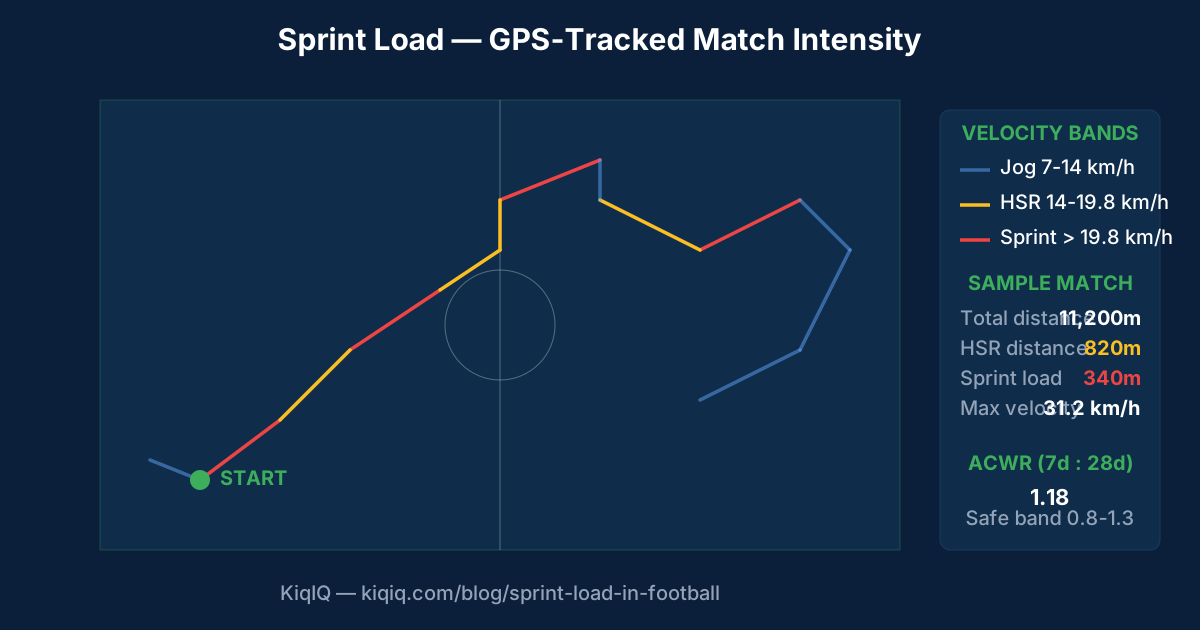
Sprint load is the volume and intensity of high-speed running a footballer accumulates during a match — measured by GPS as the metres covered above defined velocity thresholds. It is the primary driver of soft-tissue injury risk and the metric clubs use to plan training, recovery, and squad rotation. Modern players run roughly 200-400 metres of sprint distance per match.
How sprint load is measured
Modern football clubs use GPS vests (Catapult, STATSports, Polar) worn under the kit. Each device records position 10-20 times per second, computing instantaneous velocity. The data is then bucketed into intensity bands.
- Walking / standing: 0–7 km/h.
- Jogging: 7–14 km/h.
- High-speed running (HSR): 14–19.8 km/h (sometimes 19.0).
- Sprinting: > 19.8 km/h. This is the band that drives "sprint load".
- Maximum velocity: Top sprint speed reached during the session — peak-load proxy.
Sprint load = total metres covered in the sprinting band (above 19.8 km/h or each club's chosen threshold) over a session. It's the most-tracked physical KPI in football.
Typical match sprint loads by position
Position dictates sprint-load profile. From Premier League GPS-tracking data:
- Wingers and full-backs: 350-550m of sprint distance per match. The highest of any outfield position.
- Strikers: 280-420m. Lower than wingers because their sprints are short and box-bound.
- Central midfielders: 220-340m. Sustained high-speed running, fewer maximum sprints.
- Centre-backs: 120-220m. Mostly defensive recoveries; some teams (City, Liverpool) push their CBs higher.
- Goalkeepers: 30-80m. Mostly outfield distribution + occasional sweeping sprints.
Why sprint load matters more than total distance
A common mistake is judging match intensity by total distance run. Total distance correlates poorly with injury risk and performance — a player can cover 11km of the field at jogging pace and barely register stress. Sprint load is what stresses the muscles, tendons, and energy systems.
Hamstring strain incidence correlates strongly with sprint-load volume in the 7-14 days before injury. Players who suddenly sprint more than their recent average — known as a "high acute:chronic workload ratio" — are roughly 4× more likely to suffer a soft-tissue injury in the following week.
Acute:chronic workload ratio (ACWR)
ACWR is the ratio of recent (acute, typically 7-day) sprint load to longer-term (chronic, typically 28-day) average sprint load. The injury-risk sweet spot is between 0.8 and 1.3. Above 1.5 — a sudden spike — predicts injury sharply. Below 0.8 — a sudden drop — also predicts injury when the player returns to high load.
Clubs use ACWR data to prescribe training. A player coming back from a hamstring strain shouldn't exceed an ACWR of 1.3 in their return week. A player who has been on international duty (low club training, then a high-load match) is sometimes rotated to bring ACWR down before another sprint-heavy game.
Match-week load management
A typical Premier League week has Saturday matches, Sunday recovery, Monday or Tuesday low-intensity training, mid-week strength + tactics, Friday tactics + activation, Saturday match. Sprint load is concentrated on match-day and one or two mid-week sessions. Total sprint-load target for the week is typically 1500-2200m for a regular starter.
Tournament weeks (Champions League / Europa League) compress this into Saturday match → Tuesday match → Saturday match. Sprint loads of 600-900m three times in eight days are physically taxing; managers rotate to keep ACWR in the safe band.
Sprint load and injury history
Players with prior hamstring or quad strains tend to accumulate sprint load more conservatively. Some clubs cap returning players at 70% of their pre-injury sprint volume in the first 2-3 weeks back. The protocol matters — clubs that respect it have lower re-injury rates.
Some elite players have permanently elevated injury risk because of their sprint-load history (Gabriel Jesus, Jadon Sancho, Reece James). Squad management relies on accepting they cannot play every match — better to rotate at 80% sprint load than to push to 100% and lose them for months.
Limitations of GPS sprint-load metrics
GPS data is precise but bucket-thresholds are arbitrary. The 19.8 km/h sprint threshold is a convention — some clubs use 19.0 or 21.0, which changes who is "sprinting". Sprint load also doesn't capture deceleration load, which is increasingly understood to be just as taxing as acceleration.
Newer systems are starting to track "high-intensity efforts" (HIEs) — actions that involve fast acceleration, deceleration, or change of direction regardless of peak velocity. HIE-tracking gives a more complete picture of physical load than sprint distance alone.
Frequently asked questions
- What is sprint load in football?
- Sprint load is the total metres covered in the sprinting velocity band (typically above 19.8 km/h) by a player during training or a match. It is the primary GPS-tracked metric used to gauge match intensity, plan recovery, and prevent soft-tissue injuries.
- How much do footballers sprint per match?
- Wingers and full-backs cover 350-550m of sprint distance per match. Strikers run 280-420m. Central midfielders 220-340m. Centre-backs 120-220m. Goalkeepers 30-80m. Total varies by tactical role and game state.
- What is the acute:chronic workload ratio (ACWR)?
- ACWR compares a player's recent (7-day) sprint load to their longer-term (28-day) average. The injury-risk sweet spot is 0.8 to 1.3. Sudden spikes above 1.5 predict roughly 4× higher soft-tissue injury risk in the following week. Sudden drops below 0.8 also raise risk on return.
- Why does sprint load matter more than total distance?
- Total distance includes walking and jogging, which barely stresses the body. Sprint load specifically captures the high-intensity efforts that drive muscle, tendon, and energy-system adaptation — and predict injury risk. Two players who run the same total distance can have very different sprint loads and very different recovery needs.
References
- Sprint Load and Injury Risk in Elite Football — British Journal of Sports Medicine
- Acute:Chronic Workload Ratio Methodology — Sports Medicine
- Catapult Sports — GPS Velocity Threshold Conventions — Catapult
- High-Intensity Efforts vs Sprint Distance — UEFA Sports Science
Ask KiqIQ a follow-up
Get a live, data-driven answer powered by api-football + KiqIQ's Poisson model. Try one of these prompts or write your own.
Part of pillar
Performance Science
See every article in this knowledge pillar →
Related
Reviewed by a KiqIQ editor before publication. Spotted an error? Email editor@kiqiq.com — we follow our Corrections Policy.