
How Far Do Football Players Run Per Game?
Outfield footballers cover 10-12 km per match on average — but the split between high-intensity sprints and low-intensity jogging matters more than the total distance.
 Tap to enlarge
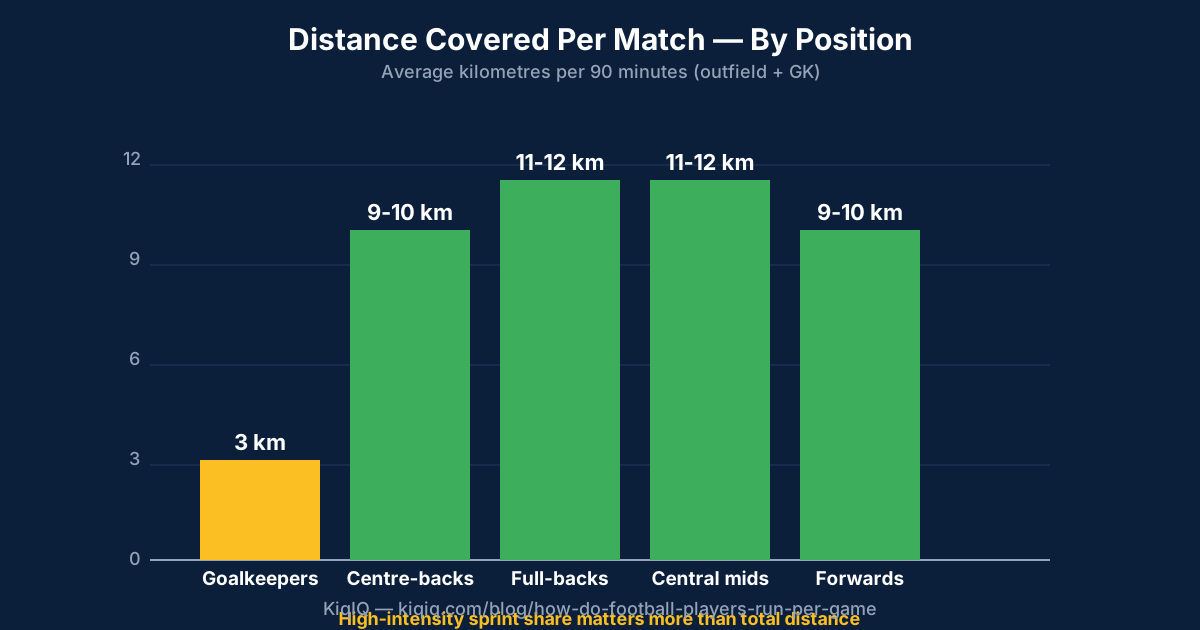
Outfield footballers cover 10-12 km per 90 minutes on average across the top European leagues. Goalkeepers cover roughly 3 km. The headline distance figure hides what actually matters: the split between high-intensity sprints, jogging, and standing. A central midfielder and a centre-back can both clock 10 km — but at very different intensities.
Average distance by position (per 90 minutes)
- Central midfielders — 11.0-12.0 km. Highest total — they cover both halves and link play.
- Full-backs / wing-backs — 10.5-12.0 km. Long touchline runs both ways every cycle.
- Wingers / wide forwards — 10.0-11.0 km. High sprint share, lower total.
- Centre-forwards — 9.5-10.5 km. Lower total, higher sprint share toward goal.
- Centre-backs — 9.0-10.0 km. Lowest outfield total; movement clustered around the back line.
- Goalkeepers — 2.5-3.5 km. Nearly all low-intensity inside the box.
Why the breakdown matters more than the total
Total distance is a coarse measure. Two players running the same 10 km can have very different physical loads depending on how that distance was distributed.
Tracking systems like ChyronHego TRACAB, Stats Perform's SportVU, and Premier League official tracking break running into bands — typically walking (<7 km/h), jogging (7-15 km/h), high-speed running (15-20 km/h or 20-25 km/h depending on provider), and sprinting (>25 km/h or >5.5 m/s). It's the high-speed and sprint bands — usually only 8-12% of the total — that tax players physiologically and predict fatigue.
- Sprint distance. Roughly 250-400 m per match in elite outfield players. The decisive 1-3% of total distance.
- High-speed running. Roughly 700-1,200 m per match. Maps onto pressing actions, runs into space, and recovery sprints.
- Jogging + walking. ~80-90% of total distance — recovery between high-intensity actions.
- Repeated sprint ability. Capacity to recover between sprints matters more than peak speed.
How tactics change distance
A high-pressing team running PPDA in single digits will produce more high-intensity distance per player than a deep-block team. Pep-influenced positional play tends to reduce total distance (less unstructured running) but increases short-burst sprint counts. Counter-attacking sides pile distance into a small number of high-speed sprints.
Match state matters too. Teams chasing a goal cover more high-intensity ground in the final 20 minutes; teams protecting a lead reduce total output but maintain defensive sprint counts.
How to read tracking data
- Look at high-speed running first. Total distance can be misleading; HSR (>20 km/h) is the better workload indicator.
- Compare like-for-like. Don't compare a winger's sprint count to a CB's — different roles, different demands.
- Watch the trend, not single matches. Player distance varies 10-15% game to game; focus on rolling averages.
- Match minutes matter. Per-90 normalisation lets you compare players who didn't play full matches.
Frequently asked questions
- How far does the average football player run per match?
- Outfield footballers cover 10-12 km per 90 minutes across the top European leagues. Goalkeepers cover roughly 3 km. Central midfielders typically run furthest (11-12 km); centre-backs and centre-forwards cover the lowest outfield totals at 9-10 km, but at different intensities.
- How much of that distance is sprinting?
- Sprinting (>25 km/h or above 5.5 m/s) accounts for roughly 250-400 m per match — about 1-3% of the total distance. High-speed running (15-25 km/h) adds another 700-1,200 m. Combined, high-intensity efforts make up about 8-12% of the total distance but produce most of the physiological load.
- Which position runs the most in football?
- Central midfielders cover the most total distance per match — typically 11-12 km — because they connect both halves of the pitch and contribute to both attacking and defensive phases. Modern wing-backs come close, occasionally exceeding central midfielders in high-press systems.
- How is distance measured in football?
- Optical tracking (TRACAB / SportVU / Premier League official tracking) uses multi-camera arrays around the stadium to triangulate every player position 10-25 times per second. GPS units worn under match shirts in some competitions complement optical tracking. Both feed into the speed-band breakdowns shown on broadcast graphics and analytics platforms.
References
- CIES Football Observatory — Physical Performance Reports — CIES
- Premier League — Match Centre Tracking Stats — Premier League
- StatsBomb — High-Intensity Running and Sprinting — StatsBomb
- Journal of Sports Sciences — Match Running in Elite Football — Journal of Sports Sciences
Key terms in this article
Ask KiqIQ a follow-up
Get a live, data-driven answer powered by api-football + KiqIQ's Poisson model. Try one of these prompts or write your own.
Part of pillar
Performance Science
See every article in this knowledge pillar →
Related
Reviewed by a KiqIQ editor before publication. Spotted an error? Email editor@kiqiq.com — we follow our Corrections Policy.