
Football Tracker Vests: GPS, Heart Rate, and Performance Monitoring
Football tracker vests use GPS and heart-rate sensors to measure sprint load, distance, intensity, and recovery. We explain what they measure, the major brands, and where they're heading.
 Tap to enlarge
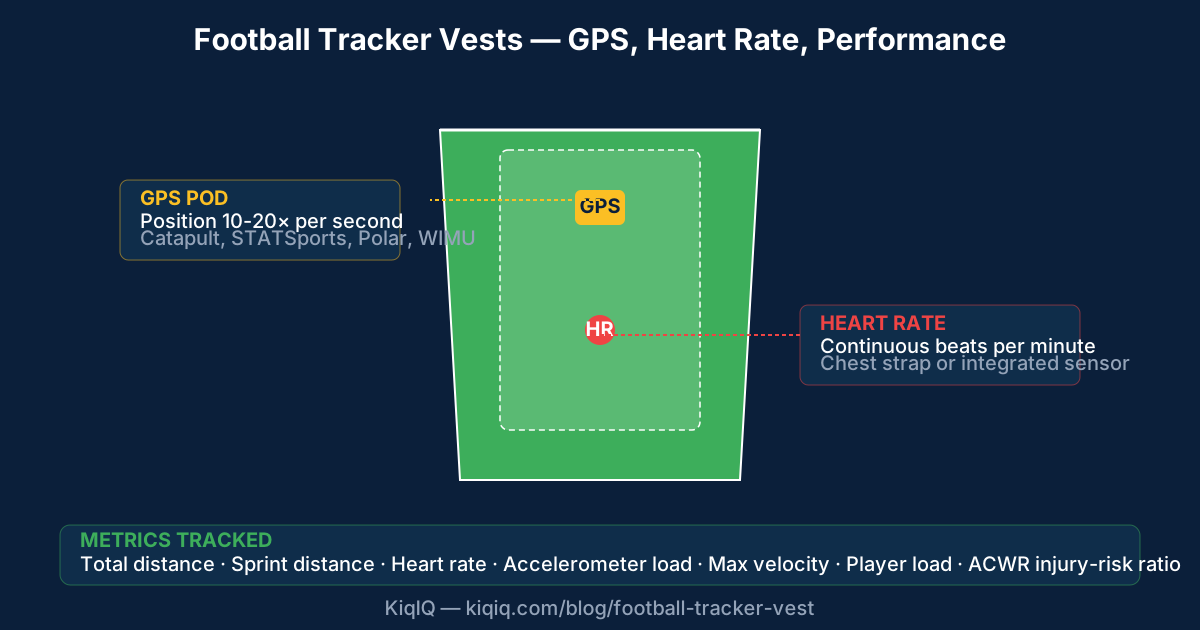
Football tracker vests are wearable devices worn under playing kit that record GPS position 10-20 times per second along with heart rate, accelerometer data, and sometimes additional metrics. Major brands include Catapult, STATSports, Polar, and Statsports. They've become standard at all professional levels of football, with GPS data feeding training plans, recovery decisions, injury prevention, and squad rotation. The data also flows to academies and increasingly to consumer-facing fan apps.
What tracker vests measure
Modern football GPS vests record 5-7 metrics:
The same metric set is now showing up in consumer-grade pods sitting underneath the STATSports and Catapult academy SKUs, products that log total distance, sprint distance, max velocity and distance-per-minute, pair to a phone app, and target grassroots and academy-junior use rather than first-team strength-and-conditioning departments. The data layer is closer to a fitness tracker than a Vector or Apex pod, but for a U-14 player or amateur 11-a-side the questions it answers (am I building sprint exposure, is my distance load progressing, where do I sit on max velocity) are the same.
- GPS position 10-20× per second. Allows reconstruction of every player movement across the pitch.
- Total distance. Cumulative metres covered during a session or match.
- Sprint distance. Distance covered above a velocity threshold (typically 19.8 km/h). The most-tracked physical KPI.
- Heart rate. Continuous beats-per-minute via chest strap or integrated sensor.
- Accelerometer load. Total impact + change-of-direction stress on the body, separate from raw distance.
- Maximum velocity. Top sprint speed reached during the session.
- Player load. A composite metric combining acceleration + deceleration in all directions.
GPS data flows to coaches' tablets in real time. They can see sprint load, fatigue indicators, and heart-rate zones during the match — sometimes pulling players who are accumulating risky load.
How the data is used
Five main applications in modern football:
- Training periodisation. A player's sprint load over a week informs whether they should train hard or recover.
- Injury prevention. ACWR (acute:chronic workload ratio) above 1.5 over a 7-day window predicts ~4× higher injury risk. Tracker data computes ACWR continuously.
- Squad rotation. Managers use cumulative load data to decide who to rest in midweek matches.
- Tactical analysis. Heatmaps, average position, and movement patterns from GPS data enable detailed tactical reviews.
- Match preparation. Pre-match warm-ups are calibrated against player-specific velocity profiles.
Major brands
Four brands dominate the professional football market:
- Catapult. Australian-based; market leader in elite football. Used by ~60% of Premier League clubs. Catapult Vector is the current flagship.
- STATSports. Northern-Irish-based. Apex pod system. Used by ~30% of Premier League clubs and Adidas-sponsored.
- Polar. Finnish-based; strong in Northern European football. Polar Team Pro system.
- WIMU Pro. Spanish brand; strong in La Liga and continental Europe.
How accurate is the data?
Three accuracy layers:
- GPS distance accuracy. ±2-3% over a 90-minute match. Reliable for total distance and sprint distance.
- Velocity threshold accuracy. Sprint distance depends heavily on the threshold setting. Different brands and clubs use different thresholds (19.0 vs 19.8 vs 21.0 km/h), making cross-brand comparison tricky.
- Heart rate accuracy. Chest-strap sensors are highly accurate (±1 bpm). Wrist-based or vest-integrated sensors are less reliable during high-intensity movement.
Consumer / amateur tracker vests
STATSports and Catapult both sell consumer versions for amateur players:
- STATSports Apex Athlete Series. ~£200-300. The most accessible amateur option; same hardware as professional version with slightly less software functionality.
- Catapult Vector S7. ~£400-500. Enterprise hardware at consumer pricing.
- Polar Team Pro Soccer. ~£300-400. Strong heart-rate integration.
Where the technology is heading
Three trends in football wearables:
- Player tracking + opta-style event data merging. Soon, every match will have integrated GPS + event data — what a player did AND where every other player was.
- Sweat sensors and biomarkers. Lactate, hydration, glucose tracking via wearable sweat sensors is being trialled. Approval and sport-rules permission still pending.
- Real-time fatigue prediction. AI models combine GPS load, heart rate, and sleep data to predict imminent injury risk and trigger rotation in real time.
- Consumer adoption. Amateur players increasingly use the same brands. The data is now available to anyone with a few hundred pounds.
Frequently asked questions
- What is a football tracker vest?
- A wearable GPS device worn under a player's kit (between the shoulder blades) that records position 10-20 times per second along with heart rate, accelerometer data, and other physiological metrics. Used to measure sprint load, total distance, max velocity, and overall training/match intensity. Major brands include Catapult, STATSports, Polar, and WIMU.
- How much does a football GPS tracker cost?
- Professional systems run £3,000-15,000 per pod plus annual subscription costs. Consumer/amateur systems are £200-500 — STATSports Apex Athlete Series at £200-300 is the most accessible. The same hardware as professional version with slightly less software functionality.
- How accurate is the GPS data?
- Distance accuracy is ±2-3% over a 90-minute match — reliable. Sprint distance depends heavily on the velocity threshold setting (19.0 vs 19.8 vs 21.0 km/h), making cross-brand comparisons tricky. Heart-rate accuracy is high with chest-strap sensors (±1 bpm) but less reliable with wrist-based or vest-integrated sensors during high-intensity movement.
- Why do clubs use GPS trackers?
- Five main applications: training periodisation (managing weekly sprint load), injury prevention (ACWR-based risk monitoring — ratios above 1.5 predict ~4× higher injury risk), squad rotation (cumulative load decides who rests), tactical analysis (heatmaps and movement patterns), and match preparation (warm-up calibration). The data has become standard at all levels of professional football.
References
- Catapult Sports — Official — Catapult
- STATSports — Apex System — STATSports
- GPS Validity in Team Sports — British Journal of Sports Medicine
- Acute:Chronic Workload Ratio Research — Sports Medicine
- SOCCERBEE Pro — consumer GPS player tracker (affiliate) — SOCCERBEE
Ask KiqIQ a follow-up
Get a live, data-driven answer powered by api-football + KiqIQ's Poisson model. Try one of these prompts or write your own.
Part of pillar
Performance Science
See every article in this knowledge pillar →
Related
Reviewed by a KiqIQ editor before publication. Spotted an error? Email editor@kiqiq.com — we follow our Corrections Policy.