
Football Science: How Modern Sports Science Shapes the Game
Football science is the multi-disciplinary application of physiology, biomechanics, psychology, nutrition, and data analytics to football. We map the field and explain why every elite club has a sports-science team.
 Tap to enlarge
Football science is the multi-disciplinary application of physiology, biomechanics, psychology, nutrition, and data analytics to the sport. Every Premier League club now employs 15-30 dedicated sports-science staff covering performance optimisation, injury prevention, and recovery. The field has expanded rapidly since 2010 alongside the GPS-tracking revolution and is the foundation of modern professional preparation.
The five disciplines
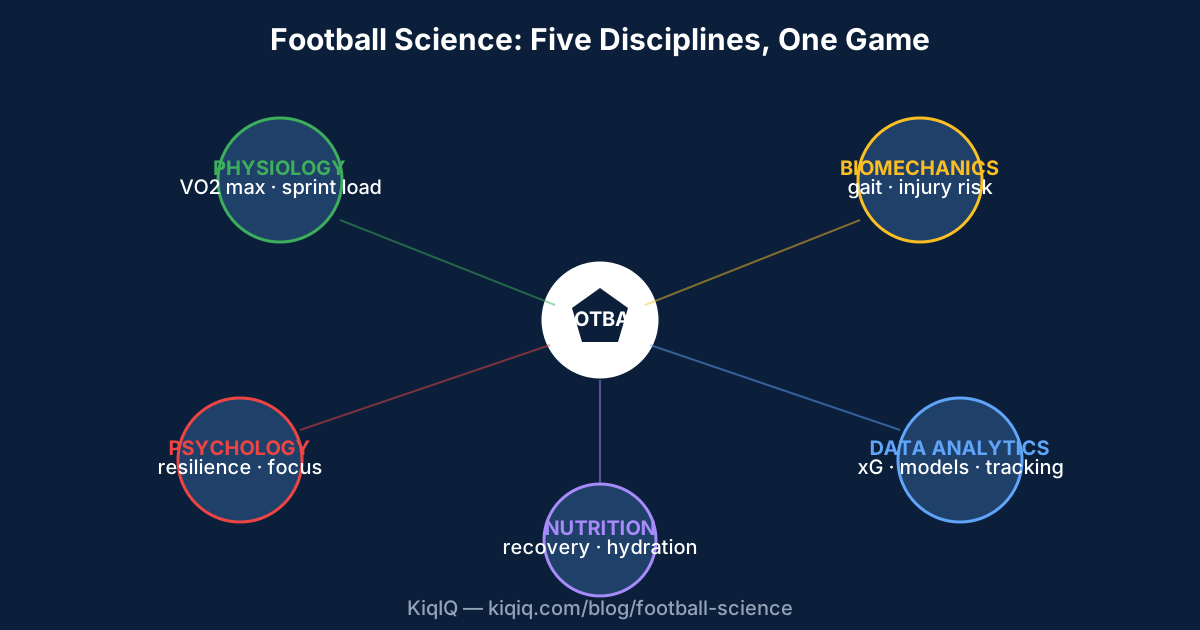
Football science draws on five primary disciplines:
- Physiology. Energy systems, lactate thresholds, recovery rates, heat / hydration responses. Underpins training periodisation.
- Biomechanics. Movement efficiency, kinetic chains, sprint mechanics, jumping technique. Covered in `/blog/football-biomechanics-basics`.
- Psychology. Confidence, focus, anxiety management, team cohesion. The newest pillar to be formally professionalised.
- Nutrition. Pre-match fuelling, recovery glycogen restoration, body-composition optimisation. Increasingly individualised per player.
- Data analytics. GPS load, sleep tracking, recovery markers, injury prediction. The discipline that has grown fastest since 2015.
An elite Premier League sports-science team typically employs 15-30 staff: head of sports science, physiologists, biomechanists, psychologists, nutritionists, recovery specialists, S&C coaches, and data analysts.
Why football science exploded after 2010
Three drivers:
- Wearable technology. GPS vests, heart-rate sensors, sleep trackers all became cheap and reliable in the early 2010s. Massive new data streams enabled new analytical questions.
- Marginal-gains culture. Sky's cycling team in the late 2000s popularised "marginal gains" thinking — many small improvements compounding. Football clubs adopted the philosophy.
- Increased competitive intensity. Premier League prize money, transfer-fee inflation, and Champions League returns created pressure for any edge available. Sports science delivered measurable improvements.
Where football science delivers most value
Three high-leverage application areas:
- Injury prevention. ACWR (acute:chronic workload ratio) monitoring + Nordic hamstring exercises + bio-banding in youth. Reductions in soft-tissue injury rates of 30-50% over the last decade.
- Recovery optimisation. Sleep tracking, ice baths, compression therapy, glucose monitoring. A faster-recovering squad rotates better and finishes seasons stronger.
- Player profiling. Individual nutrition + training plans calibrated to each player's physiology. The Cristiano Ronaldo model (custom plans + recovery) has been generalised across elite squads.
How football science differs from other sports
Three differences from sports like cycling or American football:
- Intermittent intensity. Football is bursty — sprint, walk, sprint. Energy-system modelling differs from continuous-intensity sports.
- Squad-level (not individual) optimisation. A football team has 25+ players whose physiology must be balanced across rotation, not just optimised individually.
- Tactical intent matters. A high-press tactical system has different sports-science demands than a possession-based one. Sports-science plans must align with tactical periodisation.
Notable football-science innovations
Five innovations that originated in football-science labs:
- Nordic hamstring curls. The single most-evidenced injury-prevention intervention. ~50% reduction in hamstring strains.
- Bio-banding. Grouping youth players by skeletal age to neutralise the relative-age effect.
- ACWR injury-prediction. Acute:chronic workload ratio above 1.5 → ~4× injury risk; widely adopted.
- Sleep-prioritisation programmes. Liverpool under Klopp pioneered sleep tracking + sleep coaching. Now standard.
- Individualised nutrition. Cristiano Ronaldo, Erling Haaland, Mohamed Salah all have player-specific nutritionists. The default at top clubs.
Where the field is heading
Three trends shaping football science in the late 2020s:
- AI-driven injury prediction. Multi-modal models combining GPS, sleep, biomarker, and emotional-state data to predict injury risk in real time.
- Continuous biomarker monitoring. Sweat-based glucose + lactate sensors, wearable hydration monitors. Live in-match physiological data.
- Mental-health integration. Sports psychology evolving from performance focus to holistic mental-health support, especially at academy level.
- Genetics-informed training. Polymorphism-based training individualisation (response to power vs endurance training varies genetically). Early-stage but growing.
Reading more
Three KiqIQ articles deepen specific aspects of football science:
- `/blog/football-biomechanics-basics` — kinetic-chain primer
- `/blog/why-is-power-important-in-football` — power vs strength
- `/blog/sprint-load-in-football` — GPS load monitoring
- `/blog/why-is-flexibility-important-in-football` — joint mobility for performance + injury
- `/blog/stretches-for-football` — practical mobility routines
Frequently asked questions
- What is football science?
- Football science is the multi-disciplinary application of physiology, biomechanics, psychology, nutrition, and data analytics to football. Every Premier League club now employs 15-30 dedicated sports-science staff covering performance optimisation, injury prevention, and recovery. The field has expanded rapidly since 2010 alongside the GPS-tracking revolution and is the foundation of modern professional preparation.
- Why is football science important?
- Three high-leverage application areas: injury prevention (ACWR monitoring + Nordic hamstring exercises have reduced soft-tissue injuries 30-50% over the last decade), recovery optimisation (sleep tracking, ice baths, glucose monitoring — a faster-recovering squad rotates better), and individualised player profiling (custom nutrition + training plans per physiology).
- What disciplines make up football science?
- Five primary disciplines: physiology (energy systems, lactate thresholds), biomechanics (movement efficiency, kinetic chains), psychology (confidence, focus, team cohesion), nutrition (pre-match fuelling, recovery glycogen restoration), and data analytics (GPS load, sleep tracking, injury prediction). Modern clubs employ specialists in each.
- Where is football science heading?
- Four trends: AI-driven injury prediction (multi-modal models combining GPS + sleep + biomarker + emotional-state data), continuous biomarker monitoring (sweat-based glucose and lactate sensors), mental-health integration (psychology evolving from performance-only to holistic), and genetics-informed individualisation (training response varies genetically). All early-stage but growing fast.
References
- Football Science Research — BJSM — British Journal of Sports Medicine
- UEFA Sports Science — UEFA
- FIFA Medical — FIFA Medical
- Liverpool FC Sports Science Programme — The Athletic
Key terms in this article
Ask KiqIQ a follow-up
Get a live, data-driven answer powered by api-football + KiqIQ's Poisson model. Try one of these prompts or write your own.
Part of pillar
Performance Science
See every article in this knowledge pillar →
Related
Reviewed by a KiqIQ editor before publication. Spotted an error? Email editor@kiqiq.com — we follow our Corrections Policy.