
Stretches for Football: Pre-Match, Recovery, and Daily Mobility
The right stretches for football depend on when you do them. Pre-match needs dynamic; post-match and recovery use static; daily mobility prevents injury. We cover each with the science.
 Tap to enlarge
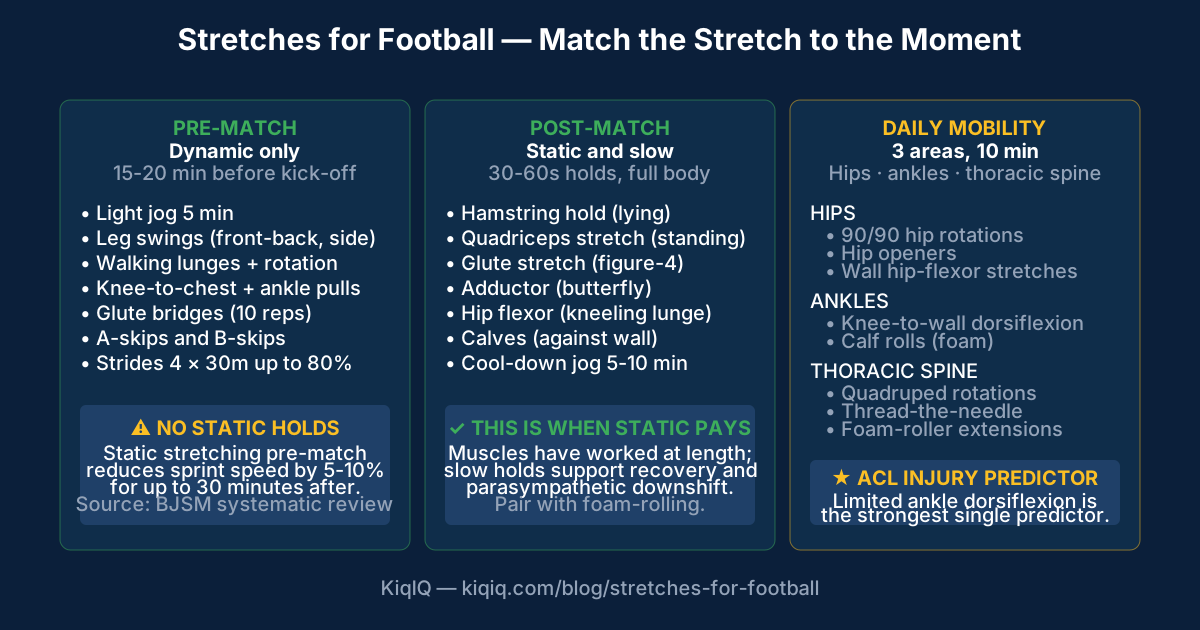
The right stretches for football depend entirely on when you do them. Pre-match needs dynamic movement-based stretching to prepare muscles for explosive action. Post-match uses static holds to encourage recovery. Daily mobility work targets the hips, ankles, and thoracic spine — the joints that prevent injury and unlock performance. Static stretching before kick-off has been linked to reduced sprint speed and is now widely avoided.
Pre-match — dynamic only
Static pre-match stretching (holding a hamstring stretch for 30 seconds, for example) was standard in football for decades. Modern sports science has demonstrated that pre-match static stretching reduces explosive output: studies show 5-10% drops in sprint speed and vertical jump performance for up to 30 minutes after long-hold static stretches.
Pre-match warm-ups now use dynamic stretching — movement-based mobility that increases body temperature, activates the nervous system, and primes elastic-recoil tissue without long holds.
Static stretches before a match reduce explosive output. Save the holds for after the game.
Pre-match dynamic routine (15-20 mins)
A typical professional pre-match warm-up:
- Light jog 5 min. Body temperature rising; heart rate easing up.
- Leg swings (front-back, side-to-side): 10 reps each leg per direction. Hip-flexor and adductor mobility.
- Walking lunges with rotation: 10 m, alternating legs. Activates glutes and hip flexors; thoracic rotation.
- Knee-to-chest + ankle pulls: 10 m. Mobility through hips and ankles.
- Glute bridges: 10 reps. Activates glute medius (the lazy muscle).
- A-skips and B-skips: 20 m each. Acceleration mechanics.
- Strides + accelerations: 4 × 30 m, building up to 80% pace. Final priming for first sprint.
Post-match — static and slow
After the final whistle, the body has done its explosive work. The post-match window is when static stretching pays off: the muscles have been working at length, and slow holds encourage recovery, length retention, and parasympathetic-nervous-system downshift (the rest-and-digest mode).
- Hamstring hold (lying or seated): 30-60 seconds per leg.
- Quadriceps stretch (standing, with strap if needed): 30-60 seconds per leg.
- Glute stretch (figure-4 lying): 30-60 seconds per side.
- Adductor (butterfly or wall straddle): 30-60 seconds.
- Hip flexor (kneeling lunge): 30-60 seconds per side.
- Calves (against wall): 30-60 seconds per leg.
- Cool-down jog or walk: 5-10 minutes. Helps clear lactate and ramp the heart rate down.
Daily mobility — three areas that matter most
Three joint regions reward consistent mobility work and produce outsized injury and performance returns:
- Hips. 90/90 rotations, hip openers, wall hip-flexor stretches. Hip mobility caps shooting power, sprint stride length, and turning radius.
- Ankles. Dorsiflexion drills (knee-to-wall), calf rolls. Limited ankle dorsiflexion is the strongest single predictor of ACL injury risk.
- Thoracic spine. Quadruped rotations, thread-the-needle, foam-roller extensions. Thoracic mobility supports passing range, change-of-direction, and prevents the lower back from overcompensating.
Recovery-day routines
On a recovery day after a match, light movement beats both rest and hard training. A typical pro recovery session:
- 15-min low-intensity bike or pool walk to flush soreness.
- 10-15 min foam-rolling (quads, glutes, lats, calves).
- Static-stretching routine (the post-match list above), 60 seconds per pose.
- 5 min of breathwork or yoga to support parasympathetic recovery.
Common mistakes
Three patterns that undermine football mobility:
- Bouncing during a static stretch. Risks tendon irritation. Holds should be controlled.
- Skipping the dynamic warm-up. Particularly common in amateur football. Cold tissue + max-effort sprinting = hamstring or calf injury.
- Stretching only the sore muscles. Soreness in the quad often comes from a tight hip flexor; soreness in the calf often from poor ankle dorsiflexion. Address upstream.
When to seek professional help
If a tightness or restriction persists more than 2-3 weeks despite consistent mobility work, see a physiotherapist. Three red flags: pain (rather than tightness) during stretching, restricted range that doesn't improve session-to-session, and asymmetry (one side significantly tighter than the other).
Frequently asked questions
- Should you stretch before a football match?
- Yes — but only dynamic stretches, not static holds. Static stretching pre-match has been shown to reduce sprint speed and vertical-jump output by 5-10% for up to 30 minutes. Use dynamic mobility work (leg swings, walking lunges, A-skips, glute bridges, strides) for 15-20 minutes before kick-off.
- When should I do static stretches?
- After matches and training, and on recovery days. Static stretching after exertion is when it pays off — the muscles have worked at length, and 30-60 second holds support recovery, length retention, and parasympathetic downshift. Add foam-rolling and a cool-down jog to maximise the benefit.
- Which stretches matter most for football?
- Three joint regions reward consistent mobility work: hips (90/90 rotations, hip openers, hip-flexor stretches — for shooting power and stride length), ankles (knee-to-wall dorsiflexion drills — limited ankle dorsiflexion is the strongest single ACL-injury predictor), and thoracic spine (quadruped rotations, thread-the-needle — supports passing range and prevents lower-back compensation).
- Is yoga good for footballers?
- Yes, in moderation. Once or twice a week, yoga complements football mobility work — hip openers, hamstring length, breathing, parasympathetic recovery. Avoid intensive heat-yoga sessions in-season (excessive dehydration risk). Most Premier League clubs have yoga as part of weekly recovery scheduling.
References
- Static Stretching and Sprint Performance — British Journal of Sports Medicine
- Ankle Dorsiflexion and ACL Injury Risk — Journal of Orthopaedic and Sports Physical Therapy
- UEFA Sports Science — Warm-Up Protocols — UEFA
- FIFA 11+ Injury Prevention Programme — FIFA Medical
Ask KiqIQ a follow-up
Get a live, data-driven answer powered by api-football + KiqIQ's Poisson model. Try one of these prompts or write your own.
Part of pillar
Performance Science
See every article in this knowledge pillar →
Related
Reviewed by a KiqIQ editor before publication. Spotted an error? Email editor@kiqiq.com — we follow our Corrections Policy.