
Early Recruitment in Youth Football: The Risks and Rewards
Early recruitment of 7-9 year olds is now standard at top European academies — but the conversion rate to senior professional is below 5%. We explain the system, the risks, and the alternatives.
 Tap to enlarge
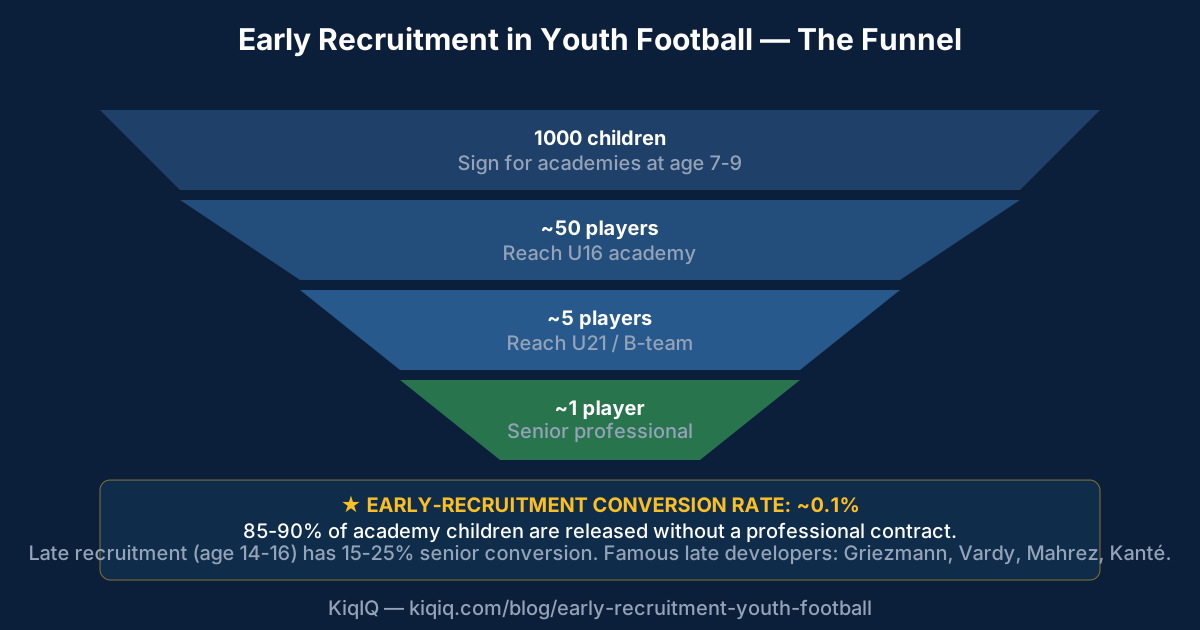
Early recruitment in youth football is when academies sign children at ages 7-9, locking them into multi-year development pathways. The practice is now standard at top European clubs — but the conversion rate from early-recruitment academy entry to senior professional contract is below 5% at most academies, and below 1% at the most selective. The risks for the children — emotional, educational, social — are significant.
How early recruitment works
Modern Premier League academies operate on six-year cycles starting at age 8 (U9). Recruitment starts much earlier — scouts watching grassroots U7-U8 matches identify candidates, sign them to "development centres" or six-week trials, then offer pre-academy contracts.
By age 9, an academy player is locked into a multi-year structured pathway: 3-5 training sessions per week, weekend matches against other academies, education plans negotiated with the local school, restricted parental control over playing schedules.
A child signed at age 8 will spend 1,500-2,000 hours training and playing before age 14. The opportunity cost — sports, social activities, education flexibility — is substantial.
The conversion rate problem
Across English Premier League and Championship academies, the conversion rate from age-8 academy entry to senior professional contract is consistently low:
- ~0.5-1.0% reach senior Premier League level.
- ~3-5% reach senior professional level (Premier League / EFL Championship + lower).
- ~10-15% sign professional contracts at any level (including non-league).
- 85-90% are released without a professional contract.
The relative-age effect — early recruitment's flaw
A well-documented bias: early recruitment disproportionately picks players born in the first months of the academy year (September-October in English football, where the cutoff is 1 September).
- About 60-70% of Premier League academy graduates are born September-November — the early quartile of the academy year.
- These players were physically larger at age 8-12 because they were 6-11 months older than their peers.
- This is not skill — it is age advantage. By age 16, the size gap closes; the player who was the early-quartile star at 9 is often less skilled than late-quartile peers who weren't recruited.
- Bio-banding (skeletal-age grouping) is the proposed solution. Manchester City and Barcelona have published methodology since 2019.
The emotional and developmental risks
Three documented risk categories for early-recruitment children:
- Identity collapse. A child who has been an "academy player" since age 8 finds release at 14, 16, or 18 a fundamental identity crisis. Mental-health support is increasingly written into academy contracts, but the underlying problem remains.
- Educational restriction. Schedule constraints often limit GCSE / A-level subject choice. Players who don't make it have to rebuild education pathways late.
- Reduced social development. Academy players spend disproportionate time with other academy players, restricting friendship breadth and social-skill diversity.
The alternative: late recruitment
Some academies (notably Brighton's, Brentford's senior recruitment, and several continental European clubs) explicitly prefer late recruitment — bringing players in at 14-16 once their growth and physical profile is clearer. Three advantages:
- Higher conversion rate. A 14-year-old recruited shows-of-skill rather than physical maturity converts to senior level at much higher rates (~15-25%).
- Lower sunk-cost emotional risk. A player recruited later has less identity wrapped up in the academy outcome.
- More predictable physical profile. By 14-16, growth is mostly complete; recruitment can be made on technical and tactical merit rather than projection.
Famous late-developers who would have been missed
Several elite players were rejected or never recruited by major academies in their early years and broke through later:
- Antoine Griezmann. Rejected by every French academy at age 13 as too small. Picked up by Real Sociedad in Spain at 14. Two-time French Footballer of the Year.
- Jamie Vardy. Released by Sheffield Wednesday at 16. Worked in a factory; played non-league football. Premier League winner with Leicester at 28.
- Riyad Mahrez. Released by French academies. Scouted at 23 from French second division. Premier League title winner.
- N'Golo Kanté. Released by JS Suresnes at 19; worked his way up through French lower leagues. Two-time Premier League winner; World Cup winner.
What parents should consider
Three principles for parents considering early academy recruitment for their child:
- Protect education flexibility. Don't sign anything that locks education choices to the academy schedule.
- Insist on multi-sport exposure. Children who play other sports through age 12 develop better spatial intelligence and have backup skill paths if football doesn't work out.
- Plan for the 90% case. The default outcome is no senior contract. Have a path that doesn't require the academy success to feel like a positive experience.
Frequently asked questions
- What is early recruitment in youth football?
- Early recruitment is when football academies sign children at ages 7-9, locking them into multi-year development pathways. The practice is now standard at top European clubs. Children typically train 3-5 times per week, play weekend academy matches, and have education plans negotiated with their local school. The pathway runs from U9 through U21.
- What's the conversion rate from academy to professional football?
- Across English Premier League and Championship academies, conversion rates from age-8 academy entry to senior professional contract are: ~0.5-1.0% to senior Premier League, ~3-5% to senior professional level (any tier), ~10-15% to any professional contract including non-league, and 85-90% released without a professional contract.
- Why is the relative-age effect a problem in youth recruitment?
- Children born early in the academy year (September-November in English football) are 6-11 months older than late-quartile peers, which means significant size differences at ages 8-12. Academies disproportionately recruit early-quartile children — about 60-70% of Premier League academy graduates are born in the first half of the cutoff year. This is age advantage, not skill, and many late-developers are filtered out unfairly.
- Are there famous late-developing footballers who would have been missed?
- Yes — many. Antoine Griezmann was rejected by every French academy at 13 as too small (Real Sociedad picked him up at 14). Jamie Vardy was released at 16 and reached the Premier League at 28. Riyad Mahrez was released by French academies. N'Golo Kanté was released at 19. All became Premier League title winners or international stars.
References
- Premier League Academy Conversion Rates — The Athletic
- Relative-Age Effect Research — Journal of Sports Sciences
- Bio-Banding — Manchester City Academy — The Athletic
- EPPP — Elite Player Performance Plan — Premier League
Ask KiqIQ a follow-up
Get a live, data-driven answer powered by api-football + KiqIQ's Poisson model. Try one of these prompts or write your own.
Part of pillar
Player Development
See every article in this knowledge pillar →
Related
Reviewed by a KiqIQ editor before publication. Spotted an error? Email editor@kiqiq.com — we follow our Corrections Policy.