
How to Become a Football Referee: The Pathway from Grassroots to Pro
Becoming a football referee starts with a Level 7 qualifying course at age 14+. We walk through the full pathway, the costs, the time commitment, and how the system rewards dedication.
 Tap to enlarge
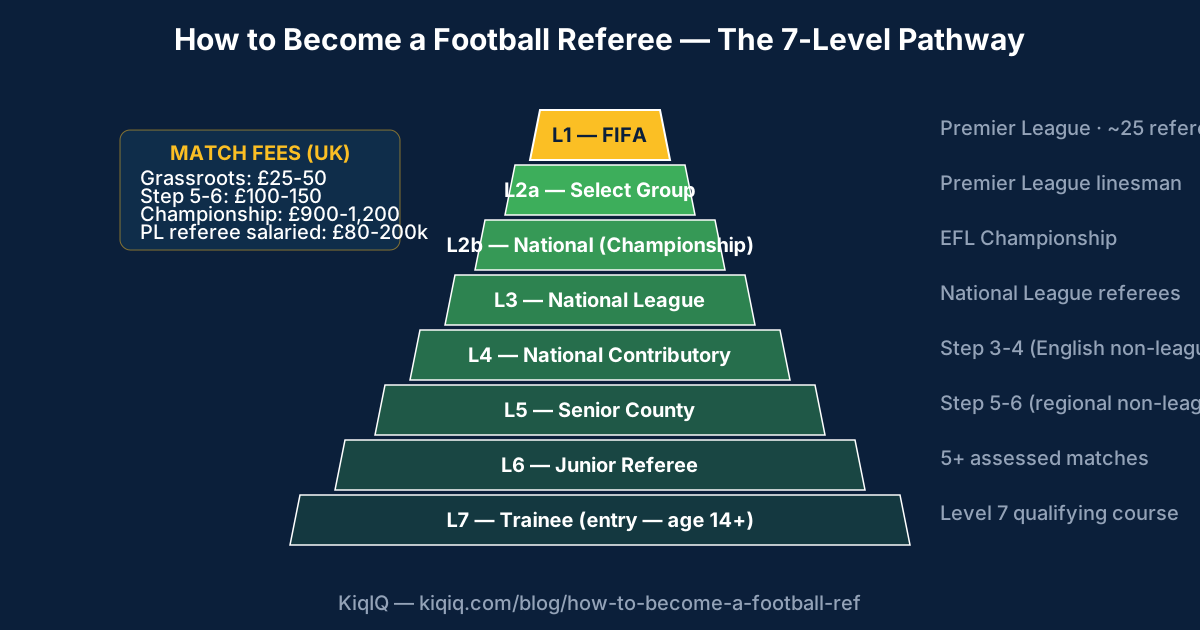
Becoming a football referee starts with a Level 7 qualifying course run by your national FA, available from age 14. The course covers the IFAB Laws of the Game, on-pitch positioning, and basic match-management. After certification, referees progress through seven levels — from grassroots youth football to FIFA-list internationals. The pathway is meritocratic: assessments after every match, with promotion based on consistent performance.
The seven referee levels (FA system)
The English FA referee pathway has seven levels (numbered descending — 7 is entry, 1 is national list). Other FAs use similar structures with different numbering:
- Level 7 — Trainee. Entry level. Refereeing youth football and grassroots adult leagues. Minimum age 14.
- Level 6 — Junior referee. After 5+ matches assessed. Refereeing grassroots adult football regularly.
- Level 5 — Senior county referee. Step 5-6 of English football pyramid (Northern League, Isthmian, etc.).
- Level 4 — National contributory referee. Step 3-4 (National League North/South).
- Level 3 — National league referee. National League level. Linesman on EFL.
- Level 2b — National referee. EFL Championship + cup competitions.
- Level 2a — Select Group 2. Premier League linesman + lower-flight matches.
- Level 1 — Select Group 1 / FIFA list. Premier League referees + international fixtures. Approximately 18-25 referees in England at any given time.
A referee who joins at 14 and progresses steadily can reach Premier League Select Group by their late 30s. Most FIFA-list referees are aged 35-45 — peak combination of experience and fitness.
The Level 7 qualifying course
The entry course is run by your national FA. In England, the FA Referee Course is:
- Duration. Typically 10-15 hours over 2-4 sessions, plus an exam.
- Cost. Approximately £100-150 in the UK (subsidised by some county FAs).
- Format. A mix of online theory (Laws of the Game) and in-person practical (positioning, signals, match-management scenarios).
- Assessment. Written exam on the Laws + practical assessment officiating a small-sided match.
- Outcome. A Level 7 certificate + registration with the FA, allowing the referee to officiate competitive matches and start collecting paid match fees.
How referees progress
Promotion through the seven levels is meritocratic and assessment-driven:
- Assessor reports. Senior referees observe each match and write reports on positioning, decision-making, communication, and Laws application.
- Match volume. Most levels require a minimum number of matches per season (typically 20-40). Promotion candidates must hit this baseline.
- Fitness tests. From Level 4 upwards, referees must pass annual fitness tests (modified beep test, sprint repeats, ARIET 6-1 test). Failing the fitness test removes a referee from the active list.
- Promotion exams. Each level has progression exams that test deeper knowledge of the Laws and complex match scenarios.
What referees earn
Referee match fees rise significantly with level (English approximate ranges as of 2025-26):
- Grassroots (Level 7). £25-50 per match.
- Step 5-6 (Level 5). £100-150 per match.
- National League (Level 3). £200-350 per match.
- EFL Championship (Level 2b). £900-1,200 per match.
- Premier League (Level 1). Salaried — approximately £80,000-200,000+ per year for a Select Group 1 referee.
- FIFA international. UEFA and CONCACAF tournament fixtures pay £3,000-15,000 per match for elite officials.
The fitness demands
Modern professional referees run 10-13 km per match, with sprints of up to 30 metres. The fitness expectation has risen dramatically since 2000. Premier League referees train 5-6 days per week with dedicated FA fitness coaches.
Annual fitness tests typically include the ARIET 6-1 test (a 6-1 ratio of recovery to high-intensity sprints) and 75-metre sprint repeats. Failing these tests removes a referee from the senior list — even Premier League veterans can be relegated for fitness reasons.
Why people become referees
Three common motivations:
- Lifelong football involvement. Players who can't play to professional level can stay in football as referees, sometimes reaching higher elite levels than they would have as players.
- Income at amateur levels. Even at Level 7, refereeing 2-3 matches per weekend can earn £100-200 — often more than minimum-wage casual work for the same hours.
- Career pathway to professional. Approximately 30-40 referees per year qualify in England with realistic ambitions of reaching National League level by their early 30s and Select Group by 40.
Common challenges
Three difficulties prospective referees should understand:
- Abuse and respect issues. Grassroots refereeing has a high attrition rate due to verbal and occasional physical abuse from players, parents, and coaches. The FA Respect campaign exists for this reason.
- Time commitment. Senior level requires 4-5 evenings per week including training, plus weekend matches.
- Asymmetric reward. A referee's best match goes unnoticed; one mistake can dominate post-match conversation.
Frequently asked questions
- How do you become a football referee?
- Sign up for the Level 7 qualifying course run by your national FA. In England, this is the FA Referee Course, available from age 14, costing approximately £100-150 over 2-4 sessions. The course covers the IFAB Laws of the Game, positioning, signals, and match management. After passing the exam, you're registered as a Level 7 referee and can officiate paid matches.
- What are the levels of football refereeing?
- The English FA pathway has seven levels (numbered descending — 7 is entry, 1 is the national / FIFA list). Level 7 is grassroots youth and adult football; Level 4 is non-league National League North/South; Level 2 is EFL Championship; Level 1 is the Premier League Select Group + FIFA international list. Approximately 18-25 referees hold Level 1 status in England at any time.
- How much do football referees earn?
- Match fees rise with level. Grassroots Level 7 typically earns £25-50 per match. Non-league senior football £100-350. EFL Championship £900-1,200 per match. Premier League referees are salaried at approximately £80,000-200,000+ per year. FIFA-list referees earn additional fees for international fixtures (£3,000-15,000 per match for tournament football).
- Do football referees need to be fit?
- Yes — increasingly. Premier League referees run 10-13 km per match including sprints up to 30 metres. From Level 4 upwards, referees must pass annual fitness tests including the ARIET 6-1 test and 75-metre sprint repeats. Failing the test removes a referee from the active senior list, regardless of experience or seniority.
References
- FA Referee Pathway — The FA
- Professional Game Match Officials Limited (PGMOL) — PGMOL
- IFAB Laws of the Game — IFAB
- FA Respect Campaign — The FA
Ask KiqIQ a follow-up
Get a live, data-driven answer powered by api-football + KiqIQ's Poisson model. Try one of these prompts or write your own.
Part of pillar
Player Development
See every article in this knowledge pillar →
Related
Reviewed by a KiqIQ editor before publication. Spotted an error? Email editor@kiqiq.com — we follow our Corrections Policy.