
What Age Do Footballers Retire? Career Length and Position Effects
The average professional footballer retires around age 33-35. We cover the position-specific differences, why goalkeepers play longest, and the post-career challenges most ex-pros face.
 Tap to enlarge
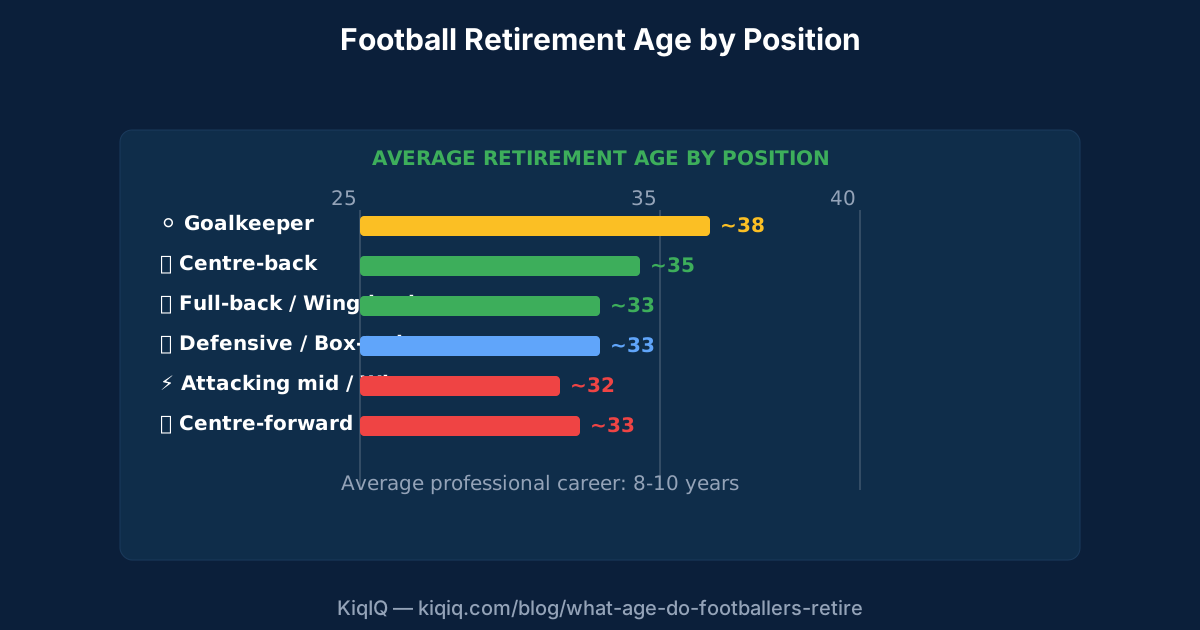
The average professional footballer retires between age 33-35. Position has a significant effect: goalkeepers play the longest (often into their late 30s and 40s), while forwards retire earliest (typically 32-33). The average professional career lasts 8-10 years. After retirement, around 30% of ex-professionals report mental-health challenges within the first two years; the PFA and FA both run dedicated post-career support services.
Average retirement ages by position
- Goalkeeper. ~37-39 typical retirement. Iker Casillas retired at 39; Gianluigi Buffon played professionally until 45.
- Centre-back. ~34-36 typical retirement. Less reliant on pace; technique and reading the game extend careers.
- Full-back / wing-back. ~32-34 typical retirement. Pace decline is significant for this position.
- Defensive / box-to-box midfielder. ~32-34 typical retirement.
- Attacking midfielder / winger. ~31-33 typical retirement. Pace and explosiveness decline earliest.
- Centre-forward. ~32-34 typical retirement. Position-specific — target strikers play later than counter-attacking forwards.
These are averages — individual variation is huge. Ryan Giggs played in the Premier League at age 40. Cristiano Ronaldo continued at the top level past 39. The "average" is for the median professional, not the elite outlier.
Why goalkeepers play longest
- Less pace dependence. Goalkeeping relies on positioning, reactions, and decision-making — qualities that decline slower than pace.
- Lower physical load per match. Outfield players cover 10-12+ km per match; goalkeepers cover 4-5 km.
- Fewer high-intensity sprints. Goalkeepers rarely sprint, sparing the soft-tissue injuries that end outfielder careers.
- Experience compounds. A goalkeeper's reading of attacking patterns gets better through their 30s.
- Iker Casillas, Buffon, Edwin van der Sar, Petr Čech, Manuel Neuer all played at the top level past age 35.
Why forwards retire earliest
- Pace + acceleration decline. Most pronounced from age 30 onward — directly affects forwards more than other positions.
- High-intensity sprint volume. Forwards make the most sprint efforts per match, accelerating injury risk.
- Tactical evolution disadvantage. Younger, faster forwards displace older ones quickly. Coaching often opts for legs over experience.
- Notable exceptions. Cristiano Ronaldo, Zlatan Ibrahimović, Karim Benzema all played at top level past 35.
Career length and earnings
- Average professional career. 8-10 years.
- Typical professional debut age. 18-20 (academy graduates) or 21-22 (academy graduates who developed late).
- Lifetime earnings concentration. Most lifetime earnings concentrated in the 5-7 peak years (age ~24-30).
- Post-career income drop. Average ex-pro income drops 70-90% post-retirement; financial planning is critical.
Post-retirement challenges
- Mental health. ~30% of ex-pros report mental-health challenges within 2 years of retirement (FIFPRO + PFA research).
- Identity loss. Football was their primary identity for 15-20 years; the transition is psychologically significant.
- Financial pressure. Despite high peak earnings, many ex-pros face financial difficulty post-career due to lifestyle inflation.
- Career transition support. PFA, FA, and FIFPRO all run dedicated transition services — coaching badges, business courses, mental health support.
Frequently asked questions
- What age do footballers retire?
- The average professional footballer retires between age 33-35. Position has a significant effect: goalkeepers play the longest (often 37-39+), while forwards retire earliest (typically 31-33). The average professional career lasts 8-10 years.
- Why do goalkeepers play longer than other footballers?
- Goalkeeping relies more on positioning, reactions, and decision-making — qualities that decline slower than pace. Goalkeepers also cover less ground per match (4-5 km vs 10-12+ km for outfielders) and rarely sprint, sparing the soft-tissue injuries that end outfield careers. Iker Casillas, Gianluigi Buffon, Edwin van der Sar, and Petr Čech all played at the top level past age 35.
- How long is an average football career?
- An average professional football career lasts 8-10 years. Players typically debut at 18-20 (academy graduates) or 21-22 (late developers), peak between ages 24-30, and retire around 33-35. Most lifetime earnings are concentrated in the 5-7 peak years, making post-career financial planning critical.
- What happens after a footballer retires?
- Common challenges include mental-health difficulty (~30% of ex-pros report struggles within 2 years), identity loss, and financial pressure (income drops 70-90% post-career). The PFA, FA, and FIFPRO run dedicated career-transition services including coaching badges, business courses, and mental-health support.
References
- PFA — Player Wellbeing — PFA
- Pensions Age — Time to Retire from Football — Pensions Age
- Jobs in Football — Retirement Age — Jobs in Football
- FIFPRO — Career Transition — FIFPRO
Key terms in this article
Ask KiqIQ a follow-up
Get a live, data-driven answer powered by api-football + KiqIQ's Poisson model. Try one of these prompts or write your own.
Part of pillar
Football Culture
See every article in this knowledge pillar →
Related
Reviewed by a KiqIQ editor before publication. Spotted an error? Email editor@kiqiq.com — we follow our Corrections Policy.