
SSG vs Match Load in Football: Designing Realistic Training
Small-sided games (SSGs) typically produce 60-120% of match load depending on pitch size and player numbers. We map the design rules for SSG load matching match demands.
 Tap to enlarge
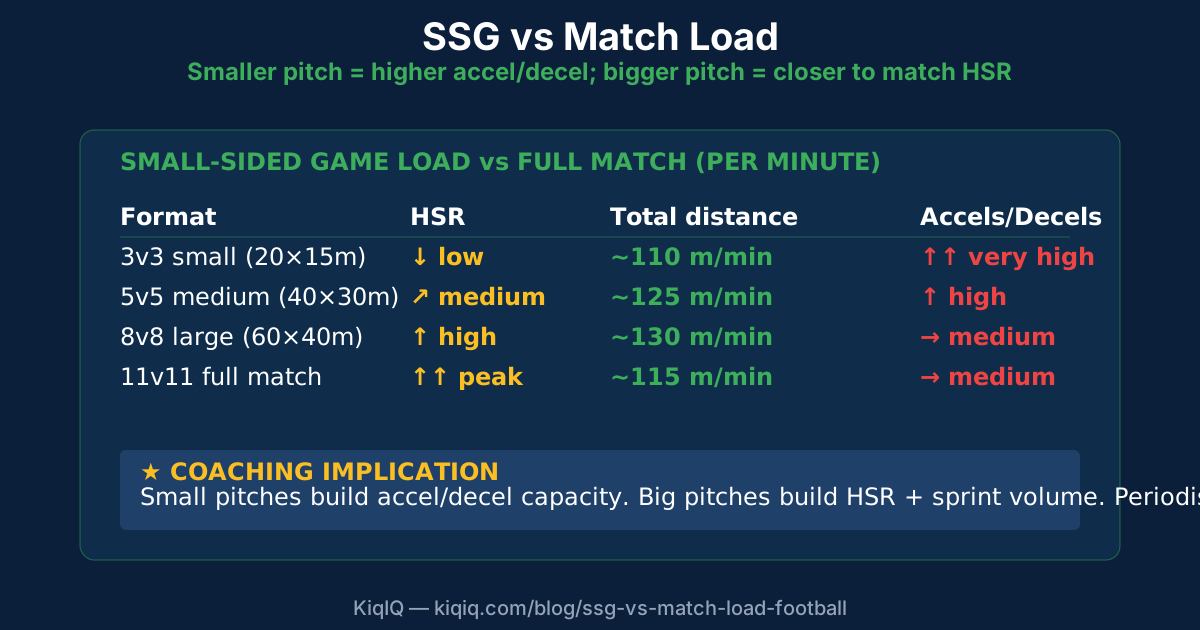
Small-sided games (SSGs) typically produce 60-120% of match load depending on pitch size, player numbers, and rules. Smaller pitches with fewer players create higher acceleration / deceleration loads (often exceeding match); larger pitches with more players approximate match high-speed running demands. Coaches design SSGs to target specific load components.
How SSG load varies
- Pitch size. Smaller = more touches, more COD, higher accel/decel; larger = more sprints, more HSR.
- Player numbers. Fewer players per team = more touches per player, higher individual load; more players = closer to full-match team dynamics.
- Rules. Goal types (mini-goals vs full-size + GK), touch limits, possession rules all shift load.
- Duration / rest ratios. Work:rest design (e.g., 4×4min on / 1min off) shapes intensity.
Specific SSG formats
- 3v3 / 4v4 small pitch. Highest accel/decel/COD load; HSR low. Used for technical + agility training.
- 5v5 / 6v6 medium pitch. Balanced load; close to match m/min and HSR proportions.
- 8v8 / 9v9 full / 3/4 pitch. Closest to match dynamics; HSR matches or exceeds match averages.
- 11v11 with rules. Match-mimic with overload constraints.
Design rules for matching match load
- Match HSR target. Use larger pitches (≥40m × 60m for 6v6+).
- Match accel/decel target. Use smaller pitches with frequent direction changes.
- Match-day-1 prep. Lower-volume SSGs the day before match.
- Match-day-3 / 4 development. Higher-volume SSGs reproducing match peak demands.
Frequently asked questions
- How does SSG load compare to match load in football?
- Small-sided games produce 60-120% of match load depending on pitch size, player numbers, and rules. Smaller pitches with fewer players create higher accel/decel loads (often exceeding match); larger pitches with more players approximate match HSR demands. Coaches design SSGs to target specific load components.
- Why are SSGs used in football training?
- Three reasons: (1) replicate match physical demands in a controlled environment; (2) develop technical + tactical skills under match-like pressure; (3) progress conditioning while keeping players engaged via game-based work. SSGs are typically more enjoyable and more transferable than traditional running-based conditioning.
- What SSG format best replicates match load?
- Larger formats (8v8 or 9v9 on 3/4-size pitches) most closely approximate match HSR and m/min. Smaller formats (4v4) exceed match accel/decel demands but under-deliver HSR. Most clubs use a mix — small SSGs for technical / agility work; larger SSGs for conditioning + match-like load.
References
- PMC — SSG Review — PubMed Central
- Frontiers — SSG Load — Frontiers in Sports
- FIFA Training Centre — SSG — FIFA
Key terms in this article
Ask KiqIQ a follow-up
Get a live, data-driven answer powered by api-football + KiqIQ's Poisson model. Try one of these prompts or write your own.
Part of pillar
Performance Science
See every article in this knowledge pillar →
Related
Reviewed by a KiqIQ editor before publication. Spotted an error? Email editor@kiqiq.com — we follow our Corrections Policy.