
Distance Per Minute in Football: An Intensity Normaliser
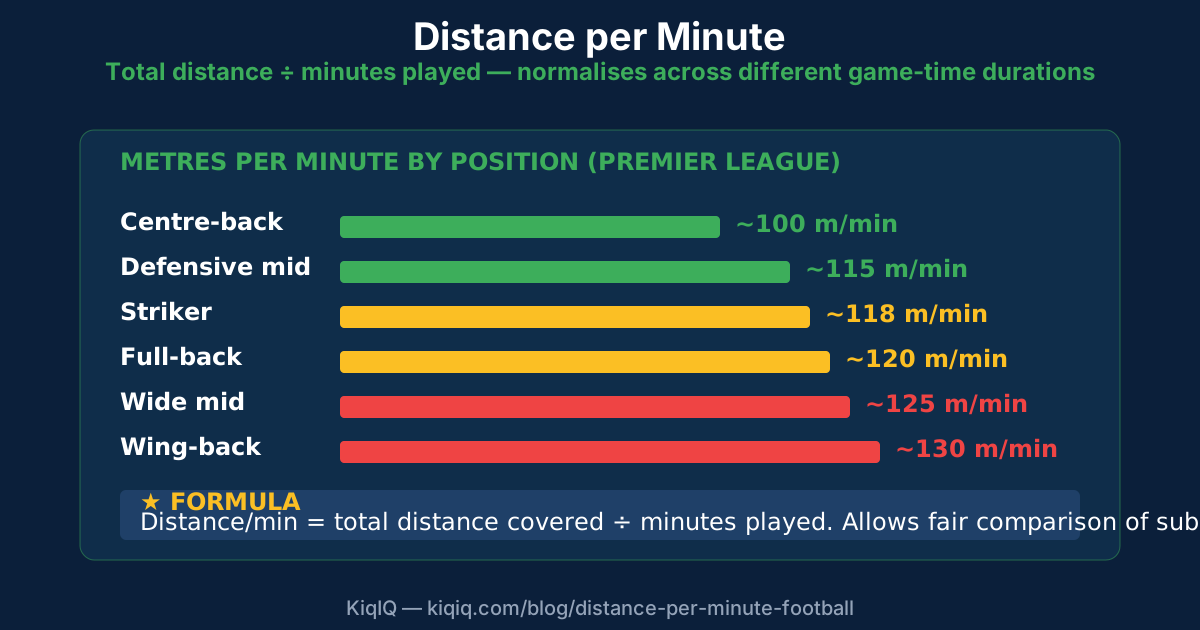
Distance per minute (m/min) normalises total distance against time on pitch — a useful intensity proxy when comparing players who play different minutes or sessions of different durations.
 Tap to enlarge
Distance per minute (m/min) is a useful intensity-normalising metric that divides total distance covered by time on pitch. It allows fair comparison between players who play different minutes (a 90-min starter vs a 30-min substitute) or sessions of different durations (a 60-min training vs a 90-min match).
How it's calculated
- Formula. Total distance (m) ÷ minutes played.
- Match averages. Premier League midfielders typically 110-130 m/min over a full match.
- Substitute peak. Subs coming on for the final 20 mins often exceed 140 m/min — fresh legs + high-intensity context.
- Position norms. CMs and FBs highest; CBs lowest (~85-100 m/min).
Why use distance per minute
- Comparing different minutes played. A 90-min total of 11,000m looks bigger than a 30-min total of 4,000m — but per-minute the substitute is more intense (133 vs 122 m/min).
- Intra-session intensity tracking. First-half vs second-half m/min reveals fatigue patterns.
- Training vs match comparison. Standard SSGs often exceed match m/min — useful for ensuring conditioning adequacy.
Frequently asked questions
- What is distance per minute in football?
- Distance per minute (m/min) is total distance covered divided by minutes played. It normalises across different game-time durations, allowing fair comparison between starters and substitutes, or training sessions of different lengths. Premier League midfielders typically average 110-130 m/min over a full match.
- Why does distance per minute matter?
- It eliminates the bias introduced by playing-time differences. A starter's 11,000m total looks bigger than a substitute's 4,000m total, but per-minute the substitute may be working harder. M/min is essential for intra-session fatigue analysis and for comparing training intensity to match intensity.
References
- PlayerData — High Intensity Metrics — PlayerData
- Football Observatory — Distance Analysis — Football Observatory
Ask KiqIQ a follow-up
Get a live, data-driven answer powered by api-football + KiqIQ's Poisson model. Try one of these prompts or write your own.
Part of pillar
Performance Science
See every article in this knowledge pillar →
Related
Reviewed by a KiqIQ editor before publication. Spotted an error? Email editor@kiqiq.com — we follow our Corrections Policy.