
Automatic Defensive Block Detection From Tracking Data: Two Dimensions That Classify Every Sequence
Coaches describe defensive blocks as "high", "mid" or "low", "compact" or "stretched". Modern tracking data can classify every defensive sequence along both dimensions automatically — turning a coaching vocabulary into a measurable model.
 Tap to enlarge
When a coach talks about a team's defensive shape, they describe it along two axes: how high the team's defensive line is, and how compact the unit is between front line and back line. The vocabulary — "low compact block", "high press", "mid block stretched too long" — has been part of tactical language for decades. Modern tracking data finally lets that vocabulary become a measurable model. Every defensive sequence in a match can be classified along both dimensions automatically, turning the coach's eye into a system that scales to every team in the league.
The two dimensions of a defensive block
The first dimension is height — where the team's defensive structure sits on the pitch. A low block defends close to the own goal, a high block presses near the opposition box, a mid block sits between. The measurement is the collective spatial distribution of the team's outfield players during a defensive sequence: take the centroid or median y-coordinate of all ten outfield players, normalise against pitch length, and classify into bands.
The second dimension is length — the vertical distance between the team's top line (typically the forward line) and the team's base line (the defensive line). A compact block has a small vertical distance; a stretched block has a large one. The measurement separates coordinated defensive units from teams whose first line presses without support from the lines behind.
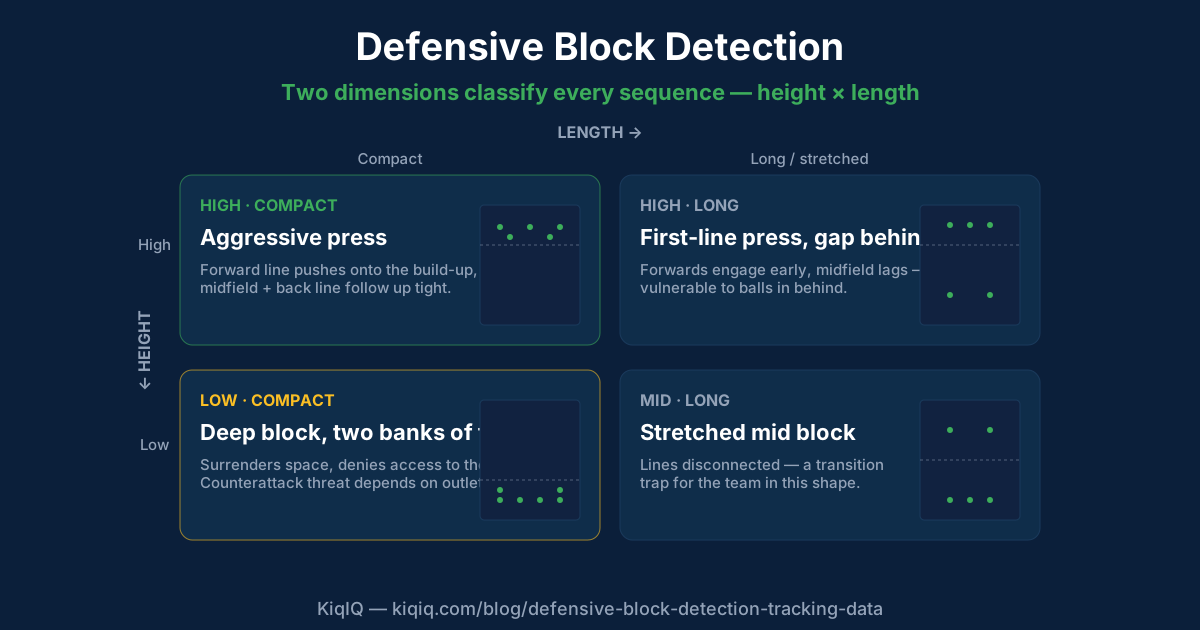
Two dimensions classify every defensive sequence: height (low / mid / high) and length (compact / long / stretched). The combination produces four basic structural types coaches already use as a vocabulary.
The four basic block types
Combining the two dimensions produces four structural types, each corresponding to a distinct tactical situation. High compact block: a coordinated high press where the forwards trigger and the lines behind step up in sync. Mid compact block: stable defensive shape, opponent allowed into the middle third but no further. Mid long block: the forwards press but the lines behind don't step up — a stretched team, structurally vulnerable to balls played through the gap. Low compact block: organised deep defence, the classic 4-5-1 or 5-4-1 sitting in front of their own box.
A real match has many sequences from each type. The analytical value is in measuring time-spent and outcome-by-block-type — which block does this team concede most chances in, which block produces the most progressive opposition passes, which block successfully prevents shots. Those answers are usable as pre-match preparation against a specific opponent and as in-season trend data for a coach's own team.
Why analysing at sequence-level beats analysing at match-level
A common analyst trap is averaging block characteristics across an entire match. A team that spends 30 minutes in a low compact block and 30 minutes in a high compact block has an average block height that's neither — and that average is misleading for tactical purposes. The team is operating in two distinct modes, and the right model separates them rather than blending them.
Sequence-level classification handles this directly. Each defensive sequence — the period from when the team loses possession to when they win it back or the opponent shoots — gets its own block classification. The team's match profile becomes a distribution of sequences across block types, not a single average. That distribution is what predicts performance against specific opponents, and it's what coaches actually find actionable.
What the model lets coaches actually ask
Once the classification is automatic, the analytical questions become specific. In which block type does the team concede the most dangerous attacks? When does the team become too long — what triggers the front line to press without support? Which defensive structure is most effective at preventing progression into the final third? Which block type yields the most turnovers in the opposition half?
For a coach preparing for a specific opponent, the questions are inverted. What block does this opponent struggle to break down? Where does their build-up break against a compact press? Which side of the pitch yields more turnovers? The classification scales to every team in the league — a coach can compare their own block-type distribution against a league average, against a specific upcoming opponent, and against their own historical trends to spot drift.
- Height dimension — median y-coordinate of outfield players, normalised against pitch length.
- Length dimension — vertical distance between top and base of the defensive unit.
- Four types — high compact, mid compact, mid long, low compact.
- Sequence-level — classify each defensive phase, not the match average.
- Use cases — own-team drift detection, opponent-specific preparation, league-wide benchmarking.
Frequently asked questions
- What is a defensive block in football?
- A defensive block is the structural shape a team forms when defending out of possession. It is described along two dimensions: height (where on the pitch the structure sits — high, mid, or low) and length (how compact or stretched the structure is between the front line and back line). Four basic combinations follow — high compact, mid compact, mid long, and low compact.
- How is a defensive block measured from tracking data?
- Height is measured from the collective spatial distribution of the team's outfield players during a defensive sequence — typically the centroid or median y-coordinate normalised against pitch length. Length is measured as the vertical distance between the team's top line (forwards) and base line (defenders) during the same sequence. Each defensive sequence gets its own classification.
- Why analyse at sequence level not match level?
- Teams operate in different defensive modes throughout a match — sometimes pressing high, sometimes sitting deep. Averaging across an entire match produces a misleading mid-point figure. Sequence-level classification preserves the actual distribution of block types the team used, which is what coaches actually need for opponent preparation and own-team drift detection.
- What questions can automatic block classification answer?
- Which block type concedes the most dangerous attacks. When and why the team becomes structurally too long. Which block effectively prevents opposition progression. For opponent preparation: what block does this opponent struggle to break down? Where on the pitch do they yield the most turnovers? The classification turns coaching vocabulary into measurable, comparable data.
References
- Spielverlagerung — Tactical analysis library · Spielverlagerung
- StatsBomb — Tracking data + tactical pattern detection · StatsBomb
Key terms in this article
Ask KiqIQ a follow-up
Get a live, data-driven answer powered by api-football + KiqIQ's Poisson model. Try one of these prompts or write your own.
Part of pillar
Data and Systems
See every article in this knowledge pillar →
Related
- How to be a useful football analyst →
- Club tech stack architecture →
- Pillar: Tactical Intelligence →
- StatsBomb IQ: A Complete Guide to the Football Analytics Platform →8 min read
- Football Data Providers Compared: Opta, StatsBomb, SkillCorner and Wyscout →7 min read
- How Far Do Football Players Run Per Game? →4 min read
Reviewed by a KiqIQ editor before publication. Spotted an error? Email editor@kiqiq.com. We follow our Corrections Policy.