
What Is Grassroots Football? Definition, Levels and Why It Matters
Grassroots football is the foundation of the sport — community-led, volunteer-run football for participants of all ages and abilities outside the professional and academy systems. We map the levels and structures.
 Tap to enlarge
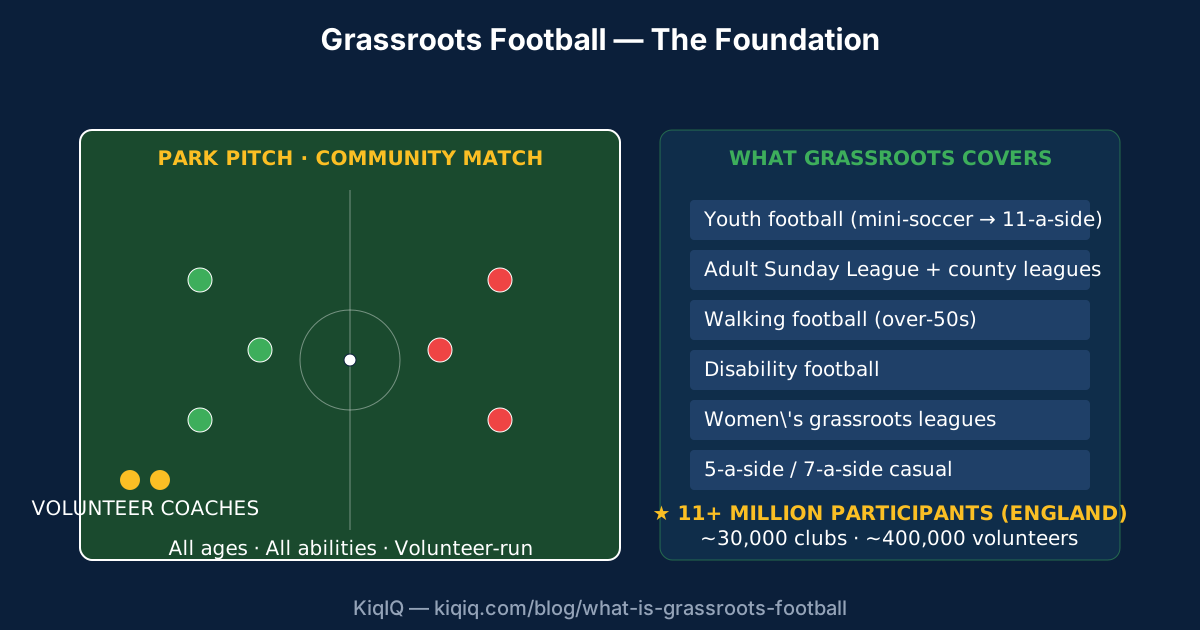
Grassroots football is the foundation of the sport — community-led, volunteer-run football for participants of all ages and abilities outside the professional and academy systems. The FA estimates over 11 million people participate in grassroots football in England. UEFA defines grassroots as "all football outside the professional game" — covering youth football, adult amateur leagues, walking football, and disability football.
What grassroots football covers
- Youth football. Mini-soccer (U7-U10), 9-a-side (U11-U12), 11-a-side youth (U13-U18). The biggest segment by participant count.
- Adult amateur leagues. Sunday League, county leagues, Saturday morning club football. Volunteer-run.
- Walking football. Modified format for over-50s. Fastest-growing grassroots segment in the UK.
- Disability football. Includes powerchair, blind / partially sighted, deaf, learning-disability football.
- Women's grassroots. All female football outside the WSL professional structure.
- 5-a-side / 7-a-side casual. Pay-and-play formats; most major UK cities have multiple commercial 5-a-side leagues.
UEFA explicitly defines grassroots as "all football outside the professional game." This includes academy youth football for non-elite players who won't reach professional level, plus all amateur and recreational formats.
Grassroots structure in England
- The FA. National governing body. Sets rules, sanctions tournaments, runs Wembley.
- County FAs. 50 county-level associations administering local football (e.g., Hertfordshire FA, Liverpool County FA, Yorkshire FA).
- Local leagues. Hundreds of local leagues affiliated with county FAs — Sunday League, midweek leagues, youth leagues.
- Local clubs. ~30,000+ grassroots football clubs in England (source: The FA).
- Commercial 5-a-side. Goals, Powerleague, and other commercial operators run pay-and-play leagues outside the FA structure.
Why grassroots football matters
- Talent pipeline. Most professional footballers played grassroots before being scouted into academies.
- Community fabric. Local clubs are social institutions — multi-generational families, club bars, community fundraising.
- Health benefit. 11+ million participants engaging in physical exercise; significant public-health value.
- Volunteer infrastructure. ~400,000 volunteers in English grassroots (FA estimate) — coaches, committee members, ground staff.
- Inclusivity. Disability football, walking football, and women's grassroots create entry points for groups underrepresented in elite football.
How to get involved in grassroots football
- As a player. Find a local club via The FA full-time fixture system or the FA Find a Club tool. Most clubs welcome new players.
- As a parent. Sign up your child to a local youth team. Mini-soccer (U7-U10) is the entry point.
- As a coach. The FA Level 1 introductory coaching badge is available; most county FAs run the course.
- As a referee. The FA Referee Course at age 14+ qualifies you to officiate grassroots matches.
- As a volunteer. Most grassroots clubs need committee members, ground-staff, and matchday volunteers — direct outreach is the easiest path.
Common challenges in grassroots
- Volunteer shortage. Mid-life male volunteers (the historical backbone) are declining; recruitment is the #1 challenge.
- Pitch availability. Limited 3G / 4G all-weather pitches in many regions; council-owned grass pitches deteriorate in winter.
- Funding. Grassroots clubs run on subscriptions + small grants. Fundraising is constant.
- Safeguarding. Modern grassroots requires safeguarding compliance — DBS checks, child-protection officers, formal procedures.
Frequently asked questions
- What is grassroots football?
- Grassroots football is the foundation of the sport — community-led, volunteer-run football for participants of all ages and abilities outside the professional and academy systems. UEFA defines it as "all football outside the professional game." Over 11 million people participate in grassroots football in England.
- What does grassroots football include?
- Youth football (mini-soccer, 9-a-side, 11-a-side youth), adult amateur leagues (Sunday League, county leagues), walking football (over-50s), disability football, women's grassroots, and 5-a-side / 7-a-side casual formats. Some commercial 5-a-side operators run outside the FA structure.
- How do you get involved in grassroots football?
- Five paths: (1) join a local club as a player via The FA Find a Club tool; (2) sign up your child to mini-soccer (U7-U10); (3) take The FA Level 1 coaching badge; (4) take The FA Referee Course at age 14+; (5) volunteer at a local club as a committee member or ground-staff helper. Most clubs welcome new participants.
- How important is grassroots football?
- Critical. It's the talent pipeline (most pros played grassroots first), the community fabric (multi-generational social institutions), a major public-health asset (11+ million participating in regular exercise), and an inclusivity engine (disability, walking, women's grassroots create entry points underserved by elite football). The FA estimates ~400,000 volunteers run English grassroots.
References
- The FA — Power of Grassroots Football — The FA
- UEFA — Grassroots Overview — UEFA
- Diamond Football — Grassroots Definition — Diamond Football
- BU1Sport — Grassroots Principles — BU1Sport
Ask KiqIQ a follow-up
Get a live, data-driven answer powered by api-football + KiqIQ's Poisson model. Try one of these prompts or write your own.
Part of pillar
Football Culture
See every article in this knowledge pillar →
Related
Reviewed by a KiqIQ editor before publication. Spotted an error? Email editor@kiqiq.com — we follow our Corrections Policy.