
What Is Walking Football? Rules, Benefits, Where to Play
Walking football is a low-impact version of the game where running is banned. We explain the rules, the health benefits, the global growth since 2011, and where to play.
 Tap to enlarge
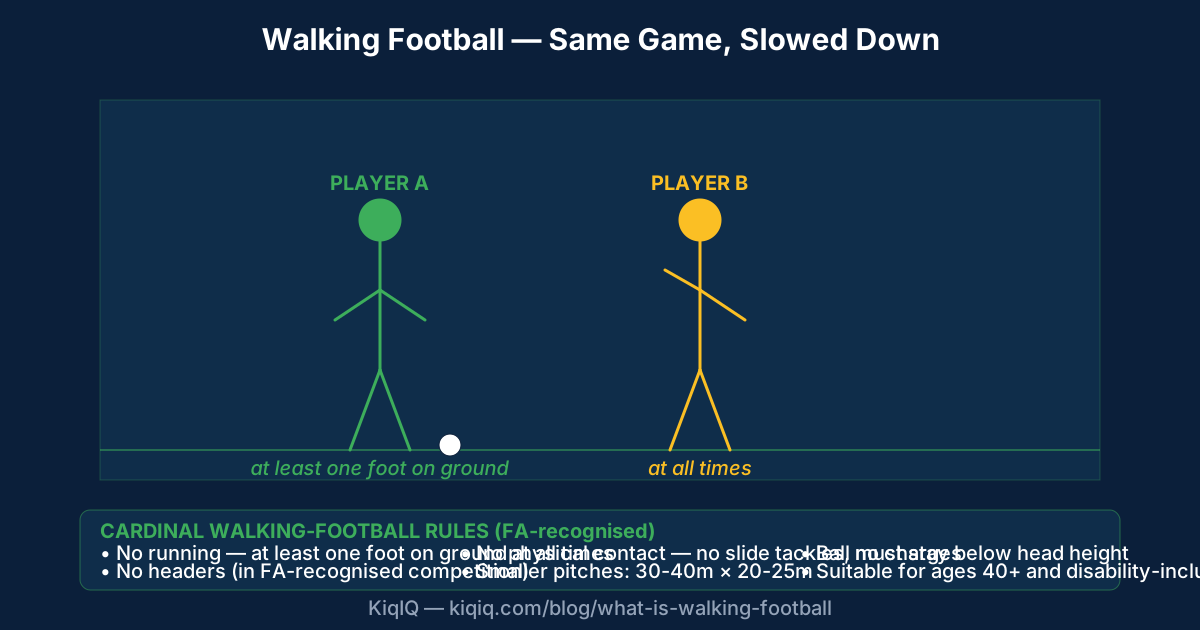
Walking football is a low-impact version of football where running is banned — at least one foot must remain in contact with the ground at all times. Originally developed in 2011 in Chesterfield, England, as a way for older players (50+) to keep playing the game, it has grown into a global movement with affiliated leagues across the UK, Europe, North America, and Asia. The Football Association (FA) recognised it formally in 2016.
How walking football is played
Walking football follows the same basic principles as 11-a-side or 5/6/7-a-side football, with crucial modifications:
- No running. At least one foot must remain in contact with the ground at all times. A referee whistles for a free kick if a player is judged to be running.
- No physical contact. Sliding tackles, shoulder challenges, and hard physical contact are all banned. A free kick is awarded for any contact above incidental.
- Smaller pitch. Typically 30-40m × 20-25m for 6-a-side or 7-a-side walking format.
- Smaller goals. Usually 5-a-side-style goals (3.66 × 1.22m).
- Shorter games. Typically two halves of 15-25 minutes.
- No headers. In FA-recognised walking football, headers are also banned to reduce concussion risk.
- The ball must stay below head height. A free kick is awarded if a kick raises the ball above head height (similar to futsal).
The slower pace shifts emphasis from athleticism to technique, positioning, and tactical awareness. Many players say their football brain has improved by playing walking football.
The health benefits
Multiple studies have shown walking football provides significant health benefits:
- Cardiovascular health. Sustained moderate-intensity activity improves resting heart rate, blood pressure, and VO2 max.
- Joint health. No-impact movement is suitable for those with knee, hip, ankle, or back issues.
- Mental health. Strong evidence that team-based sport reduces depression, social isolation, and cognitive decline in older adults.
- Weight management. A typical 60-minute walking football session burns 350-500 calories.
- Diabetes management. Specifically endorsed by Diabetes UK for type-2 management.
Who plays walking football
Walking football was originally created for over-50s but has since broadened:
- Over-50s and over-60s leagues. The original demographic — players who couldn't keep up with full-pace football but wanted to keep playing.
- Mixed-age leagues. Some clubs run open-age walking football for any adult who prefers the slower pace.
- Disability-inclusive leagues. Walking football is the most accessible competitive football format. The Walking Football Association (WFA) runs disability-specific competitions.
- Women's walking football. Has grown significantly since 2018; now affiliated leagues across the UK, Europe, and Australia.
The global growth since 2011
Walking football's expansion since its 2011 origin in Chesterfield has been remarkable. Key milestones:
- 2011. Chesterfield FC pioneers walking football for community engagement.
- 2014. Barclays runs a walking-football TV ad campaign in the UK; participation jumps.
- 2016. The FA formally recognises walking football and produces an official rulebook.
- 2017. First Walking Football World Cup hosted in Manchester. England wins.
- 2019. International Federation of Walking Football (IFWF) formed.
- 2020-21. Pandemic accelerates uptake — outdoor walking football was one of the few permitted sports activities for over-50s during restrictions.
- 2024. UK has 1,000+ registered walking football clubs; 50,000+ active participants. Continental Europe and Australia have growing competitive leagues.
Where to play walking football
Three pathways to start:
- Walking Football Association (WFA) club finder. Searchable by postcode. Hundreds of UK clubs offer free taster sessions.
- Local Premier League / EFL clubs' community foundations. Most clubs run "Walking Reds" / "Walking Blues" / similar branded leagues. Often free or low-cost.
- Powerleague and other 5-a-side venues. Many run walking football leagues, particularly for over-50s mid-week.
How walking football improves regular football
A surprising finding: many walking footballers report their regular football improved after playing walking football. Three reasons: better positioning (you can't sprint to recover, so you must position correctly), better passing accuracy (rushed passes don't work — there's time to pick the right pass), and better tactical awareness (the slower pace makes patterns visible). Several Premier League academies now use walking-football drills as a tactical-awareness teaching tool.
Frequently asked questions
- What is walking football?
- Walking football is a low-impact version of football where running is banned — at least one foot must stay in contact with the ground at all times. Physical contact is also limited (no slide tackles, no shoulder charges, often no headers). It was developed in 2011 in Chesterfield, England, primarily for over-50s, and has since grown into a global sport with affiliated leagues worldwide.
- Who can play walking football?
- Originally over-50s, walking football has expanded to mixed-age, disability-inclusive, and women's leagues. The slower pace and lack of physical contact make it accessible to anyone who wants to play football without the physical demands of full-pace games. The Walking Football Association recognises competitive leagues from age 40+.
- What are the rules of walking football?
- No running (at least one foot on the ground at all times); no physical contact (no slide tackles, no shoulder charges); smaller pitches (typically 30-40m × 20-25m); shorter games (15-25 min halves); no headers (in FA-recognised play); and the ball must stay below head height. Otherwise the rules follow normal football conventions.
- What are the health benefits of walking football?
- Cardiovascular improvement (heart rate, blood pressure, VO2 max), joint-friendly impact (suitable for knee/hip/ankle issues), mental health gains (reduced depression and isolation in older adults), weight management (350-500 calories per 60 min), and specifically endorsed by Diabetes UK for type-2 management.
References
- The Walking Football Association — WFA
- Health Benefits of Walking Football — British Journal of Sports Medicine
- FA Walking Football Rulebook — The FA
- International Federation of Walking Football — IFWF
Ask KiqIQ a follow-up
Get a live, data-driven answer powered by api-football + KiqIQ's Poisson model. Try one of these prompts or write your own.
Part of pillar
Football Culture
See every article in this knowledge pillar →
Related
Reviewed by a KiqIQ editor before publication. Spotted an error? Email editor@kiqiq.com — we follow our Corrections Policy.