
5-a-Side Football Tactics: Formations, Roles, and How to Win
5-a-side football needs different tactics from 11-a-side. We cover the four main formations (1-2-1, 2-1-1, 1-1-2, diamond), goalkeeper distribution, and the cardinal small-sided rules.
 Tap to enlarge
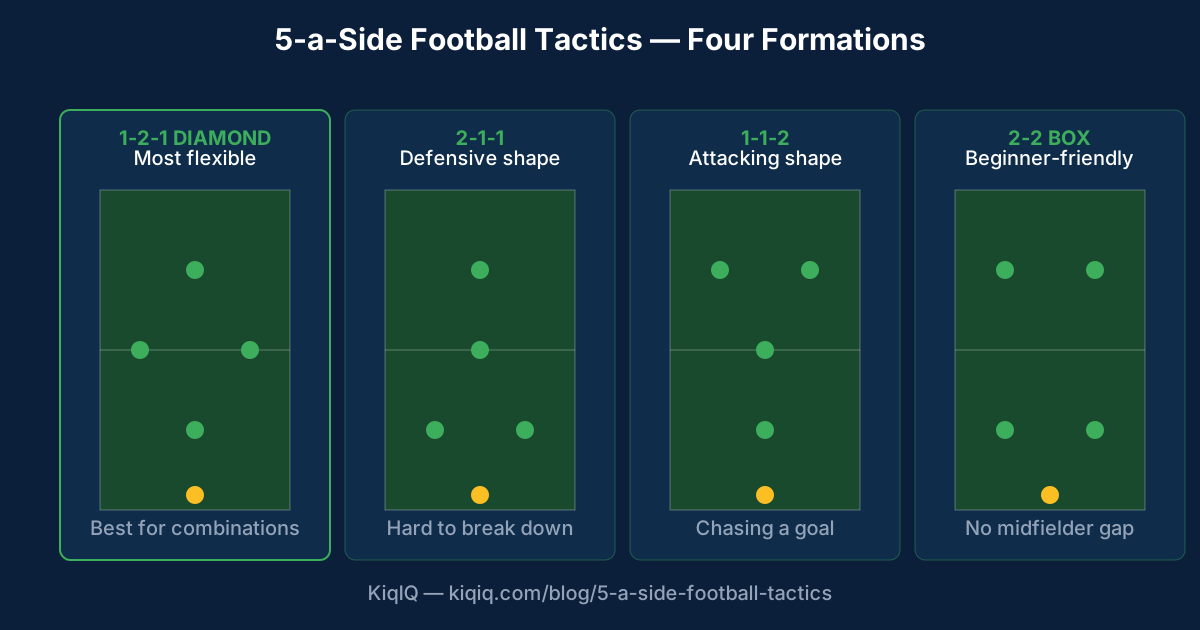
5-a-side football is a different sport from 11-a-side, with its own tactical principles. The smaller pitch (typically 30×20m), smaller goals (3.66×1.22m), and 4 outfield players per team mean possession matters more, set pieces matter less, the goalkeeper plays a more active distribution role, and one mistake usually decides the match. Four formations dominate amateur and competitive 5-a-side: the 1-2-1 diamond, 2-1-1, 1-1-2, and 2-2 box.
How 5-a-side differs from 11-a-side
Five structural differences shape 5-a-side tactics:
- Smaller pitch (typically 30×20m). Less space to spread the ball; rondos and combinations dominate.
- Smaller goals (3.66m × 1.22m, ~25% of regulation goal area). Long-range shots become low-percentage; close-range finishes are king.
- 4 outfield players per team. No specialist positions — every player attacks and defends.
- No offside (in most rule sets). Players can stand on the goal line; deep-lying strikers are common.
- Goalkeeper distribution = primary build-up. Throws + short passes start every move.
5-a-side rewards possession, combinations, and goalkeeper distribution. It punishes long-range shooting and slow tactical build-up.
Formation 1: 1-2-1 (the diamond)
One defender, two wide midfielders, one striker. The most flexible 5-a-side formation. Rotations are easy: any player can swap into any role within the diamond shape.
Strengths: balanced attack and defence, easy combinations through the middle, naturally creates triangles. Weaknesses: requires good fitness across all four outfield players (constant movement); a tired side breaks shape easily.
Formation 2: 2-1-1
Two defenders, one central midfielder, one striker. The most defensive 5-a-side formation. Two players sit deep at all times.
Strengths: hard to break down, suitable for protecting a lead, good for amateur teams against more skilful opposition. Weaknesses: limited attacking output, isolates the lone striker, vulnerable to high pressing.
Formation 3: 1-1-2
One defender, one central midfielder, two strikers. The most attacking 5-a-side formation. Best suited to chasing a goal in the final minutes or against a tired opposition.
Strengths: maximum forward presence, two players in the box for cut-backs and rebounds. Weaknesses: very vulnerable to counter-attacks; requires fast recovery from the deepest player.
Formation 4: 2-2 (the box)
Two defenders + two strikers, no dedicated midfielder. A simpler structure favoured by social-league teams.
Strengths: easy to coach, clear defensive responsibilities, good for less experienced players. Weaknesses: midfield gap means possession often bypasses the team via long passes; rondos and short combinations are difficult.
Goalkeeper as a fifth outfield player
5-a-side goalkeepers are far more involved than 11-a-side keepers. Three differences:
- Distribution starts every attack. A keeper who can throw or short-pass the ball into space is the most valuable player on a 5-a-side team.
- Sweeping range is greater. With a small pitch, the keeper covers more ground; sweeping out of the box (where allowed) is common.
- Goalkeepers can rotate with outfield players. Some teams rotate to give the goalkeeper a rest; some advanced setups have the GK come up to attack near the end of close matches.
Cardinal rules of 5-a-side
Five tactical truths that apply across formations:
- Don't shoot from outside 8 metres. Goalkeeper saves get the ball back to the opposition immediately. Work the ball closer.
- Pass and move every touch. Static players in 5-a-side become passing options the opposition can pre-cover.
- Use the walls (where present). Indoor 5-a-side with walls allows wall-passes that can't be defended without going past the wall.
- Don't over-commit to one player. If three of your four outfielders chase the ball, the fourth is being marked by the only opposition player not on the ball — leaving them free.
- Press in pairs. A single presser is bypassed easily; two pressers triangulate.
When formations should change
Three contexts that change formation choice:
- Score state. Leading by 2+ → shift to 2-1-1. Trailing → shift to 1-1-2. Level with minutes left → 1-2-1 diamond.
- Player fitness. A tired team can't sustain 1-2-1 for 60 minutes. Rotate to 2-2 to reduce running.
- Opposition shape. Against a 1-1-2 with two strikers, drop a 2-1-1 to neutralise both. Against a 2-2 box, push a 1-2-1 with two midfielders to win the centre.
Frequently asked questions
- What is the best 5-a-side formation?
- The 1-2-1 diamond is the most flexible and balanced 5-a-side formation. It naturally creates triangles, allows easy rotation, and works against most opposition shapes. The 2-1-1 is more defensive, the 1-1-2 more attacking, and the 2-2 box is simplest for less-experienced teams. Choose based on opposition, fitness, and game state.
- How is 5-a-side different from 11-a-side tactically?
- Smaller pitch and goals favour possession and short combinations. No specialist positions — every player attacks and defends. The goalkeeper plays an active distribution role, starting every attack. Long-range shots become low-percentage. Pace and individual skill matter more than complex tactical patterns.
- Should you press in 5-a-side?
- Yes, but only in pairs or threes. A single presser is bypassed easily on a small pitch. Two pressers triangulate the ball-carrier; three is the maximum because committing all four outfielders leaves your back free. Pressing in pairs is a hallmark of competitive 5-a-side teams.
- How important is the goalkeeper in 5-a-side?
- Critical. The 5-a-side goalkeeper plays a much more active role than in 11-a-side — they start every attack with distribution, can sweep aggressively, and (in some rule sets) come up to attack in the final minutes. A goalkeeper with good throwing range and short-passing accuracy is often the most valuable player on a 5-a-side team.
References
- Powerleague — 5-a-side Tactical Guide — Powerleague
- FIFA Futsal Laws of the Game — FIFA
- Small-Sided Games Research — Journal of Sports Sciences
- FA Mini-Soccer Tactical Resources — The FA
Key terms in this article
Ask KiqIQ a follow-up
Get a live, data-driven answer powered by api-football + KiqIQ's Poisson model. Try one of these prompts or write your own.
Part of pillar
Tactical Intelligence
See every article in this knowledge pillar →
Related
Reviewed by a KiqIQ editor before publication. Spotted an error? Email editor@kiqiq.com — we follow our Corrections Policy.