
What Is a 3G Football Pitch? Construction, Maintenance, and Use
A 3G pitch is a third-generation artificial surface using long synthetic grass blades + rubber crumb infill. We cover the construction, why 3G replaced 2G, and how it differs from 4G claims.
 Tap to enlarge
A 3G football pitch (third-generation artificial pitch) is a synthetic surface using long synthetic grass blades (40-65mm) combined with rubber crumb infill and a shock-pad base. It is the standard all-weather pitch for grassroots and academy football across England, certified by The FA and the Football Foundation. 3G replaced 2G (sand-filled) and 1G (early all-synthetic) pitches because it more closely replicates natural grass play characteristics. "4G" is a marketing term with no formal definition.
3G pitch construction
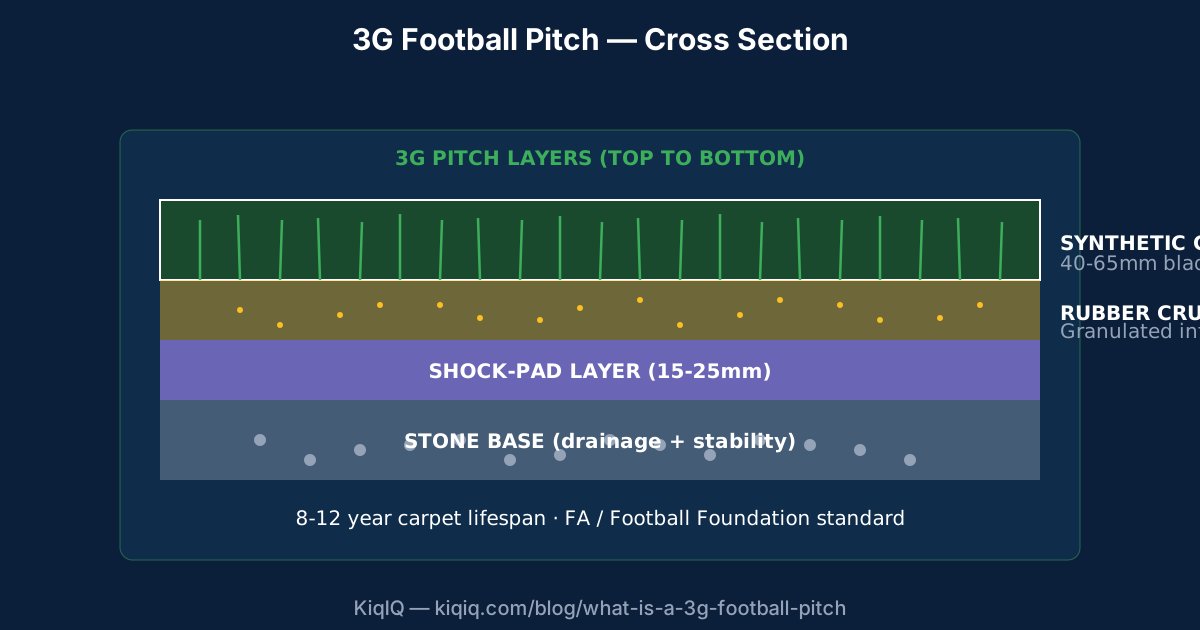
A standard 3G pitch has three layers from bottom to top:
- Stone base. Compacted aggregate that provides drainage and stability.
- Shock-pad layer. Cushioned underlay (typically 15-25mm). Reduces injury risk and adds bounce.
- Synthetic grass blades. Long polyethylene fibres (40-65mm tall, often green-coloured to mimic grass).
- Rubber crumb infill. Granulated rubber (often recycled tyre rubber) brushed in between blades. Provides ball roll, footing, and shock absorption.
- Lifespan. ~8-12 years typical before replacement of the synthetic carpet.
The Football Foundation funds 3G pitches across England via its Football Investment Strategy. By 2026, the Foundation had supported the construction of 750+ 3G pitches in England.
Why 3G replaced earlier generations
- 1G (1960s-1970s). Early all-synthetic pitches like astroturf. Hard, abrasive, ball bounced unnaturally. Mostly removed from professional use.
- 2G (1980s-1990s). Sand-filled synthetic. Better than 1G but still abrasive and ball roll was harsh.
- 3G (2000s onwards). Rubber-crumb infill + long synthetic grass. Closer to natural grass play characteristics.
- Player feedback. 3G is widely accepted as comfortable for sliding tackles and natural-feeling for ball control.
- Professional recognition. UEFA permits 3G in Champions League / Europa League fixtures (FIFA Quality Pro certified).
"4G" — marketing term, not formal generation
- No formal IFAB / FIFA / FA definition of "4G". The term is used by some manufacturers as marketing for newer infill types (e.g., cork, organic infill instead of rubber crumb).
- FIFA Quality Pro certification. This is the formal performance standard — pitches certified meet specific tests for ball roll, ball bounce, shock absorption, and player-surface interaction.
- Beware "4G" claims. Without FIFA Quality Pro or FA-recognised certification, "4G" is essentially a marketing label.
Use rules and footwear
- Acceptable footwear. Moulded studs, blades, or astroturf trainers (turf-specific).
- Banned footwear. Metal studs (typically banned on 3G — damages the surface).
- Studs in 3G. Some 3G pitches allow short metal studs; check the venue's footwear policy.
- Cleat damage to 3G. Heavy stud abrasion shortens pitch lifespan; football associations enforce footwear policies to protect the investment.
- FA guidance. The FA publishes a footwear policy for 3G pitches that local authorities and clubs follow.
Maintenance + lifespan
- Brushing. Pitches need regular brushing to redistribute the rubber crumb infill (typically every 1-3 weeks during heavy use).
- Top-up infill. Rubber crumb migrates over time; periodic top-ups extend lifespan.
- Decompaction. Annual deep-clean process that lifts and re-fluffs the synthetic blades.
- Snow / ice. Most 3G pitches can be played on in winter once snow is cleared. Mechanical brushing removes ice.
- Replacement cycle. ~8-12 years for the synthetic carpet; the shock-pad base lasts 15-20+ years.
Environmental concerns
- Microplastic shedding. Rubber crumb infill releases microplastics into the environment over time. The EU is moving to restrict it from 2031.
- Alternative infills. Cork, organic infills, and engineered materials are being tested as rubber-crumb replacements.
- Recycling. End-of-life 3G carpets are difficult to recycle; significant industry challenge.
- Heat retention. 3G pitches retain more heat than natural grass — can be 10-15°C warmer in summer sun.
Frequently asked questions
- What is a 3G football pitch?
- A 3G football pitch is a third-generation artificial surface using long synthetic grass blades (40-65mm tall) combined with rubber crumb infill and a shock-pad base. It is the standard all-weather pitch for grassroots and academy football across England, certified by The FA and funded by the Football Foundation. 3G replaced 2G (sand-filled) and 1G (early all-synthetic) pitches because it more closely replicates natural grass play.
- What is the difference between 3G and 4G football pitches?
- There is no formal "4G" definition by IFAB, FIFA, or The FA. "4G" is a marketing term used by some manufacturers for newer infill types (e.g., cork, organic infill instead of rubber crumb). The proper performance standard is FIFA Quality Pro certification, which tests for ball roll, ball bounce, shock absorption, and player-surface interaction. Treat "4G" claims with skepticism unless backed by formal certification.
- Can you wear metal studs on a 3G pitch?
- Most 3G pitch operators ban metal studs because they damage the synthetic carpet, shortening pitch lifespan. Some pitches allow short metal studs; always check the venue's footwear policy. Acceptable footwear typically includes moulded studs, blades, or turf-specific trainers. The FA publishes a footwear policy for 3G pitches followed by local authorities.
- How long does a 3G football pitch last?
- The synthetic carpet typically lasts 8-12 years before replacement. The shock-pad base layer beneath lasts 15-20+ years. Lifespan depends on intensity of use, footwear policy enforcement, and maintenance frequency (regular brushing, infill top-ups, annual decompaction).
References
- Football Foundation — 3G Pitches FAQ — Football Foundation
- SIS Pitches — Astroturf Generations Guide — SIS Pitches
- FIFA Quality Pro Certification — FIFA
- The FA — Footwear Policy 3G — The FA
Ask KiqIQ a follow-up
Get a live, data-driven answer powered by api-football + KiqIQ's Poisson model. Try one of these prompts or write your own.
Part of pillar
Fundamentals
See every article in this knowledge pillar →
Related
Reviewed by a KiqIQ editor before publication. Spotted an error? Email editor@kiqiq.com — we follow our Corrections Policy.