
4-2-3-1 Formation: The Modern Tactical Default
The 4-2-3-1 features a double pivot, three attacking midfielders, and a lone striker — one of modern football's most-used formations. We break down the structure, the German national team era, and where it works.
 Tap to enlarge
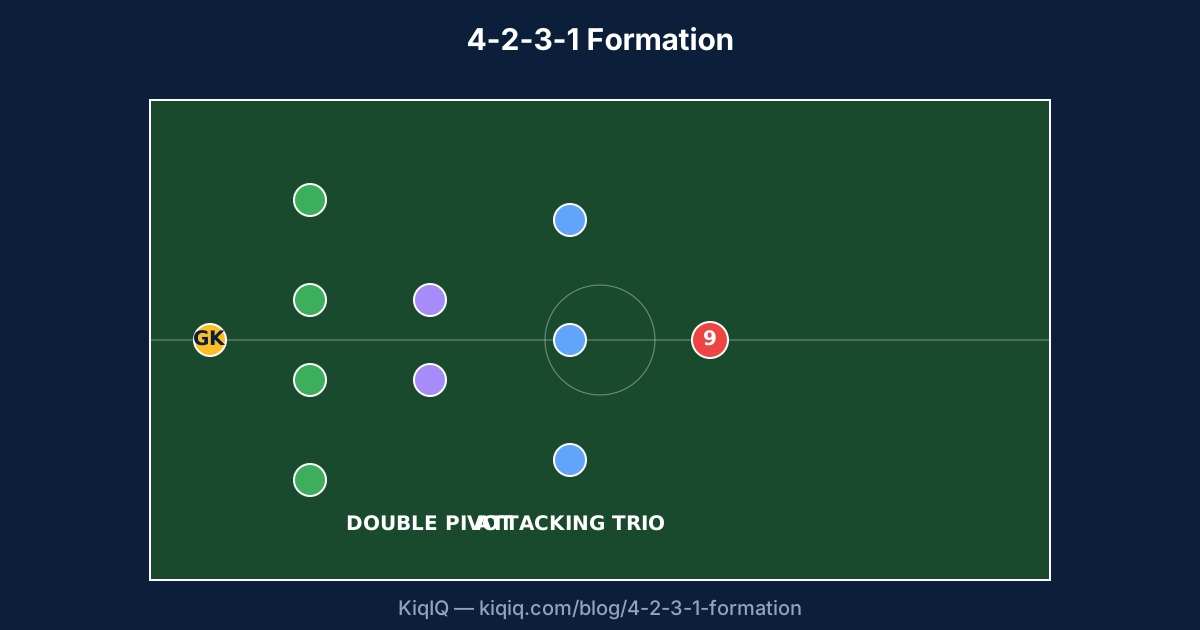
The 4-2-3-1 is one of modern football's most-used formations: 1 GK, 4 defenders, 2 defensive midfielders (double pivot), 3 attacking midfielders, and 1 centre-forward. Joachim Löw's Germany won the 2014 World Cup with it. José Mourinho built Real Madrid's 2011-13 era around it. Most national teams default to 4-2-3-1 because it balances defensive structure with attacking creativity.
The 4-2-3-1 structure
11 starters: 1 GK + 4 defenders + 2 holding mids + 3 attacking mids + 1 striker.
- Goalkeeper. Standard role; sweeper-keeper variants increasingly common.
- Back four. Two CBs + two attacking full-backs.
- Double pivot. Two defensive / box-to-box midfielders side by side. Screens the defence and links play forward.
- Attacking trio. Two wide players (often inverted) flanking a central attacking midfielder ("the 10").
- Lone striker. Often a target / pressing forward, supported by the 10 dropping in.
The 4-2-3-1 effectively combines the defensive solidity of 4-4-2 with the attacking creativity of 4-3-3 — the double pivot replaces the single 6, and the 3 attacking mids replace the front three.
Strengths of the 4-2-3-1
Why it became the international default:
- Defensive shield. Two holding midfielders provide stronger cover than a single CDM.
- Defined creator. The "10" is the team's designated final-pass merchant; clear creative hierarchy.
- Press triggers. The 3 attacking midfielders + striker form a 4-man front press.
- Compatible with most player profiles. Doesn't require world-class wingers like 4-3-3, or two strikers like 4-4-2.
- Fluid in possession. Easily morphs into 4-3-3 (one CM advances) or 3-4-3 (FB inverts).
Weaknesses
Three vulnerabilities:
- Striker isolation. The lone CF can become disconnected if the 10 doesn't link play.
- Vulnerable to midfield rotation. A strong opposition CM trio (3-man midfield) can outnumber the 4-2-3-1's three centre players (2 + 10) if the wide attackers don't tuck in.
- The 10 must be elite. A weak attacking midfielder collapses the system; few players combine the creativity, defensive workrate, and pressing intensity needed.
Famous 4-2-3-1 sides
- Germany 2010-2014. Joachim Löw's 4-2-3-1 with Schweinsteiger + Khedira double pivot, Müller / Özil / Podolski attacking trio, Klose lone striker. Won the 2014 World Cup.
- José Mourinho's Real Madrid (2010-2013). Khedira + Xabi Alonso pivot; Özil at 10; Ronaldo / Higuaín / Di María attacking. La Liga 2011-12 with 100 points.
- Liverpool under Brendan Rodgers (early 2010s). 4-2-3-1 with Henderson + Allen pivot; Coutinho / Sterling / Sturridge / Suárez attacking variations.
- Pep Guardiola's Bayern Munich (2013-2016). 4-2-3-1 base morphing into 3-2-4-1 in possession.
When 4-2-3-1 works best
- Squad has a world-class CAM. A Mesut Özil / Kevin De Bruyne / James Rodríguez profile.
- Two complementary defensive midfielders. One destroyer + one playmaker (Khedira + Schweinsteiger model).
- A lone striker comfortable with isolation. A target-pressing forward like Lewandowski / Klose / Lukaku.
- Tournament football. International coaches default to 4-2-3-1 because it's easy to train and balances defence + attack.
Frequently asked questions
- What is the 4-2-3-1 formation?
- The 4-2-3-1 is a football formation with 1 goalkeeper, 4 defenders, 2 defensive midfielders (double pivot), 3 attacking midfielders, and 1 centre-forward. It is one of modern football's most-used formations and the international default. Germany won the 2014 World Cup with it.
- How is 4-2-3-1 different from 4-3-3?
- 4-2-3-1 has 2 defensive midfielders (double pivot) and 3 attacking midfielders + 1 striker. 4-3-3 has 1 holding midfielder + 2 box-to-box midfielders, plus 3 forwards. 4-2-3-1 is more defensively structured and has a defined creative "10"; 4-3-3 has more pressing intensity and inverted-winger goal threat.
- Who plays the 4-2-3-1 best?
- Joachim Löw's Germany (2010-2014, World Cup winners 2014) and José Mourinho's Real Madrid (2010-2013, La Liga 2011-12 with 100 points) are the canonical examples. Most national teams use 4-2-3-1 as their tournament default formation.
- What is a double pivot?
- A double pivot is two defensive midfielders playing side by side (rather than one CDM with two box-to-box mids in front). The double pivot screens the back four and provides defensive cover when full-backs push high. Common in 4-2-3-1, 4-2-2-2, and 3-4-2-1 systems.
References
- The Coaches' Voice — 4-2-3-1 Tactical Breakdown — Coachbetter
- IFAB Laws of the Game — IFAB
- Premier League — Tactical Coverage — Premier League
- Coaches' Voice — 4-2-3-1 — Coaches' Voice
Key terms in this article
Ask KiqIQ a follow-up
Get a live, data-driven answer powered by api-football + KiqIQ's Poisson model. Try one of these prompts or write your own.
Try the calculators
Apply the concepts from this article with KiqIQ's free calculators.
Part of pillar
Tactical Intelligence
See every article in this knowledge pillar →
Related
Reviewed by a KiqIQ editor before publication. Spotted an error? Email editor@kiqiq.com — we follow our Corrections Policy.