
AS Monaco Shirt History: The Diagonal Red and White, Principality Identity
AS Monaco shirt history: the diagonal red-and-white halves, the principality identity, the 1980s Wenger era, manufacturer changes through Adidas, Puma, Macron and Kappa.
 Tap to enlarge
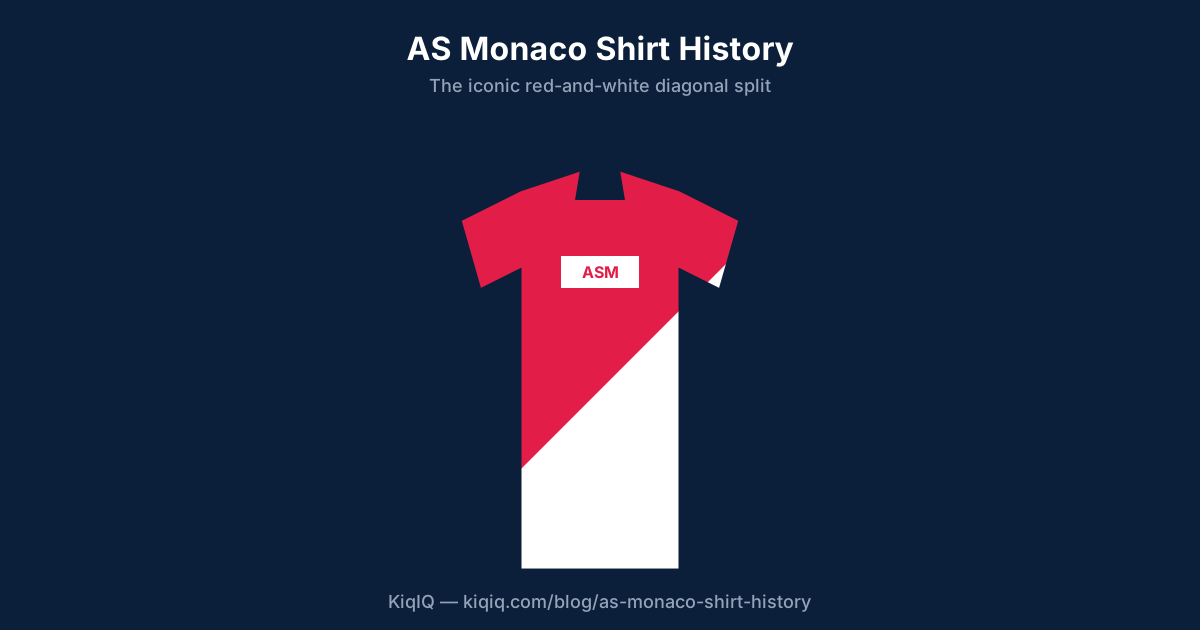
AS Monaco's home shirt is one of the most-immediately-recognisable in European football: a diagonal split, red on one side and white on the other, with the diagonal running from the shoulder down across the chest. The design references the flag of the principality of Monaco itself, which carries the same red-and-white colour scheme in horizontal bands. Across more than a century of Ligue 1 football, the diagonal-halves home shirt has been the conserved heritage anchor of the club's visual identity.
A 1924 founding and the principality colour scheme
Association Sportive de Monaco was founded on 23 August 1924, merging several smaller clubs from the principality. The red-and-white colour scheme derives directly from the flag of Monaco, which has been the flag of the principality (in its modern form of two horizontal bands of red over white) since 1881. The diagonal arrangement on the shirt is the club's distinctive visual signature: not vertical halves in the Athletic Bilbao sense, not horizontal stripes, but a diagonal split that gives the design a unique character among European top-flight kits.
The diagonal-halves design has been the conserved home pattern across most of the modern era. A current example is a 2024-25 AS Monaco away shirt, an example of how the away-kit slot operates as the design-experimental space alongside the heritage-protected diagonal home.
The 1980s Wenger era and the manufacturer-template period
Monaco's most-discussed modern era ran through the late 1980s and early 1990s under Arsène Wenger, then in his pre-Arsenal years as a young coach. Wenger's Monaco won the Ligue 1 title in 1987-88, narrowly missed several others, and produced a generation of players including George Weah, Jürgen Klinsmann, Glenn Hoddle, and Mark Hateley. The shirts of the Wenger era carry the diagonal home design with manufacturer templates of the period (Le Coq Sportif at points; other suppliers across the decade).
The 1980s and early 1990s Monaco templates are heritage shirts in the French collector market and increasingly in the broader international collector market. The combination of the distinctive diagonal design and the Wenger-era reference points (the players, the title win, the Champions League runs) gives this generation of shirts a recognised position in modern football kit collecting. Original match-worn examples surface only rarely; fan-issue reissues and reproductions have circulated through manufacturer retro lines.
The Stade Louis II era and Champions League runs
AS Monaco plays at the Stade Louis II, a 16,360-capacity stadium in the Fontvieille district of the principality. The stadium's location, distinctive arches, and the principality setting are part of the visual context that frames the club's kit identity. Monaco shirts photographed at the Stade Louis II across multiple decades read as the same club's identity, with the diagonal design as the visual anchor across each manufacturer cycle.
Monaco's modern Champions League runs (including the 2004 final under Didier Deschamps, lost to Porto in Gelsenkirchen) extended the international profile of the kit. The 2003-04 Champions League-final shirt is a recognised collector item in the broader European market, with the diagonal-halves design in the typical Kappa template of the era. Monaco also reached the 2017 Champions League semi-final, with the Kylian Mbappé and Bernardo Silva-era squads pushing the kit back into international visibility.
AS Monaco shirts are one of a small number of European top-flight kits with an instantly-recognisable distinctive design (the diagonal halves) that does not appear at any other major club. The visual distinctiveness is a heritage anchor of the kit's collector value.
Manufacturer rotation: Adidas, Puma, Macron, Kappa
Across the modern era Monaco has cycled through several manufacturers, including Adidas, Puma, Kappa, Macron, and more recently Nike, with each manufacturer retaining the diagonal red-and-white home design through their respective templates. Adidas's Monaco templates carried the Three Stripes detailing across the standard sleeve and short positions. Kappa's templates featured the brand's tighter Italian-fit cut. Macron's templates introduced the smaller-brand precision of the early 2010s.
The away-kit slot has been the design experimental space across each manufacturer era. Monaco away kits have ranged across all-blue (a nod to the broader French national palette), all-white, black-based variants, and reverse-diagonal designs that invert the red/white relationship. The 2024-25 away kit is representative of the modern range: a clear visual departure from the diagonal home design, the club crest as the consistent identity anchor.
The collector market and the international footprint
Monaco shirts have a meaningful international collector following, driven by the combination of design distinctiveness, the Wenger-era heritage, and the various Champions League runs that pushed the kit onto international television. The 1987-88 title-winning templates and the 2003-04 Champions League-final shirt are the heritage anchors of the modern Monaco collector market.
The broader French Ligue 1 kit-collecting market has expanded significantly over the 2010s and 2020s as international interest in French football grew (driven in part by the rise of PSG and the Mbappé era at Monaco then PSG). Monaco shirts sit alongside Marseille, PSG, and Saint-Étienne as the most-collected Ligue 1 historical kits, with the diagonal design giving Monaco a visual distinctiveness that the other major French clubs do not match.
- 1924 founding: AS Monaco formed through merger of principality clubs; red-and-white colours from the principality flag.
- 1987-88 Wenger title: Monaco win Ligue 1 under Arsène Wenger; heritage templates from this era.
- 2003-04 Champions League final: Lost to Porto in Gelsenkirchen; Kappa templates of the era.
- 2017 Champions League semi-final: Mbappé and Bernardo Silva-era squad.
- Manufacturer cycle: Le Coq Sportif, Adidas, Puma, Kappa, Macron, Nike across the decades.
- Stade Louis II: 16,360-capacity stadium in the Fontvieille district of the principality.
Frequently asked questions
- What colours does AS Monaco play in?
- AS Monaco play in red and white at home, arranged as a diagonal split with the red on one side of the diagonal and white on the other. The colours derive directly from the principality of Monaco's flag, which carries the same red-and-white scheme in horizontal bands. The diagonal arrangement is the club's distinctive visual signature and has been the conserved home design across most of the modern era of Ligue 1 football.
- Why does Monaco wear a diagonal shirt?
- The diagonal arrangement on the AS Monaco shirt is the club's distinctive visual signature, dating to the early modern era of the club's kit design. The colours (red and white) come directly from the principality of Monaco's flag, while the diagonal layout is the specific design choice that makes the shirt instantly recognisable in European football. The diagonal does not appear at any other major top-flight European club.
- When did Arsène Wenger manage Monaco?
- Arsène Wenger managed AS Monaco from 1987 to 1994, his major coaching role before his Japanese spell and his subsequent Arsenal career. Wenger's Monaco won Ligue 1 in 1987-88 and produced a generation of internationally-recognised players including George Weah, Jürgen Klinsmann, Glenn Hoddle, and Mark Hateley. The 1980s-90s Monaco templates from the Wenger era are heritage shirts in the French collector market.
- Where does AS Monaco play?
- AS Monaco plays at the Stade Louis II, a 16,360-capacity stadium in the Fontvieille district of the principality of Monaco. The stadium opened in 1985 and has hosted multiple UEFA Super Cup matches and the principality's other major football events. Monaco competes in Ligue 1, the top tier of French football, despite the club being based in the principality rather than in France itself, by historical agreement with the French football federation.
References
- AS Monaco, official club site — AS Monaco
- Football Shirt Culture Magazine, Ligue 1 archive — Football Shirt Culture
- Classic Football Shirts, Monaco editorial archive — Classic Football Shirts
- Ligue 1, AS Monaco club page — Ligue 1
- Museum of Jerseys, Ligue 1 design archive — Museum of Jerseys
- AS Monaco 2024-25 away shirt, Mystery Shirt Club (affiliate) — Mystery Shirt Club
Key terms in this article
Ask KiqIQ a follow-up
Get a live, data-driven answer powered by api-football + KiqIQ's Poisson model. Try one of these prompts or write your own.
Part of pillar
Football Culture
See every article in this knowledge pillar →
Related
Reviewed by a KiqIQ editor before publication. Spotted an error? Email editor@kiqiq.com — we follow our Corrections Policy.