
How to Wash Football Shirts with Printing
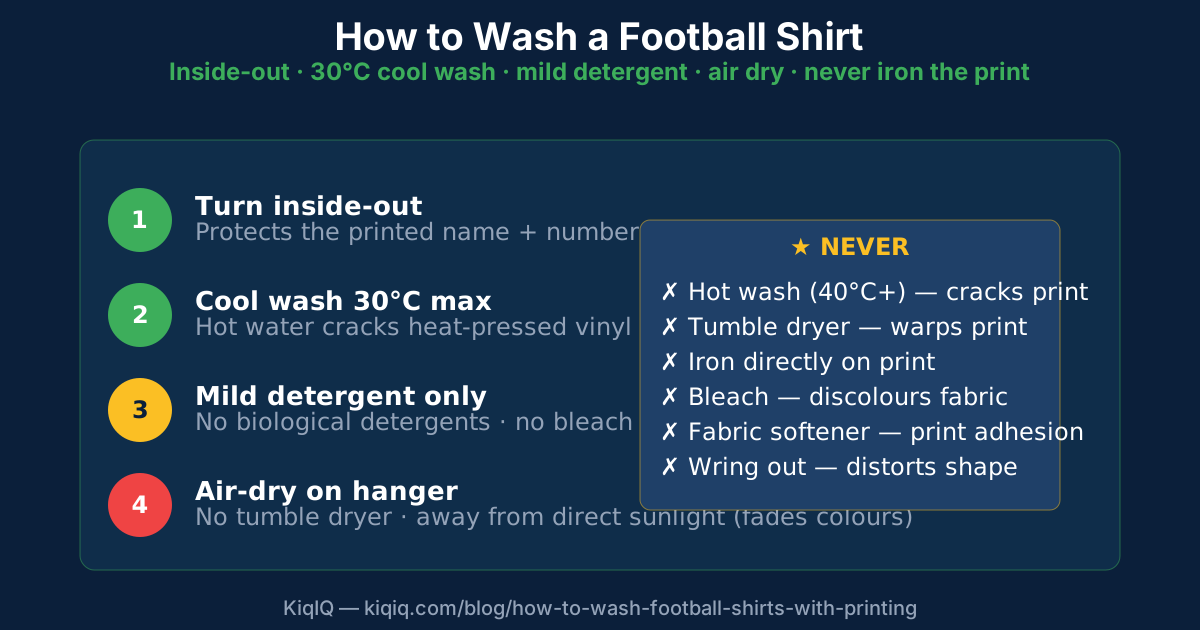
Wash football shirts inside-out, on a 30°C cool wash, with mild detergent. Avoid bleach, fabric softener, tumble dryers, and direct ironing on the print.
 Tap to enlarge
To preserve printing on football shirts, wash them inside-out at 30°C with mild detergent, air-dry away from direct sunlight, and never iron directly on the print. Avoid bleach, fabric softener, and tumble dryers — all of which damage heat-pressed names and numbers.
The 5-step washing routine
The single biggest determinant of how long a printed football shirt lasts is the wash routine. A shirt washed correctly will keep its name, number, and badge sharp for hundreds of cycles; a shirt washed carelessly will start cracking inside the first season. The routine is not complicated, but every step matters — skipping the inside-out step or bumping the temperature to 40°C will visibly accelerate the damage even if everything else is done right.
- Turn inside-out. Protects the print from agitation against other clothes.
- 30°C cool wash. Hot water cracks heat-pressed prints.
- Mild detergent only. Avoid biological detergents which break down print adhesives.
- No fabric softener / bleach. Damages print adhesion.
- Air-dry only. Tumble dryers' heat warps prints.
Why heat is the enemy
Almost every name, number, and sponsor logo on a modern football shirt is applied using a heat-press process — vinyl transfer for replica shirts, full sublimation for higher-end kit. Both methods rely on adhesive layers that were activated by heat in the first place, which means they can be re-activated (and damaged) by any subsequent heat exposure. Hot wash water softens the adhesive enough to deform it. Tumble dryer heat is worse because the dryer combines heat with tumbling agitation. A hot iron pressed directly onto the print is the worst single thing you can do — the print will lift or split immediately.
- Heat-pressed printing. Most modern names + numbers use heat-applied vinyl or sublimation transfer.
- Heat re-melts the adhesive. Hot wash, hot dryer, or direct iron contact can re-melt / crack the print.
- Cumulative damage. A few hot washes = print starts cracking. 10+ hot washes = print peeling.
When the shirt is heavily soiled
The 30°C rule covers normal use, but match-worn or training shirts sometimes need more work. Pre-soak in cool water with a small amount of mild detergent for 30-60 minutes before washing — this lifts most of the dirt without ever raising the temperature. For mud, let it dry fully and brush off the dried surface before washing; wet mud spreads, dry mud flakes off. For grass stains, dab with a paste of bicarbonate of soda and cool water and let it sit before the cool wash. Stubborn stains are still better than a cracked print, so resist the temptation to bump the temperature or add bleach to "just this one" wash.
Frequently asked questions
- How do you wash a football shirt with printing?
- Turn the shirt inside-out, wash at 30°C cool wash with mild detergent, avoid bleach and fabric softener, and air-dry away from direct sunlight. Never iron directly on the print. Most modern football-shirt names and numbers are heat-applied vinyl that cracks under hot water or hot dryers.
- Can you put a football shirt in the tumble dryer?
- No. Tumble dryers' heat warps and cracks heat-pressed printing on football shirts. Always air-dry on a hanger away from direct sunlight. Direct sunlight can also fade colours over time. Air-drying preserves both the print and the fabric colour.
- How do you iron a football shirt?
- Turn inside-out and iron from the back of the print only — never iron directly on the print itself. Use a low-heat setting (synthetic / 1-dot). Direct iron contact on heat-pressed names / numbers re-melts the adhesive and ruins the print. For best results, avoid ironing entirely; hang to dry instead.
References
- Mystery Football — Shirt Care — Mystery Football
- Castore — Wash Guide — Castore
Ask KiqIQ a follow-up
Get a live, data-driven answer powered by api-football + KiqIQ's Poisson model. Try one of these prompts or write your own.
Part of pillar
Fundamentals
See every article in this knowledge pillar →
Related
Reviewed by a KiqIQ editor before publication. Spotted an error? Email editor@kiqiq.com — we follow our Corrections Policy.