
Are Metal Studs Allowed in Football?
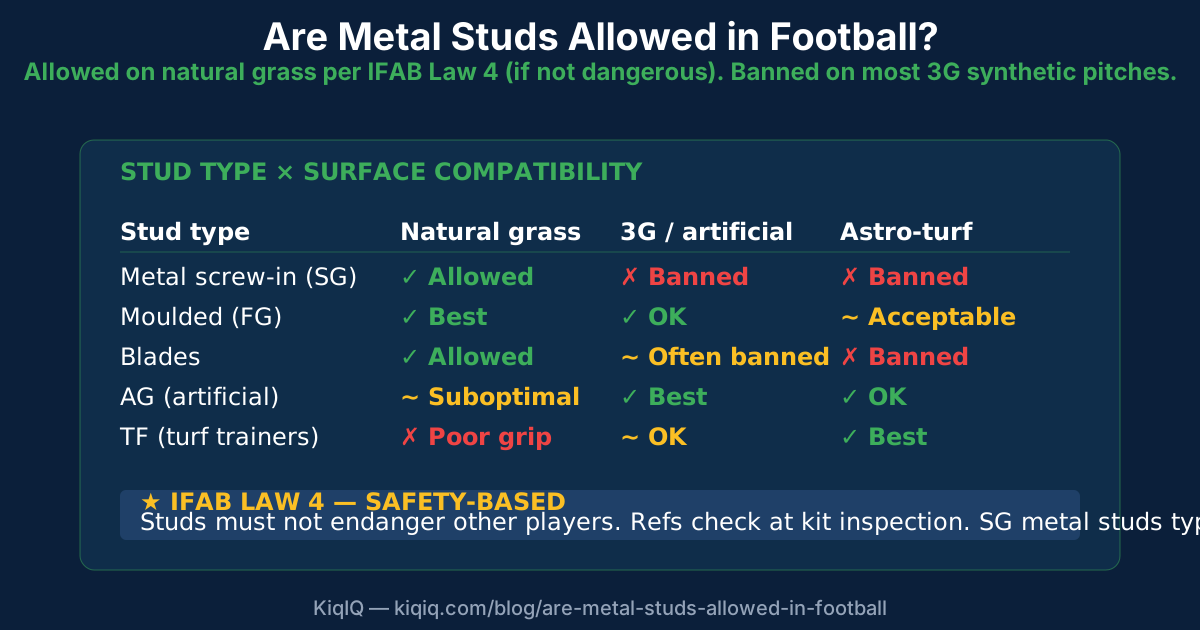
Metal studs are permitted in football per IFAB Law 4 if they are not dangerous. They are typically banned on 3G / 4G synthetic pitches but allowed on natural grass.
 Tap to enlarge
Metal studs are permitted in football per IFAB Law 4, provided they are not dangerous (sharp, broken, or excessively long). They are typically allowed on natural grass but banned on 3G / 4G synthetic pitches because they damage the artificial surface. Always check the venue's footwear policy.
IFAB Law 4 — Players' Equipment
- General rule. Equipment must not be dangerous to the player or others.
- Studs. No specific length limit; referees inspect for safety pre-match.
- Banned. Sharp, broken, or excessively worn studs.
- Decision. Referee's judgement at pre-match inspection.
Surface-specific rules
- Natural grass. Metal studs typically allowed (subject to referee inspection).
- 3G synthetic. Metal studs typically BANNED — damage the carpet, void warranties, shorten pitch lifespan.
- Indoor / 4G hybrid. Boot policy varies by venue; always check.
- Astroturf trainers. Required for 3G pitches in many leagues.
Why metal studs are useful
- Wet / soft natural grass. Metal screw-in studs penetrate deeper for better grip.
- Replaceability. Screw-in studs can be swapped for length variation by surface condition.
- Professional preference. Many Premier League players use 6-stud + 2-blade configurations with metal screw-in option.
Frequently asked questions
- Are metal studs allowed in football?
- Yes, per IFAB Law 4, metal studs are permitted in football provided they are not dangerous (sharp, broken, or excessively long). However, they are typically banned on 3G / 4G synthetic pitches because they damage the artificial surface. Always check the venue's footwear policy before play.
- Can you wear metal studs on a 3G pitch?
- Generally no. Most 3G pitch operators ban metal studs because they damage the synthetic carpet, shorten pitch lifespan, and may void manufacturer warranties. Acceptable footwear typically includes moulded studs, blades, or turf-specific trainers. The FA publishes a footwear policy for 3G pitches that local authorities and clubs follow.
- How long can football studs be?
- IFAB Law 4 doesn't specify a maximum stud length — only that studs must not be dangerous. The referee inspects boots pre-match. Practical maximum studs are 21mm (rugby-permissible); football boots typically use 12-14mm studs. Longer studs are typically only used in extremely soft / wet grass conditions.
References
- The FA — Footwear Policy 3G — The FA
- IFAB Law 4 — Players' Equipment — IFAB
- International Football Academy — Metal Studs — International Football Academy
Ask KiqIQ a follow-up
Get a live, data-driven answer powered by api-football + KiqIQ's Poisson model. Try one of these prompts or write your own.
Part of pillar
Fundamentals
See every article in this knowledge pillar →
Related
Reviewed by a KiqIQ editor before publication. Spotted an error? Email editor@kiqiq.com — we follow our Corrections Policy.