
5-2-1-2 Formation: Defensive Diamond with Two Strikers
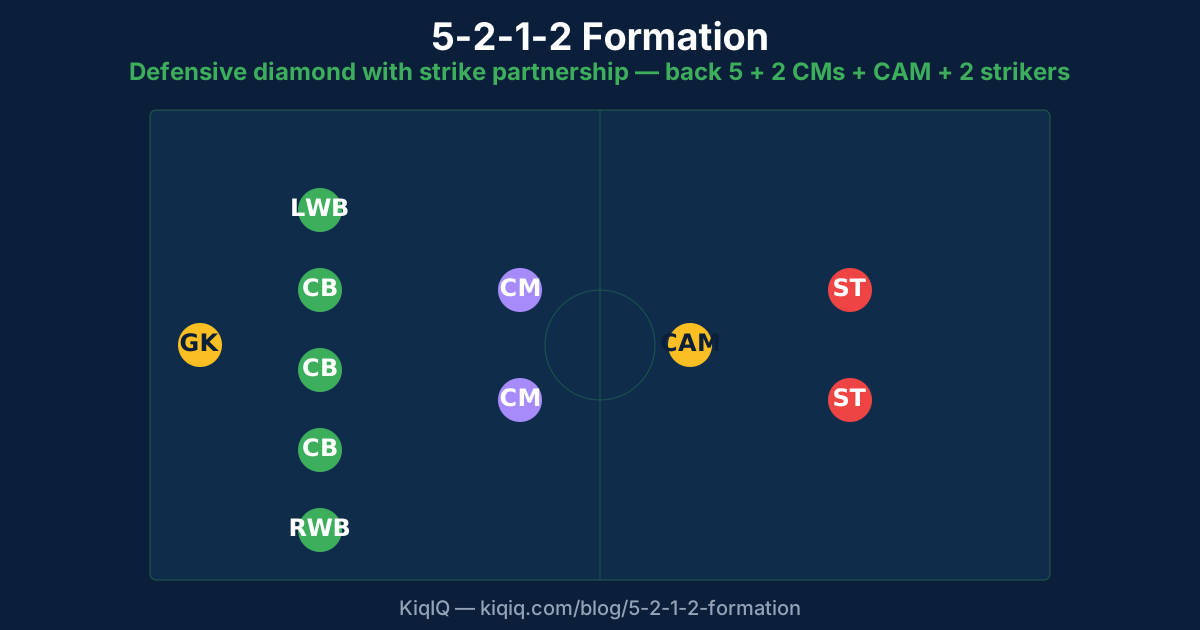
The 5-2-1-2 stacks five defenders, two CMs, a creative 10, and two strikers. It combines the defensive solidity of a back five with strike-partnership chemistry.
 Tap to enlarge
The 5-2-1-2 combines a back five (3 CBs + 2 wing-backs), 2 central midfielders, 1 attacking midfielder (the 10), and 2 strikers. It blends the defensive solidity of a five-man defence with the strike-partnership chemistry of a two-striker system, with a creative 10 connecting them.
The 5-2-1-2 structure
The 5-2-1-2 is one of the more unusual modern shapes because it pairs a defensive back five with a genuine two-striker front line, with a single creative midfielder asked to link them. The width that most modern shapes get from wingers comes here from the wing-backs, who have to cover the entire flank from edge of own box to opposition byline. The midfield base of two carries an unusually heavy workload — they are both the cover for those marauding wing-backs and the protection screen for the back three.
- 5 defenders. 3 CBs + 2 wing-backs.
- 2 CMs. Defensive cover + box-to-box.
- 1 CAM (the 10). Creative outlet; supports strikers.
- 2 strikers. Target + finisher pairing typically.
When it works
The 5-2-1-2 is a niche solution to a specific squad shape: a manager who has inherited two strikers worth playing together plus a number 10 talented enough to deserve a dedicated role, but no wide forwards. Outside that fairly narrow set of circumstances, the formation is hard to justify when 3-5-2 or 3-4-1-2 give similar defensive coverage with cleaner connections through midfield. It appears more often as an in-game adjustment than a starting shape — a manager protecting a lead might shift their 3-4-1-2 into a 5-2-1-2 by dropping the wing-backs deeper.
- Squad has two complementary strikers + a creative 10. Rare modern combination.
- Defending leads with attacking outlets. Five defenders absorb pressure; 10 + 2 strikers counter.
- Football Manager-popular formation. More common in simulation than top-flight reality.
Trade-offs to plan for
The defining weakness of 5-2-1-2 is the central midfield two against opposition shapes that load that area. Against a 4-3-3 the home side's midfield two is outnumbered three to two, which leaves the 10 having to drop deep to help and pulls them away from the strike pair they are meant to be supplying. The other recurring problem is the strikers losing connection to the rest of the team when the wing-backs cannot get high enough to provide width, leaving the front two isolated against three centre-backs. Both issues are why coaches usually default to 3-5-2 or 3-4-1-2 when the squad shape allows.
Frequently asked questions
- What is the 5-2-1-2 formation?
- 5-2-1-2 is a football formation with 1 GK, 5 defenders (3 CBs + 2 wing-backs), 2 central midfielders, 1 attacking midfielder, and 2 strikers. It combines defensive solidity of a back five with strike-partnership chemistry.
- How is 5-2-1-2 different from 5-3-2?
- 5-2-1-2 splits the 3 central midfielders into 2 CMs + 1 CAM (creative 10). 5-3-2 has 3 CMs in a flat or near-flat band. 5-2-1-2 has more attacking creativity through the 10; 5-3-2 has more midfield defensive numbers.
- Is 5-2-1-2 used in modern professional football?
- Rarely as a starting formation. More common as a defensive variant when teams switch from 3-5-2 / 3-4-1-2 to defend a lead, with wing-backs dropping deeper. The formation is more common in Football Manager and other simulations than in top-flight reality.
References
- Footballizer — 5-2-1-2 — Footballizer
- IFAB Laws of the Game — IFAB
- The Coaches' Voice — Formations — Coaches' Voice
Ask KiqIQ a follow-up
Get a live, data-driven answer powered by api-football + KiqIQ's Poisson model. Try one of these prompts or write your own.
Try the calculators
Apply the concepts from this article with KiqIQ's free calculators.
Part of pillar
Tactical Intelligence
See every article in this knowledge pillar →
Related
Reviewed by a KiqIQ editor before publication. Spotted an error? Email editor@kiqiq.com — we follow our Corrections Policy.