
3-2-4-1 Formation: Pep Guardiola's Modern Hybrid
The 3-2-4-1 is the in-possession shape Pep Guardiola's Manchester City evolves into from a 4-3-3. Three CBs, double pivot, four attackers, lone striker. We break it down.
 Tap to enlarge
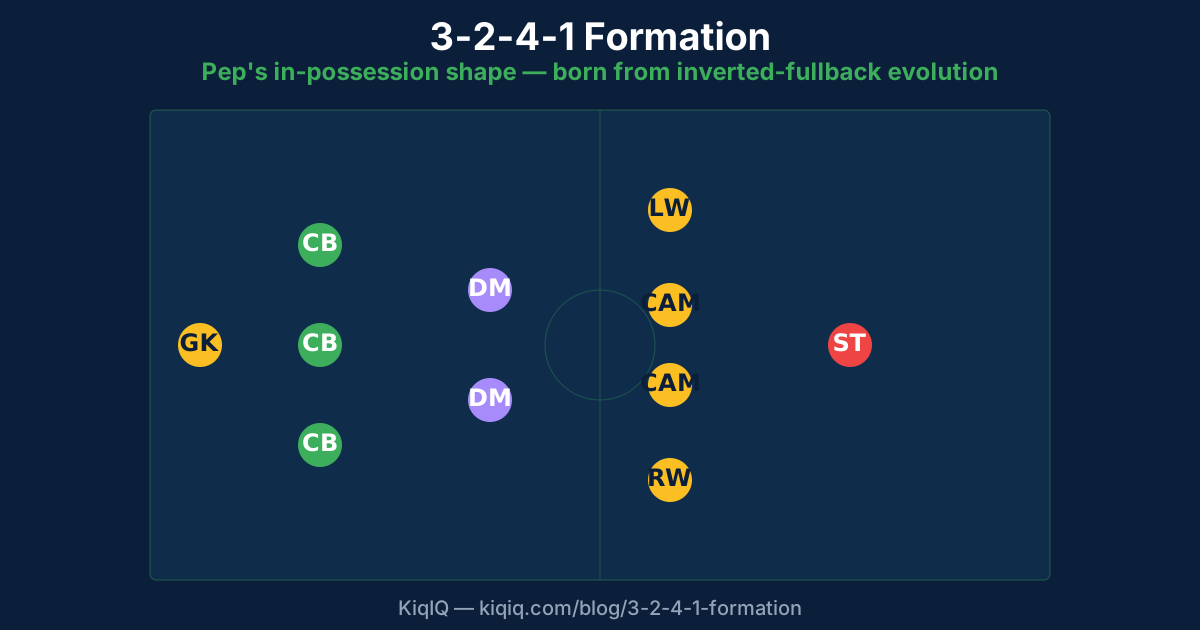
The 3-2-4-1 is the in-possession shape Pep Guardiola's Manchester City typically evolves into from a 4-3-3 baseline. Three centre-backs (one full-back inverts into the centre), a double pivot, four attacking players (two wingers + two CAMs), and a lone striker. It blends 4-3-3's pressing intensity with 3-4-3's possession superiority.
The 3-2-4-1 structure
The 3-2-4-1 is best understood as an in-possession pattern rather than a starting formation. Most teams that use it line up nominally as a 4-3-3 and only morph into the 3-2-4-1 shape once they have the ball. The defining mechanism is the inverted full-back — typically a right-back stepping into central midfield rather than overlapping down the touchline — which transforms the team's shape from four-at-the-back into a 3+2 build-up base with four attackers ahead of it.
- 3 CBs. Two normal CBs + one inverted full-back tucking in.
- Double pivot. Two CDMs forming the second line.
- 4 attackers. Two wingers + two CAMs (or two wingers + one CAM + one inside-forward).
- Lone striker. Target / pressing forward.
How it forms from 4-3-3
The transition from 4-3-3 to 3-2-4-1 happens fluidly during build-up. The team starts in their defensive shape with a back four. As the goalkeeper or a centre-back picks up the ball, one full-back drifts inside instead of pushing forward — this single movement reconfigures the entire pitch. The remaining three defenders close the back-line gap, the inverted full-back partners the holding midfielder to form a double pivot, and the front four shift upward and wider to occupy the attacking spaces vacated by the rotation.
- Out of possession: 4-3-3. Standard pressing shape.
- In possession: full-back inverts. RB or LB tucks into central midfield, joining the CDM.
- Double pivot emerges. Inverted FB + original 6 form the double pivot.
- Back three behind them. Two CBs + the other FB hold the defensive line.
- Front four advance. Wingers high + CAMs push up + striker holds high.
Why Pep uses it
Guardiola's rationale for the 3-2-4-1 is fundamentally about pressing resistance and attacking overloads. Against a typical 4-4-2 press, the 3+2 base creates a five-versus-four advantage in the first two lines — there is always a spare passer. Against a 4-3-3 press, the double pivot pulls one of the front three out of position to follow them, opening passing lanes into the four-man attacking line. And in the final third, having four players supporting the striker means every cross or cutback has multiple targets, which is why City's shot volume and chance quality have been so consistently elite under this shape.
- Build-up safety. 3 CBs + 2 CDMs = 5 players for short build-up against any press.
- Attacking numbers. 5 players in attacking third (4 + striker) overwhelm most defensive shapes.
- Press resistance. The 3+2 base structure is very hard to press effectively.
- Manchester City title runs. 6 Premier League titles in 7 seasons (2017-2023) built on this evolution.
Frequently asked questions
- What is the 3-2-4-1 formation?
- 3-2-4-1 is a football formation with 3 centre-backs, 2 defensive midfielders (double pivot), 4 attacking players, and 1 striker. It is the in-possession shape Pep Guardiola's Manchester City typically evolves into from a 4-3-3 baseline, via an inverted full-back tucking into central midfield.
- How does 3-2-4-1 form from 4-3-3?
- Out of possession the team plays 4-3-3. In possession one full-back inverts into central midfield, joining the original CDM to form a double pivot. The remaining two CBs + the other full-back form the back three. The front line advances to create a 4-attacker shape behind the striker.
- Why does Pep Guardiola use 3-2-4-1?
- Three reasons: (1) build-up safety — 3 CBs + 2 CDMs form a 5-player base that's nearly impossible to press effectively; (2) attacking numbers — 5 players in the final third overwhelm most defensive shapes; (3) tactical fluidity — the team can switch back to 4-3-3 in defensive transitions seamlessly.
References
- The Coaches' Voice — 3-2-4-1 — Coaches' Voice
- Breaking The Lines — Pep's 3-2-4-1 — Breaking The Lines
- IFAB Laws of the Game — IFAB
Key terms in this article
Ask KiqIQ a follow-up
Get a live, data-driven answer powered by api-football + KiqIQ's Poisson model. Try one of these prompts or write your own.
Try the calculators
Apply the concepts from this article with KiqIQ's free calculators.
Part of pillar
Tactical Intelligence
See every article in this knowledge pillar →
Related
Reviewed by a KiqIQ editor before publication. Spotted an error? Email editor@kiqiq.com — we follow our Corrections Policy.