
3-2-3-1-1 Formation: Layered Back Three with a Withdrawn Striker
The 3-2-3-1-1 layers a back three behind a double pivot, a three-band attacking line, a #10, and a lone striker. A rare modern variant — used to break down deep blocks.
 Tap to enlarge
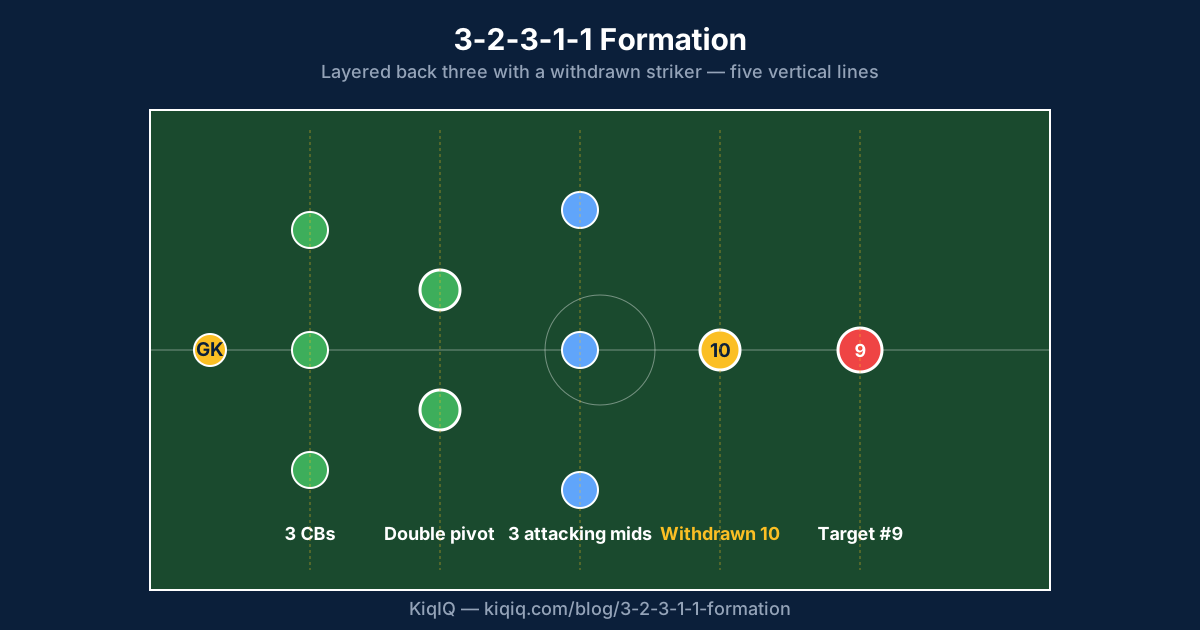
The 3-2-3-1-1 is a rare modern formation built on five clearly-separated vertical lines: a back three, a double pivot, a three-band attacking line, a withdrawn second striker (#10 / false 9), and a target striker. It's a possession-dominant shape designed to break down organised low blocks by giving the team multiple between-the-lines passing options without sacrificing defensive structure.
The 3-2-3-1-1 structure
- 3 CBs. Standard back three. Wide CBs can step into midfield to create temporary 3-1-3-3 shapes in possession.
- 2 CDMs (double pivot). Sit ahead of the back three, alternate dropping into build-up.
- 3 attacking midfielders. Two wide creators flanking a central #8. Provide width and half-space occupation.
- 1 withdrawn striker (the second 1). Drops between the lines as a #10 / false 9. Receives between opposition midfield and defence.
- 1 striker. Holds the highest line, occupies the centre-backs, finishes the moves the withdrawn striker creates.
Why coaches use 3-2-3-1-1
The defining feature is the five-line spacing. Most opposition mid-blocks are organised in two horizontal bands (defence + midfield); a five-line attacking shape forces them to either compromise compactness (gaps between bands) or commit too many bodies to mark the withdrawn striker (vacated zones).
It's a chance-creation shape, not a transitional one. Coaches use it when the opposition is set up to invite possession and the home side needs to hold the ball for long phases looking for a positional gap.
When the 3-2-3-1-1 works
- Vs deep low blocks. The five-line spacing pulls the block apart in ways a 4-3-3 cannot.
- Possession-dominant home matches. Long phases of possession reward the patience the shape demands.
- Squad has a true #10 + a target #9. The second-striker / withdrawn-striker role is non-trivial — it requires a player who reads pressure and can both finish and create.
- Build-up under pressure. The double pivot + back three gives 5 secure passing options in build-up.
Strengths and weaknesses
- Strength — chance creation depth. Five attacking lanes (two wide ATs + central AT + #10 + #9) overload most defensive blocks.
- Strength — defensive base. Three CBs + double pivot is structurally very secure on transitions.
- Strength — between-the-lines reception. The withdrawn striker is the constant overload tactic against zonal mid-blocks.
- Weakness — width via inversion only. No wing-backs. Width relies on the wide attacking mids drifting wide, leaving full-back zones uncovered if attacks break down.
- Weakness — counter-attack vulnerability. Five players ahead of the double pivot leaves the back three exposed to direct opposition transitions.
- Weakness — squad-fit narrow. Needs a #10 capable of pressing and a #9 willing to play with their back to goal — niche profiles.
How it differs from related shapes
- vs 3-2-3-2. The 3-2-3-2 plays a strike partnership; the 3-2-3-1-1 stretches the strike duo vertically with a #10 + #9. Different chance-creation logic.
- vs 3-4-3. 3-4-3 uses wing-backs for width; 3-2-3-1-1 inverts that responsibility into the wide attacking mids.
- vs 4-2-3-1. Same two-and-three midfield bands plus a #10, but a back three replaces the back four — solidity vs full-back attacking output trade-off.
Frequently asked questions
- What is a 3-2-3-1-1 formation?
- The 3-2-3-1-1 is a possession-dominant formation with five distinct vertical lines: three centre-backs, a double pivot, three attacking midfielders, a withdrawn second striker (#10 / false 9), and a target striker. The five-line spacing is designed to pull apart organised defensive blocks.
- When should a team use 3-2-3-1-1?
- Against deep low blocks in possession-dominant home matches, when the squad has a genuine #10 plus a target #9. The shape rewards long phases of patient possession by creating multiple between-the-lines reception zones simultaneously. It is rarely used as an away or transition shape because of counter-attack exposure.
- How is 3-2-3-1-1 different from 3-2-3-2?
- Both run a back three plus double pivot. The 3-2-3-2 plays a strike partnership at the same height, prioritising chemistry between the two strikers. The 3-2-3-1-1 splits the front two vertically — a #10 receiving between the lines and a #9 holding the highest line — prioritising chance creation through layered attacking depth.
- What are the weaknesses of 3-2-3-1-1?
- No wing-backs means width depends entirely on the wide attacking midfielders drifting wide; if they don't, the full-back zones go uncovered. Five attacking-line players leaves the back three exposed on counter-attacks. The shape also requires niche player profiles — a #10 willing to press and a #9 happy to play with back to goal — that are hard to staff.
References
- Spielverlagerung — modern back-three tactical analyses — Spielverlagerung
- The Athletic — formation column on five-line shapes — The Athletic
- StatsBomb — Positional Play data and territorial dominance — StatsBomb
Key terms in this article
Ask KiqIQ a follow-up
Get a live, data-driven answer powered by api-football + KiqIQ's Poisson model. Try one of these prompts or write your own.
Part of pillar
Tactical Intelligence
See every article in this knowledge pillar →
Related
Reviewed by a KiqIQ editor before publication. Spotted an error? Email editor@kiqiq.com — we follow our Corrections Policy.