
3-2-3-2 Formation: Three at the Back with Strike Partnership
The 3-2-3-2 deploys three CBs, a double pivot, three attacking midfielders, and two strikers. We cover the structure and how it differs from related back-three systems.
 Tap to enlarge
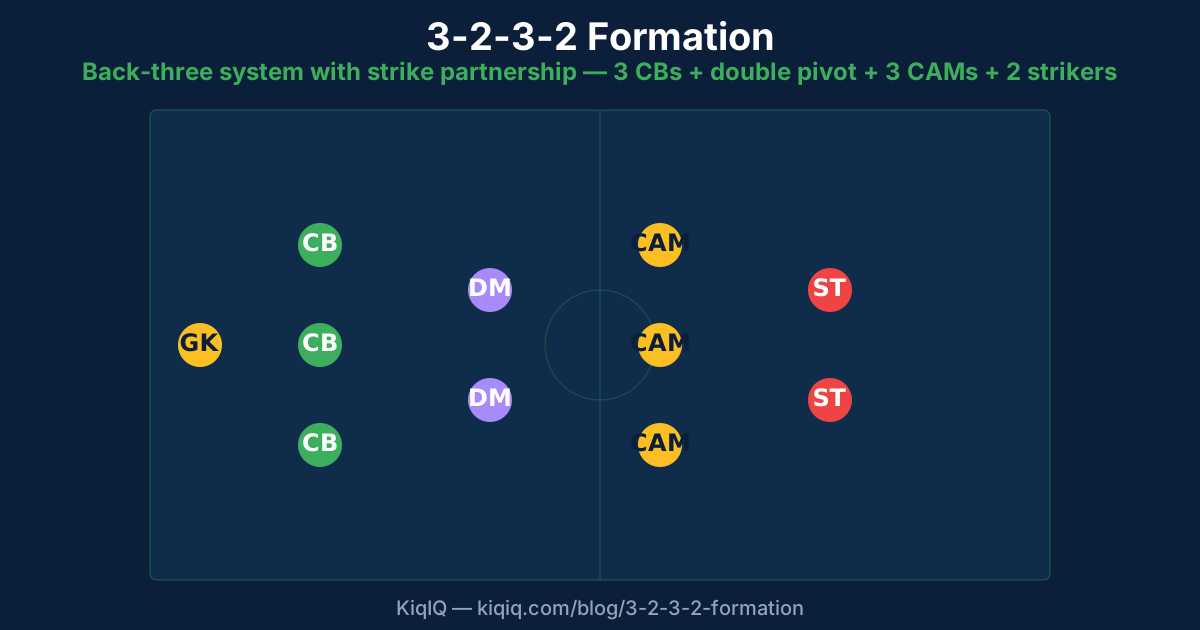
The 3-2-3-2 deploys three centre-backs, a double pivot of two defensive midfielders, three attacking midfielders, and two strikers. It is a back-three formation that retains strike-partnership chemistry — a rare modern combination of three-CB defensive solidity with two-striker attacking dynamics.
The 3-2-3-2 structure
- 3 CBs. Standard back three.
- 2 CDMs. Double pivot screening the back three.
- 3 attacking midfielders. Two wide creators + 1 central CAM.
- 2 strikers. Strike partnership.
When 3-2-3-2 works
- Squad has two complementary strikers + a strong midfield base. Allows back-three solidity without sacrificing strike pairing.
- Possession-dominant teams. Double pivot + 3 attacking mids = strong possession base.
- Vs 4-3-3 / 4-2-3-1 opposition. The shape matches up well centrally.
Strengths + weaknesses
- Strength. Three CBs + double pivot = very secure defensive base.
- Strength. Strike partnership preserved — two strikers up top.
- Weakness. Width depends entirely on the wide attacking midfielders; no wing-backs.
- Weakness. Asymmetric use of personnel — five attackers in top two bands can over-commit.
Frequently asked questions
- What is the 3-2-3-2 formation?
- 3-2-3-2 is a football formation with 1 GK, 3 centre-backs, 2 defensive midfielders (double pivot), 3 attacking midfielders, and 2 strikers. It combines back-three defensive solidity with two-striker attacking chemistry.
- How is 3-2-3-2 different from 3-5-2?
- 3-5-2 has 5 midfielders (typically 2 wing-backs + 3 CMs) and 2 strikers. 3-2-3-2 has 2 CDMs + 3 attacking midfielders + 2 strikers. 3-2-3-2 has more attacking depth in the middle band; 3-5-2 has more midfield numbers and natural flank width via wing-backs.
- Is 3-2-3-2 used in modern professional football?
- Rarely as a starting formation. More common as a tactical variant of 3-5-2 or 3-4-2-1 in specific match contexts. The structure is more popular in Football Manager simulations than in top-flight reality.
References
- The Higher Tempo Press — 3-2-3-2 — The Higher Tempo Press
- IFAB Laws of the Game — IFAB
- Football Lineups — 3-2-3-2 — Football Lineups
Key terms in this article
Ask KiqIQ a follow-up
Get a live, data-driven answer powered by api-football + KiqIQ's Poisson model. Try one of these prompts or write your own.
Try the calculators
Apply the concepts from this article with KiqIQ's free calculators.
Part of pillar
Tactical Intelligence
See every article in this knowledge pillar →
Related
Reviewed by a KiqIQ editor before publication. Spotted an error? Email editor@kiqiq.com — we follow our Corrections Policy.