
Most coaching sessions default to central patterns, while the flanks decide the game.
By David Findlay, Founder of KiqIQ.
Quick Answer: The flanks in football are the wide vertical zones on either side of the pitch, running from the defensive third to the attacking third. Players in these zones create width, stretch opposition defensive shape, and generate crossing and combination opportunities that central attackers convert.
Definition: The flanks in football refer to the wide areas on the left and right sides of the pitch, running parallel to the touchlines from the defensive third through to the final third. These zones are occupied by wingers, wide midfielders, wing-backs, and full-backs. Teams use the flanks to stretch a defensive block, deliver crosses into the penalty area, and create overloads in wide areas before switching play or cutting inside.
Key point: The flanks are not simply wide corridors. They are the primary mechanism for stretching a defensive block and creating the space central attackers need to operate effectively.
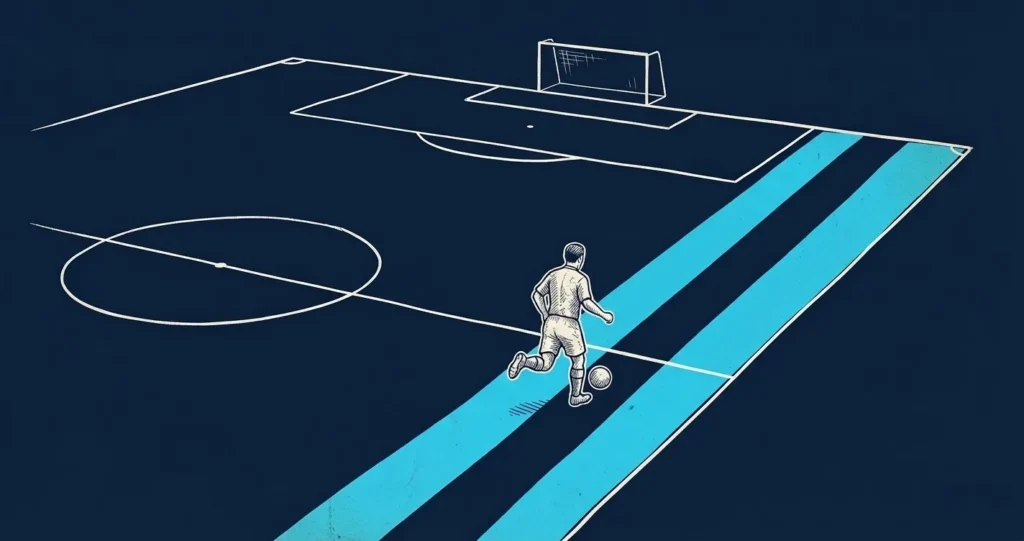
What Are the Flanks in Football?
The flanks are the left and right wide zones of a football pitch. No official boundary defines them in the Laws of the Game, but tactical convention divides the pitch into three vertical lanes: a central lane and a flank lane on each side.
The flank zone typically begins at the touchline and extends inward to approximately the width of the penalty area. This creates a wide corridor on each side that runs the full length of the pitch from goal line to goal line.
In modern football, the flanks are central to how teams create attacking opportunities. A defence compresses centrally by default. Attacking from wide positions forces that defensive shape to stretch, opening gaps in central areas that forwards and attacking midfielders exploit.
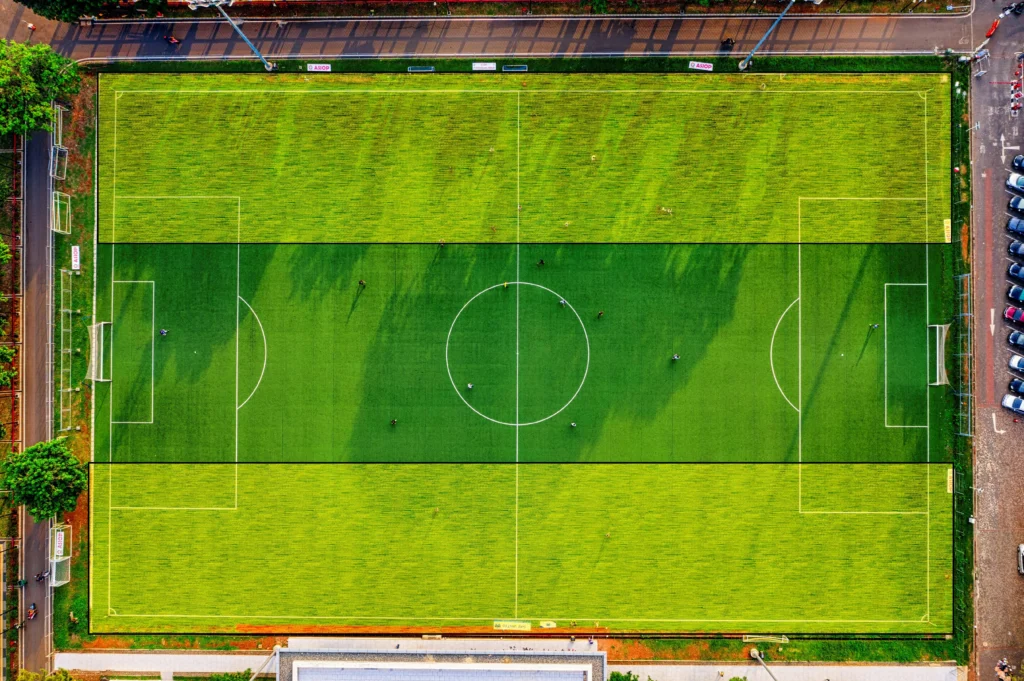
Left Flank and Right Flank in Football
The left flank and right flank serve the same structural purpose but present different tactical dynamics depending on the players deployed there and the opposition shape.
The right flank is typically occupied by a right-footed winger or a right full-back. When a left-footed player is placed on the right flank, they can cut inside onto their stronger foot, creating a different threat than a wide player who stays out and crosses.
The left flank follows the same logic in reverse. A right-footed player on the left flank will look to cut inside, while a natural left-footer tends to hug the touchline and deliver from wide.
The decision to deploy inverted wingers or orthodox wide players on each flank is one of the most significant tactical choices a manager makes. It shapes how the entire attacking structure functions.
The 6 Core Flank Roles in Football
Multiple positional roles operate across the flanks. Each carries distinct responsibilities depending on the formation and tactical plan in use. The table below maps the six primary flank roles to their zone, function, and system context.
| Role | Formation Context | Primary Zone | Key Responsibility |
|---|---|---|---|
| Right Winger | 4-3-3 or 4-2-3-1 | Right attacking flank | Create width and deliver crosses or cut inside to shoot |
| Left Winger | 4-3-3 or 4-2-3-1 | Left attacking flank | Create width and deliver crosses or cut inside to shoot |
| Right Full-Back | 4-3-3 or 4-4-2 | Right defensive and wide midfield flank | Provide defensive cover and support attacking width by overlapping |
| Left Full-Back | 4-3-3 or 4-4-2 | Left defensive and wide midfield flank | Provide defensive cover and support attacking width by overlapping |
| Right Wing-Back | 3-5-2 or 5-3-2 | Full right flank from box to box | Cover the entire right flank across both defensive and attacking phases |
| Left Wing-Back | 3-5-2 or 5-3-2 | Full left flank from box to box | Cover the entire left flank across both defensive and attacking phases |
The distinction between a winger and a wing-back matters most in defensive transitions. A winger in a 4-3-3 can afford to focus primarily on attacking output. A wing-back in a 3-5-2 must track back to form a back five, meaning fitness load and positional discipline are far more demanding.
How Teams Use the Flanks Tactically
Teams use the flanks in two broad ways: as a primary route to goal, or as a mechanism to draw the defence wide before playing through the centre.
Direct flank play involves getting the ball quickly to a wide player who can beat their marker, reach the byline, and deliver a cross into the penalty area. This approach depends on the wide player’s ability to win individual duels and the quality of central players arriving into crossing zones.
Positional flank play uses wide players to stretch the defence without necessarily requiring them to cross. The wide player pins the opposing full-back, which creates space for an overlapping full-back or an inside run from a central midfielder. The ball may never reach the byline. The flank is used to create space, not always to deliver from it.
Switching play from one flank to the other is one of the most effective ways to expose defensive shape. When a defence shifts to press one side, a quick switch to the opposite flank finds a wide player with space and time. This principle underpins most modern positional systems at elite level.
Switching Flanks to Exploit Space
When a team circulates possession on one flank, the opposition defensive block shifts towards that side. The far-side flank becomes temporarily undefended or underloaded. A quick switch of play to that flank creates a numerical advantage for the attacking team.
This is one of the foundational principles of wide play. Coaches at all levels teach flank switching as a core mechanism for breaking compact defensive blocks. Youth players learning positional awareness are taught to scan for the far-side option as a first principle of possession-based football.
For the switch to work effectively, the far-side wide player must hold a wide, high position that stretches the defence before the switch arrives. If they tuck infield prematurely, the space collapses and the switch loses its value.
Flanks Across Different Formations
The role of the flanks shifts significantly depending on the formation deployed.
In a 4-3-3, the two wingers provide the primary width. Full-backs overlap to create a two-versus-one on each flank. The central midfielder may arrive late into flank areas to support combination play.
In a 4-4-2, the wide midfielders carry responsibility for both defending their flank and supporting attacks down the line. Their workload across both phases is high.
In a 3-5-2, the wing-backs are the only dedicated wide players. They cover the entire flank from their own penalty area to the opposition final third. This demands high fitness levels and strong positional discipline.
In a 4-2-3-1, the wide attacking midfielders tend to play inside the flank rather than on the touchline, leaving the full-backs to provide width. The flanks are used to create space centrally rather than to deliver crosses directly.
Flank in Football Meaning: Key Summary
The flank in football means the wide zone on the left or right side of the pitch. The term covers both the physical area and the tactical concept of using width to attack. A player described as operating on the flank plays in the wide corridor between the touchline and the penalty area, whether in a defensive, transitional, or attacking capacity.
Understanding the flanks in football also means recognising that width is not an end in itself. Width is a tool used to create space elsewhere. The flanks are most valuable when they force a defensive reaction that opens central channels or creates overloads in the attacking third.
Frequently Asked Questions
What is a flank in football?
A flank in football is the wide zone on either side of the pitch, running from the defensive third to the attacking third along the touchline. Players operating there include wingers, full-backs, and wing-backs.
What is the right flank in football?
The right flank in football is the wide zone on the right side of the pitch from the perspective of the team in possession. It is typically occupied by a right winger, right midfielder, or right full-back depending on the formation.
What does flank mean in football?
Flank in football refers to the wide areas on the left and right sides of the pitch. Teams use these areas to stretch defensive shape, deliver crosses, and switch play to exploit space on the far side of the pitch.
Are flanks the same as wings in football?
Yes. In football, the terms flank and wing are used interchangeably. Both refer to the wide zones on either side of the pitch and the players who operate there.
What is an inverted winger on the flank?
An inverted winger is a wide player deployed on the opposite flank to their stronger foot. A right-footed player on the left flank cuts inside onto their right foot to shoot or pass, rather than staying wide to cross.