
When a goalkeeper receives a red card, the team must play with 10 players and designate an outfield player to take over goalkeeping duties, or substitute the goalkeeper if they have substitutions remaining.
By David Findlay, Founder of KiqIQ.
Quick Answer: The goalkeeper is sent off, cannot be replaced by another goalkeeper unless via substitution, and an outfield player must assume goalkeeping duties whilst the team plays with one fewer player.
Definition: A goalkeeper red card is a dismissal under Law 12 of the Laws of the Game that requires the player to leave the field immediately, forcing their team to continue with 10 players and a replacement goalkeeper selected from those on the pitch.
Key point: Most coverage explains what happens but fails to address the tactical decision tree: whether to sacrifice an outfield player through substitution or accept a weaker goalkeeper to maintain team balance.
Immediate Consequences of a Goalkeeper Red Card
When a goalkeeper receives a red card, Law 12 of the Laws of the Game mandates immediate dismissal from the field of play. The player must leave the vicinity of the pitch and technical area. The team cannot replace the dismissed goalkeeper with a substitute goalkeeper unless they use one of their permitted substitutions to bring on a replacement keeper whilst removing an outfield player.
If the team has no substitutions remaining, or chooses not to use one, an outfield player on the pitch must assume goalkeeping duties. This player must wear a goalkeeper jersey to distinguish them from outfield players, but they are not required to have goalkeeping experience or equipment beyond the shirt.
The team continues with 10 players for the remainder of the match. This numerical disadvantage applies whether the red card was issued for a second yellow card offence or a straight red card for serious foul play, violent conduct, or denying an obvious goalscoring opportunity.
Substitution Decision and Tactical Impact
The critical decision facing the team is whether to use a substitution to bring on a specialist goalkeeper. If substitutions remain available, the team can replace an outfield player with a goalkeeper from the bench. This maintains goalkeeping quality but removes an outfield player, weakening attacking or defensive structure depending on who is sacrificed.
If no substitutions are available, or if the team prioritises maintaining outfield strength, an outfield player must go in goal. Teams typically select a player with some goalkeeping experience, often a defender or a player who has trained as a backup goalkeeper in youth football. The choice depends on match context, scoreline, time remaining, and the importance of maintaining defensive or attacking personnel.
The tactical cost is not just the missing player but the disruption to team shape. Removing a key midfielder or forward to accommodate a substitute goalkeeper can collapse pressing structures or transition patterns. Conversely, leaving an inexperienced outfield player in goal creates an exploitable weakness that opponents will target with long-range efforts and set pieces.
Red Card Scenarios During Play
Red cards for goalkeepers typically occur in three scenarios: denying an obvious goalscoring opportunity outside the penalty area, serious foul play, or violent conduct. The most common is DOGSO, where a goalkeeper handles the ball outside their area or commits a foul that prevents a clear goalscoring chance.
When the red card is issued for DOGSO inside the penalty area, the laws distinguish between deliberate fouls and genuine attempts to play the ball. If the goalkeeper commits a foul whilst attempting to play the ball and a penalty is awarded, they receive only a yellow card. If the foul involves no attempt to play the ball, such as holding or pushing, the goalkeeper is sent off and a penalty is awarded.
This creates a compounding problem: the team faces both a red card and a penalty kick. The replacement goalkeeper, whether a substitute or an outfield player, must immediately face a penalty without warm-up or preparation. This scenario heavily favours the attacking team and often determines the match outcome.
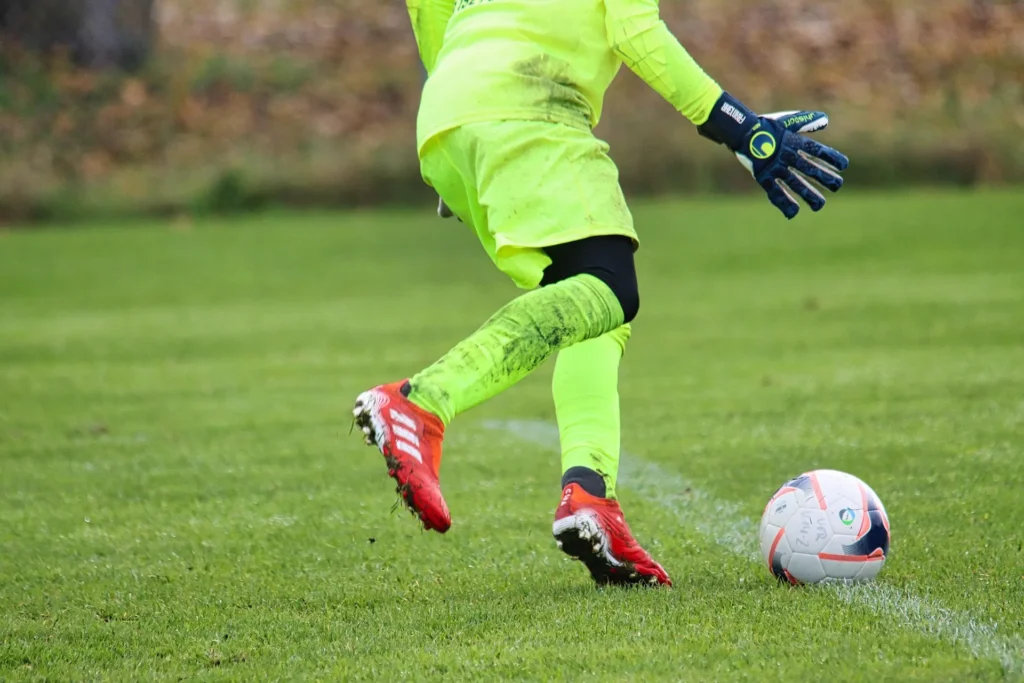
Penalty Shootout Red Card Rules
If a goalkeeper receives a red card during a penalty shootout, the rules differ from normal play. The goalkeeper is sent off, and one of the outfield players on the pitch must become the goalkeeper. However, the opposing team must withdraw one of their players to equalise the number of participants in the shootout.
This rule prevents the offending team from gaining an advantage by having more penalty takers. The team that lost their goalkeeper selects an outfield player to take over goalkeeping duties, whilst the opposing team nominates a player to be withdrawn from taking penalties. Both teams then continue the shootout with equal numbers.
The withdrawn player from the opposing team is typically a weaker penalty taker, but the team losing their goalkeeper faces the greater disadvantage of having an outfield player attempting to save penalties. This situation is rare but has occurred in professional matches, most notably in cup competitions where matches are decided by shootouts.
Historical Examples and Outcomes
Several high-profile matches illustrate the impact of goalkeeper red cards. In the 2006 World Cup final, France goalkeeper Fabien Barthez was not sent off, but the scenario has occurred in domestic leagues and cup competitions where teams have been forced to use outfield players in goal.
The outcome depends heavily on timing. A red card in the first half leaves the team vulnerable for over 45 minutes, often resulting in defensive collapse. A red card in the final 10 minutes allows the team to adopt ultra-defensive tactics and survive with an outfield player in goal. The scoreline at the time of the red card also determines whether the team prioritises defence or accepts the risk of conceding further goals whilst chasing an equaliser.
Statistical analysis shows that teams playing with 10 men and a replacement goalkeeper win fewer than 10% of matches, draw approximately 20%, and lose 70%. The disadvantage is greater than a standard red card because the goalkeeping position cannot be adequately covered by an outfield player, even one with some experience.
Back-Pass Rule and Indirect Free Kick Situations
Goalkeeper red cards are distinct from back-pass rule violations, which result in an indirect free kick rather than a red card. The back-pass rule, introduced in 1992, prohibits goalkeepers from handling the ball when it has been deliberately kicked to them by a teammate. Violations result in an indirect free kick from the point of the offence, even inside the penalty area.
Similarly, if a goalkeeper holds the ball for more than six seconds, an indirect free kick is awarded. However, as of recent law changes, holding the ball for more than eight seconds now results in a corner kick rather than an indirect free kick. These technical violations do not result in red cards unless combined with other offences such as dissent or time-wasting after a caution.
The distinction matters because indirect free kicks inside the penalty area are rare and require the ball to touch another player before a goal can be scored. This reduces the immediate threat compared to a penalty kick, but the set piece situation still creates significant danger, particularly if the replacement goalkeeper is an outfield player unfamiliar with positioning for indirect free kicks.
Minimum Player Requirements and Match Abandonment
A team must field at least seven players to continue a match. If a goalkeeper is sent off and the team already has fewer than eight players due to previous red cards, the match is abandoned. This scenario is rare but possible in matches with multiple dismissals for violent conduct or serious foul play.
The seven-player minimum applies throughout the match. If a team starts with 11 players and receives five red cards, including the goalkeeper, the match is abandoned when the sixth player is dismissed, leaving only six players remaining. The result is typically awarded as a forfeit to the opposing team, with the score recorded as 3-0 or the current score if more favourable to the non-offending team.
Match abandonment due to insufficient players is recorded differently from a completed match with a red card. The offending team faces additional sanctions, including fines, points deductions, or competition bans depending on the severity of the offences and the competition rules.
Goalkeeper Equipment and Identification Rules
When an outfield player assumes goalkeeping duties, they must wear a goalkeeper jersey that distinguishes them from outfield players and the opposing goalkeeper. The jersey must be a different colour from both teams’ outfield kits and the opposing goalkeeper’s kit. This requirement ensures referees and players can identify the goalkeeper during play.
The replacement goalkeeper is not required to wear goalkeeping gloves, padded shorts, or other specialist equipment, although teams usually provide gloves if available. The only mandatory item is the jersey. The player retains their own boots and shin guards, which may not be suitable for goalkeeping but are permitted under the laws.
The referee must be informed of the change and must approve the jersey colour before play resumes. If a suitable jersey is not available, the match is delayed until one is provided. This rarely occurs in professional matches but can happen in amateur football where backup goalkeeper kits are not always available.
Post-Match Sanctions and Suspensions
A red card results in an automatic suspension for the goalkeeper’s next match. The length of the suspension depends on the nature of the offence. A second yellow card results in a one-match ban. A straight red card for denying an obvious goalscoring opportunity typically results in a one-match ban, whilst violent conduct or serious foul play can result in three or more matches depending on the severity and competition rules.
The governing body reviews the red card and may extend the suspension if the offence is deemed particularly serious. Video evidence is used to assess the incident, and additional sanctions such as fines or warnings may be applied. The player has the right to appeal, but appeals are only successful if the referee made a clear error in identity or if the offence did not meet the threshold for a red card.
Suspensions carry over across competitions in some jurisdictions but not others. A red card in a domestic league match results in a suspension for the next league match, but may not apply to cup competitions unless specified by the competition rules. FIFA and UEFA competitions have separate disciplinary systems, so a red card in a World Cup qualifier does not affect club matches.
Frequently Asked Questions
Can a team bring on a substitute goalkeeper after a red card?
Yes, if the team has substitutions remaining, they can replace an outfield player with a substitute goalkeeper. This maintains goalkeeping quality but reduces the team to 10 players, weakening their outfield structure. If no substitutions are available, an outfield player must go in goal.
What happens if a goalkeeper gets a red card in a penalty shootout?
The goalkeeper is sent off and an outfield player must take over goalkeeping duties. The opposing team must withdraw one player to equalise the number of participants. Both teams continue the shootout with equal numbers, but the team losing their goalkeeper faces a significant disadvantage.
Does a goalkeeper red card result in a penalty kick?
Only if the red card offence occurs inside the penalty area and denies an obvious goalscoring opportunity. If the goalkeeper handles the ball outside the penalty area or commits a foul outside the box, a direct free kick is awarded from the point of the offence, not a penalty.
Can an outfield player wear goalkeeper gloves after a red card?
Yes, an outfield player assuming goalkeeping duties can wear goalkeeper gloves if available, but they are not mandatory. The only required item is a goalkeeper jersey that distinguishes them from outfield players. Most teams provide gloves, but the player can decline to wear them.
How long is the suspension after a goalkeeper red card?
A second yellow card results in a one-match suspension. A straight red card for denying an obvious goalscoring opportunity typically results in a one-match ban, whilst violent conduct or serious foul play can result in three or more matches depending on the severity and competition rules.