
One symbol connects a Pan-African shipping company, a continent’s independence movement, and one of African football’s most enduring national identities.
By David Findlay, Founder of KiqIQ.
Quick Answer: The black star in Ghana’s flag represents African emancipation, Pan-African unity, and the freedom of the African people. Adopted by Kwame Nkrumah when Ghana became the first sub-Saharan African nation to gain independence in 1957, it derives from Marcus Garvey’s Pan-African movement and gives Ghana’s national football team, the Black Stars, its name.
Definition: The black star in the Ghana flag is a symbol of African emancipation drawn from the Pan-African ideology championed by Marcus Garvey and his Black Star Line shipping company, founded in 1919. Incorporated into Ghana’s national flag by Kwame Nkrumah at independence on 6 March 1957, the star signifies the freedom, unity, and continental leadership of the African people.
Key point: The black star predates Ghana’s independence by nearly four decades, rooted in Marcus Garvey’s Pan-African vision before Nkrumah gave it permanent national status in 1957.

The Ghana Flag: Each Element and Its Meaning
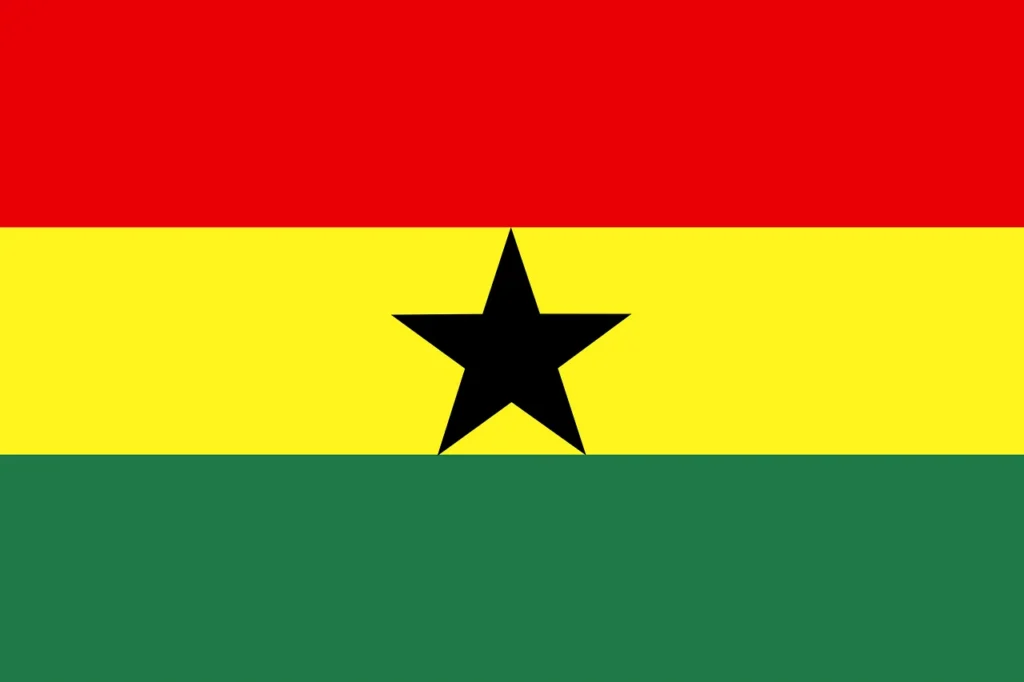
Ghana’s flag consists of three horizontal stripes in red, gold, and green, with a black star positioned at the centre of the gold stripe. Each element was assigned specific meaning at independence and has remained unchanged since 1957, with one brief exception during the period of the Second Republic between 1964 and 1966 when the flag was altered and later restored.
| Element | Colour | Meaning | Origin |
|---|---|---|---|
| Top stripe | Red | Sacrifice and blood of those who died fighting for independence | Pan-African symbolism adopted at independence 1957 |
| Middle stripe | Gold | Mineral wealth and economic prosperity of Ghana | Reference to the Gold Coast colonial name under British rule |
| Bottom stripe | Green | Forests, agriculture, and natural resources of Ghana | Ghana's land identity and environmental heritage |
| Central star | Black | African emancipation and Pan-African freedom | Derived from Marcus Garvey's Black Star Line founded 1919 |
The Black Star in the Ghana Flag: Origins in the Pan-African Movement
The black star as a symbol of African identity did not originate with Ghana. It traces directly to Marcus Garvey, the Jamaican-born Pan-African activist who founded the Universal Negro Improvement Association in 1914 and the Black Star Line shipping company in 1919.
The Black Star Line was established to connect Black communities across the Atlantic, support African repatriation, and build economic self-determination for the diaspora. The black star in that context represented hope, movement, and the collective ambition of African and diaspora communities to forge their own future outside the structures of colonialism and racial subjugation.
Garvey’s influence extended across the Atlantic and directly shaped the political outlook of a generation of African independence leaders. His writings and speeches on Pan-Africanism reached Kwame Nkrumah during his years of political education in the United States and United Kingdom, and the connection proved foundational when Nkrumah came to design the symbols of an independent Ghana.
Kwame Nkrumah and the Decision to Use the Black Star
Kwame Nkrumah led Ghana, then the British colonial territory of the Gold Coast, to independence on 6 March 1957. The moment made Ghana the first sub-Saharan African country to gain independence in the post-war era, and Nkrumah was determined that its national symbols would carry weight beyond the country’s borders.
Nkrumah consciously adopted the black star from Garvey’s movement and placed it at the centre of the new national flag. The decision carried explicit political intent. The star was not selected as a decorative element. It was a declaration of solidarity with the broader Pan-African project and a signal to colonial administrations across the continent that Ghana intended to act as the vanguard of African liberation.
The choice proved durable. The black star became the centrepiece of Ghanaian national identity in architecture, governance, and sport. Black Star Square in Accra, now officially named Independence Square, was constructed as the focal point of the independence celebrations and features a prominent arch topped with a black star, reinforcing the symbol’s role as the defining emblem of the new nation.
What Each Colour in the Ghana Flag Means
The three horizontal stripes in Ghana’s flag carry distinct symbolic meaning rooted in the independence struggle and the country’s natural and economic identity.
The red stripe at the top represents the blood of those who died fighting for Ghana’s independence from British colonial rule. The gold stripe in the centre reflects the country’s mineral wealth, particularly gold, which gave the Gold Coast its colonial name and which remains central to the Ghanaian economy. The green stripe at the bottom represents the forests, agricultural land, and natural resources of the country.
The black star sits at the centre of the gold stripe. Its central position is deliberate. It does not belong to one stripe alone. It unifies the flag and carries the overarching message that Ghana’s identity is defined by freedom above all other attributes.
The Black Star and Ghana’s Football Identity
Ghana’s national football team is officially named the Black Stars, a direct and conscious reference to the black star at the centre of the national flag. As the face of Ghana football, the team reinforces the connection between national sport and national identity that Kwame Nkrumah established at independence.
The Black Stars have qualified for the FIFA World Cup on four occasions, in 2006, 2010, 2014, and 2022. The 2010 tournament, hosted on African soil for the first time, represented the most emotionally significant chapter in the team’s history. Ghana reached the quarter-finals, where a handball by Uruguay’s Luis Suarez in the final minutes of extra time denied a clear goal. Asamoah Gyan struck the resulting penalty against the crossbar, and Ghana lost on a subsequent penalty shootout.
That moment is widely regarded as one of the most painful in African football history precisely because of what the Black Stars represented. The team was not carrying only Ghanaian hope into that match. They carried the symbolic weight of the entire continent, and the black star on their shirts carried the same meaning it has carried since 1957: the ambition of a people to lead, to compete, and to determine their own story.
The Black Stars have also won the Africa Cup of Nations on two occasions, in 1963 and 1982, and the team remains one of the most recognisable football programmes on the continent.
The Black Star Today
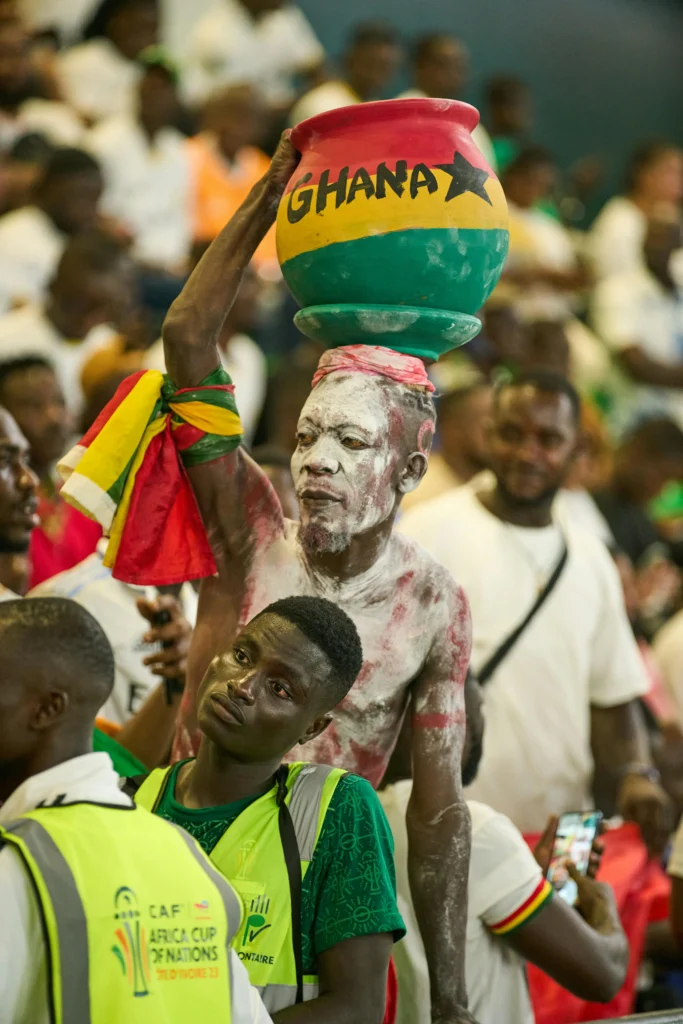
The black star continues to function as one of the most recognisable symbols in African political and sporting identity. It appears on the Ghana national football kit, across Ghanaian public institutions, and in cultural references throughout the African diaspora.
The symbol’s endurance reflects the depth of its original intent. Unlike national symbols that can fade into abstraction over generations, the black star retains active cultural resonance because the questions it was designed to answer, concerning freedom, identity, and continental ambition, have not disappeared from the conversation. In football as in politics, it remains a live symbol rather than a historical artefact.
When Ghana plays on the international stage, the black star on the crest and the name Black Stars in the official team title carry a lineage that runs from a shipping company in Harlem in 1919 to a World Cup quarter-final in Johannesburg in 2010, and continues forward.
Frequently Asked Questions
What does the black star in the Ghana flag represent?
The black star in the Ghana flag represents African emancipation and Pan-African unity. Derived from Marcus Garvey’s Black Star Line and adopted by Kwame Nkrumah at Ghana’s independence in 1957, it signifies the freedom of the African people and Ghana’s role as a leader of continental liberation.
Where did the black star symbol come from originally?
The symbol originates with Marcus Garvey and the Black Star Line shipping company, founded in 1919 as part of the Pan-African movement to unite Black communities across the Atlantic and build economic and political self-determination for African and diaspora people.
Why is Ghana’s football team called the Black Stars?
Ghana’s national football team is named the Black Stars in direct reference to the black star at the centre of the national flag. The name reflects the connection between national identity and national sport established at independence in 1957, with the symbol carrying the same Pan-African meaning in football as in politics.
What do the three colours in the Ghana flag mean?
Red represents the blood and sacrifice of those who died for independence. Gold reflects Ghana’s mineral wealth and economic identity. Green represents the country’s forests, farmland, and natural resources. The black star at the centre represents African emancipation and Pan-African freedom.
What is Black Star Square in Accra?
Black Star Square, now officially named Independence Square, is a large public space in Accra built to mark Ghana’s independence in 1957. It features a prominent arch topped with a black star and was the centrepiece of the independence celebrations convened by Kwame Nkrumah. It remains a national landmark and a physical expression of the symbol’s importance to Ghanaian identity.