
How to Tackle in Football: Technique, Timing, and the Modern Defender
Tackling in football is timing + technique + body position. We break down the four legal tackle types, when to commit, when to delay, and the 2024 IFAB foul-and-misconduct updates.
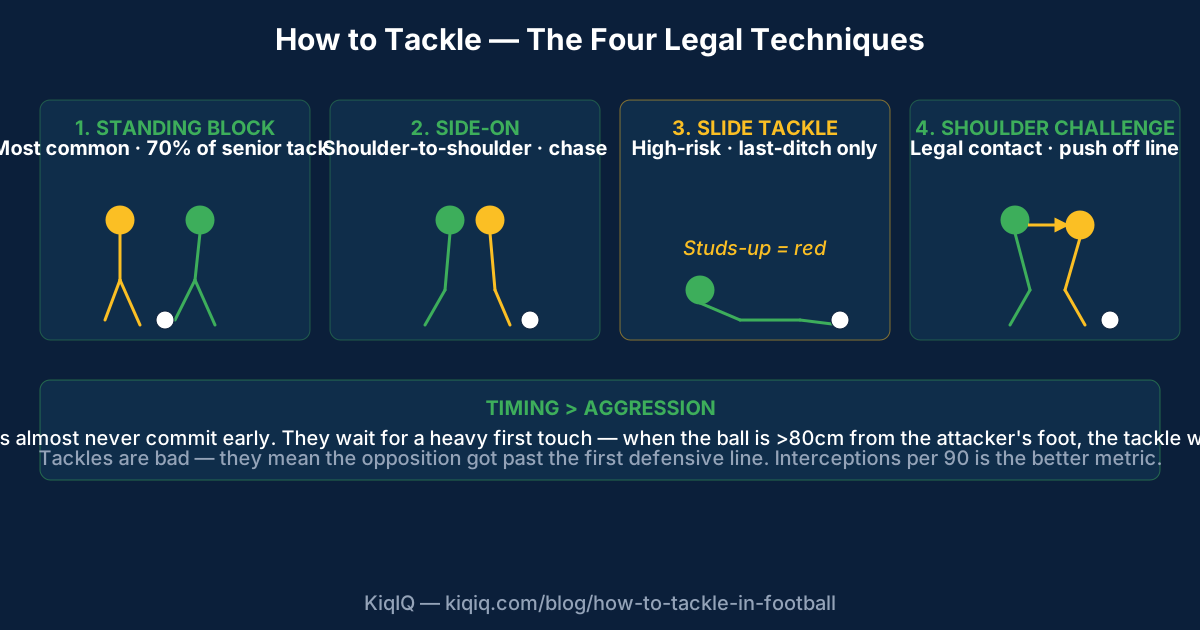
A good tackle in football is decided before the legs move. The defender reads the attacker's body, picks the right tackle type for the angle, drops their centre of mass, and commits at the moment the ball is furthest from the attacker's foot. Aggression is far less important than timing.
The four legal tackle types
Defenders use four tackle techniques in modern football, each suited to a different attacking situation:
- Standing block tackle. Defender stays on feet, plants the lead foot beside the ball, blocks with the inside or outside of the same foot. The most common and the lowest-risk.
- Side-on tackle. Defender shoulder-to-shoulder with attacker, uses the lead foot to poke the ball away. Good for chasing down a running attacker on the touchline.
- Slide tackle. Defender slides feet-first along the ground, sweeping the ball away with the leading shin or instep. High-risk: if you miss, you're on the floor.
- Shoulder challenge. Defender uses shoulder-to-shoulder contact while running alongside the attacker — legal under Law 12 if the contact is fair. Used to push the attacker off the line of the ball.
Slide tackles are the headline image but the standing block is the modern professional's default. ~70% of senior tackles in the Premier League are standing-block tackles.
When to commit
The defender's biggest decision is when to engage. Top defenders almost never commit early. They delay, watch the ball, and pick a moment when the attacker's touch is heavy or the ball drifts more than 80cm from their foot. That moment is when a tackle has the highest success rate.
Three windows where committing early is correct: when the ball-carrier is travelling backwards (cannot accelerate away easily); when the attacker has their head down; when a teammate has covered the support pass. Outside those windows, hold position and force the attacker to commit first.
Body position before contact
Three body principles separate clean tacklers from foul-prone ones:
- Low centre of mass. Knees bent, hips down. A tall, upright defender will be brushed off; a low one stays connected to the ground.
- Lead with the inside of the leading foot. Toes pointing slightly inward; lead with the foot closest to the attacker. Reduces the lead-leg vulnerability.
- Stay between attacker and goal. Goal-side positioning means the worst-case outcome of a missed tackle is the attacker continuing forward — not breaking past you toward goal.
The slide tackle — when (and when not) to use it
Slide tackles look spectacular but cost the defender their position. If you miss, you're on the ground; the attacker is past you and toward goal. Modern coaching reserves slide tackles for two scenarios: a last-ditch effort when no other recovery is possible, or a guaranteed clearance when the ball is loose and you're closer than the attacker.
Three rules for safer slide tackles: lead with one leg only (legs together = scissor tackle = potential red card), don't raise the trailing foot off the ground, and slide along the side of the attacker rather than toward them. Stamping or studs-up contact is a straight red.
The 2024 IFAB foul updates
IFAB Law 12 was tightened in 2024 around several recurring tackle scenarios. Three updates that changed how defenders coach the action:
- Tackle-from-behind clarification. Any tackle from behind that contacts the back of the leg before the ball is now defaulted to a yellow at minimum, regardless of intent.
- Studs-up consideration. Studs-up contact above the ankle is now treated as serious foul play — direct red.
- Both-feet challenge. Any tackle that leaves the ground with both feet leading toward the opponent is a straight red, regardless of whether contact is made.
Drills that build tackling
Three drills coaches use to build tackling fundamentals at any level:
- Shadow tackling. Defender mirrors an attacker's movement without engaging. Builds the patience to delay.
- 1v1 corridor. Attacker carries the ball through a 5×15m corridor; defender must dispossess inside the corridor. Teaches angle and timing.
- Recovery sprint + standing block. Defender chases the attacker from behind, must arrive level and execute a standing block tackle without sliding. Teaches recovery without giving away the slide.
Tackling and modern KPIs
Top analysts no longer judge defenders by tackle count. Tackles are *bad* — they mean the opposition got past the first defensive line. Better metrics:
- Interceptions per 90. Reading and stepping in front of passes, never needing the tackle in the first place.
- Tackle success rate. Of attempted tackles, the % that win the ball cleanly. Below 65% is poor; 75%+ is elite.
- Defensive duels won under pressure. Held ground in 1v1 contact situations vs total duels.
Frequently asked questions
- What are the main types of tackles in football?
- Four legal types: the standing block tackle (the most common, lowest-risk), the side-on tackle (shoulder-to-shoulder while chasing), the slide tackle (high-risk, sweeping the ball away from the ground), and the shoulder challenge (running alongside an attacker and pushing them off the line of the ball). Slide tackles are spectacular but uncommon at senior level — about 70% of Premier League tackles are standing blocks.
- When should a defender commit to a tackle?
- When the attacker's touch is heavy and the ball drifts ~80cm from their foot, or when the attacker is travelling backwards, has their head down, or has no easy support pass. Outside those windows, delay and force the attacker to commit first — committing early is a defining failure mode of weaker defenders.
- Why are slide tackles less common than they used to be?
- Slide tackles cost the defender their position. If the tackle is missed, the defender is on the ground and the attacker is past them. Modern coaching reserves slides for last-ditch recoveries or guaranteed clearances. The 2024 IFAB updates also tightened red-card thresholds for studs-up contact and two-footed challenges.
- What is a good tackle success rate?
- Top-flight defenders aim for 75%+ tackle success rate (clean ball-wins as a % of attempts). Below 65% is poor. Elite ball-playing CBs (Van Dijk, Saliba) often hit 80%+. Tackle count by itself is a weak metric — high tackle counts often mean the defender failed at interception, the more efficient defensive action.
References
Key terms in this article
Ask KiqIQ a follow-up
Get a live, data-driven answer powered by api-football + KiqIQ's Poisson model. Try one of these prompts or write your own.
Part of pillar
Player Development
See every article in this knowledge pillar →
Related
Reviewed by a KiqIQ editor before publication. Spotted an error? Email editor@kiqiq.com — we follow our Corrections Policy.