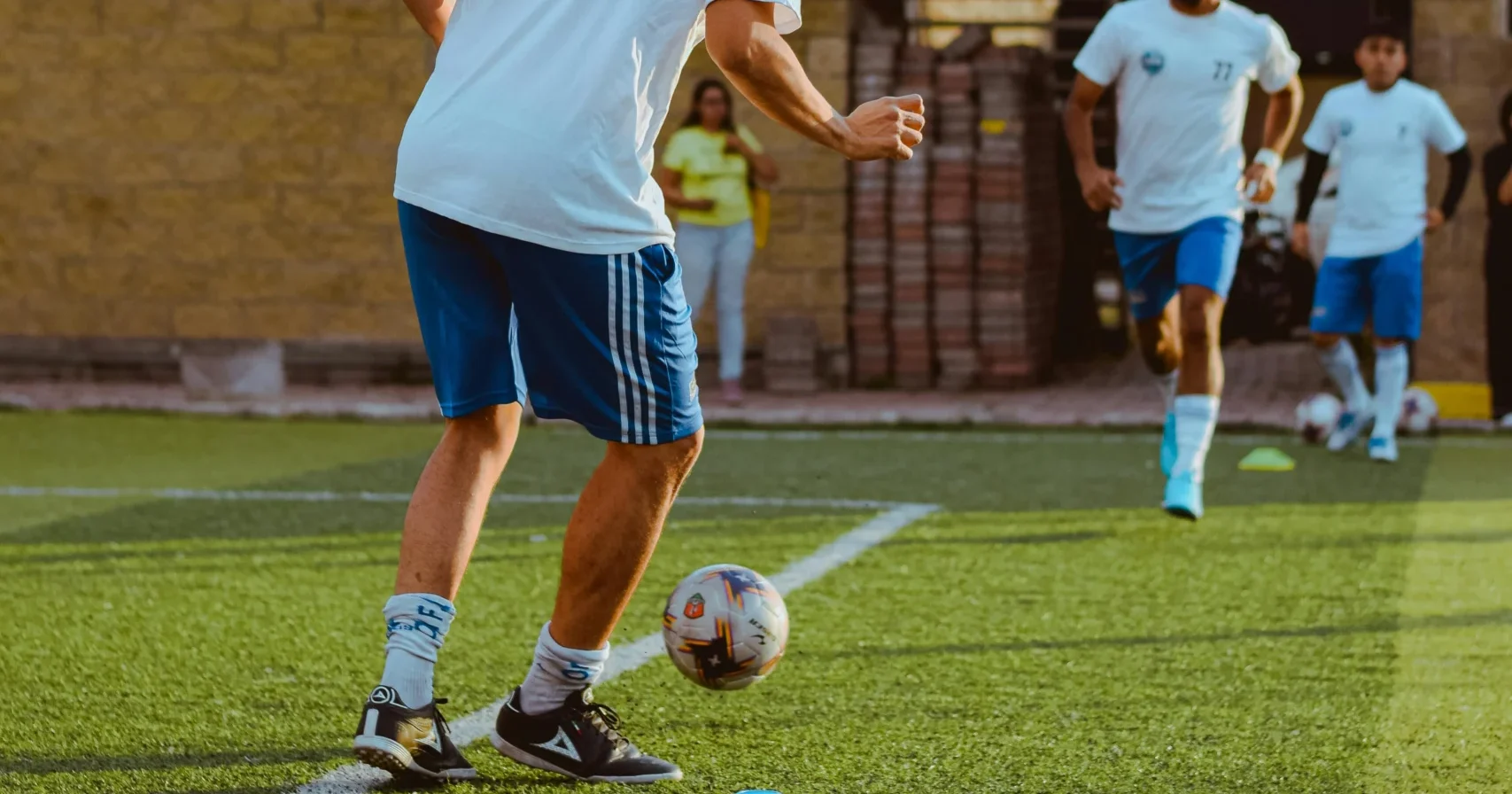
Most passing errors in football are technical, not physical. The gap between what players know and what they consistently execute under pressure is where the training work begins.
By David Findlay, Founder of KiqIQ.
Quick Answer: To improve passing accuracy in football, focus on three technical foundations: body shape and open orientation, consistent foot contact using the inside of the foot, and calibrated weight of pass. Build these through progressive drills that begin without defensive pressure and advance toward constrained, one- and two-touch exercises under live opposition. Structured repetition across sessions is what creates consistent execution in match conditions.
Definition: Passing accuracy in football refers to a player’s ability to consistently deliver the ball to an intended target with appropriate weight, direction, and timing. It is typically measured as a percentage of completed passes from total attempted passes. Accuracy is influenced by technical factors (body position, foot contact surface, follow-through), cognitive factors (scanning and decision timing), and environmental factors (pitch surface, defensive pressure, and spatial constraints). Elite midfielders in top leagues often operate in the mid-to-high 80% range, but accuracy alone does not capture the tactical value of a pass.
For player development, this distinction matters. Training should not only improve completion rate, but also the ability to execute forward passes under pressure.
This shifts the focus from simply retaining possession to creating advantage.
Key point: Passing accuracy measures reliability, not impact. The most effective players combine high completion with the ability to play forward, risk-adjusted passes that break lines.
Why Pass Accuracy Is Often Misunderstood
High pass completion rates are often interpreted as a marker of strong performance. In practice, they can reflect a specific type of play rather than overall effectiveness.
At elite level, central midfielders frequently record passing accuracy in the high-80% to low-90% range. However, the majority of those passes are low-risk, including sideways circulation, backward recycling, or short positional retention.
More impactful passes, often described as progressive or line-breaking passes, occur less frequently but carry significantly greater tactical value. These passes move the ball forward through defensive lines or into space that creates immediate pressure on the opposition.
Understanding this distinction is central to how to improve passing accuracy in football at any level of the game. In practice, this means improvement work should prioritise pre-pass preparation, including where the player looks, how they position their body, and how they orient their first touch before the delivery itself.
Why Passing Accuracy Breaks Down
Passing errors in football typically cluster around five technical and cognitive failure points. Identifying the root cause determines which corrective drill to apply.
Closed Body Shape
Players who receive the ball facing directly toward the passer limit their field of view. An open body position allows more passing options before the ball arrives.
Incorrect Foot Contact Surface
Short and medium-range passes are most accurately delivered with the inside of the foot. Using the toe or laces reduces consistency.
Miscalibrated Weight of Pass
Underhit passes invite interceptions. Overhit passes reduce control. Weight must match distance and tempo.
Scan Deficit Before Receiving
Players who scan before receiving make faster, more accurate decisions under pressure.
Decision Timing Under Pressure
Extra touches allow defenders to recover and reduce available passing options. 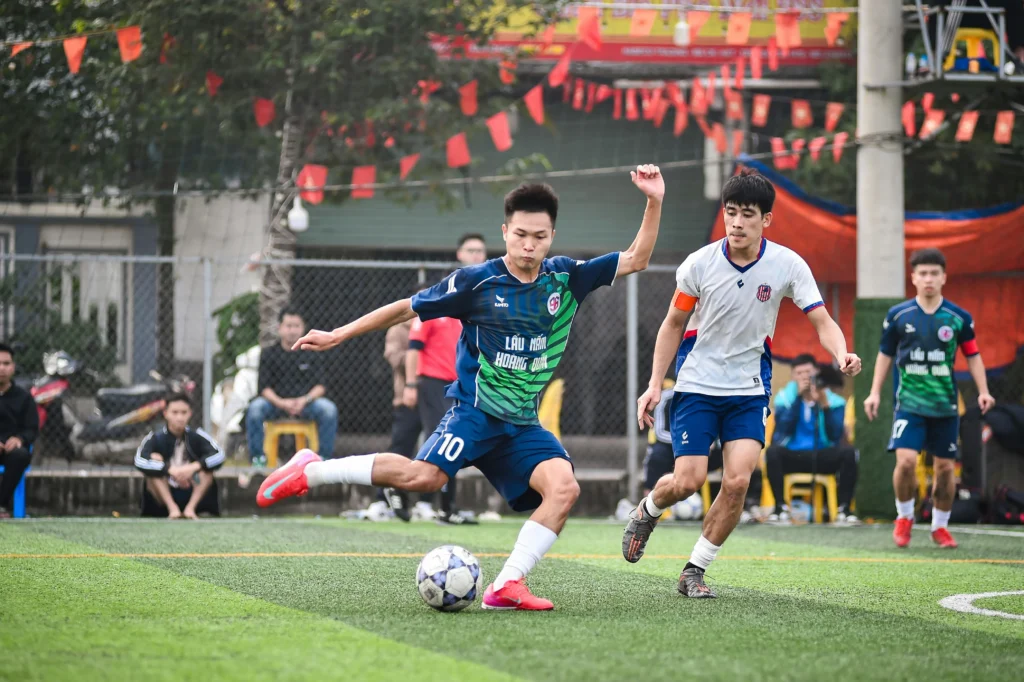
Technical Foundations: The 3 Non-Negotiables
1. Open Body Orientation
The body should be angled to allow visibility of both ball and target before contact.
2. Inside Foot Contact for Short-to-Medium Passes
The inside of the foot provides the most reliable contact surface for passes up to approximately 15 to 20 yards.
3. Appropriate Pass Weight
A firm, well-weighted pass improves both accuracy and tempo.
7 Passing Drills to Build Accuracy Progressively
Drill 1: One-Touch Passing (5 to 10 Yards)
Focus on clean contact and body shape.
Drill 2: Two-Touch Directional Passing
First touch sets direction, second delivers.
Drill 3: Passing Gates
Use cone targets to develop directional accuracy.
Drill 4: Triangle Passing
Encourages angles, movement, and awareness.
Drill 5: Short to Long Alternation
Develops weight calibration across distances.
Drill 6: Rondo
Builds passing accuracy under pressure.
Drill 7: 2v1 Confined Possession
Simulates real match scenarios in limited space. 
How to Structure Passing Sessions
Phase 1: Technical (no pressure)
Phase 2: Positional (movement and angles)
Phase 3: Pressure (live defenders)
Consistency of training matters more than duration, especially when working on how to improve passing accuracy in football over multiple sessions.
Measuring Passing Accuracy

Frequently Asked Questions
How long does it take to improve passing accuracy?
Initial improvements can be seen within a few weeks. Consistency under pressure takes longer.
What is the best drill?
Rondos are highly effective due to pressure and repetition.
Should I train my weaker foot?
Yes. It increases passing options and reduces decision delay.
What is a good passing accuracy percentage?
Professional midfielders often record 80 to 90 percent. Grassroots players, 70 to 80 percent is solid.
Does high passing accuracy mean a player is effective?
Not always. High accuracy often reflects safe passing. More impactful passes carry more risk and lower completion rates.
Does pitch surface affect passing?
Yes. Surface consistency affects ball speed and pass weight.
How do you improve passing under pressure?
Progress from low-pressure drills to constrained, high-pressure environments.