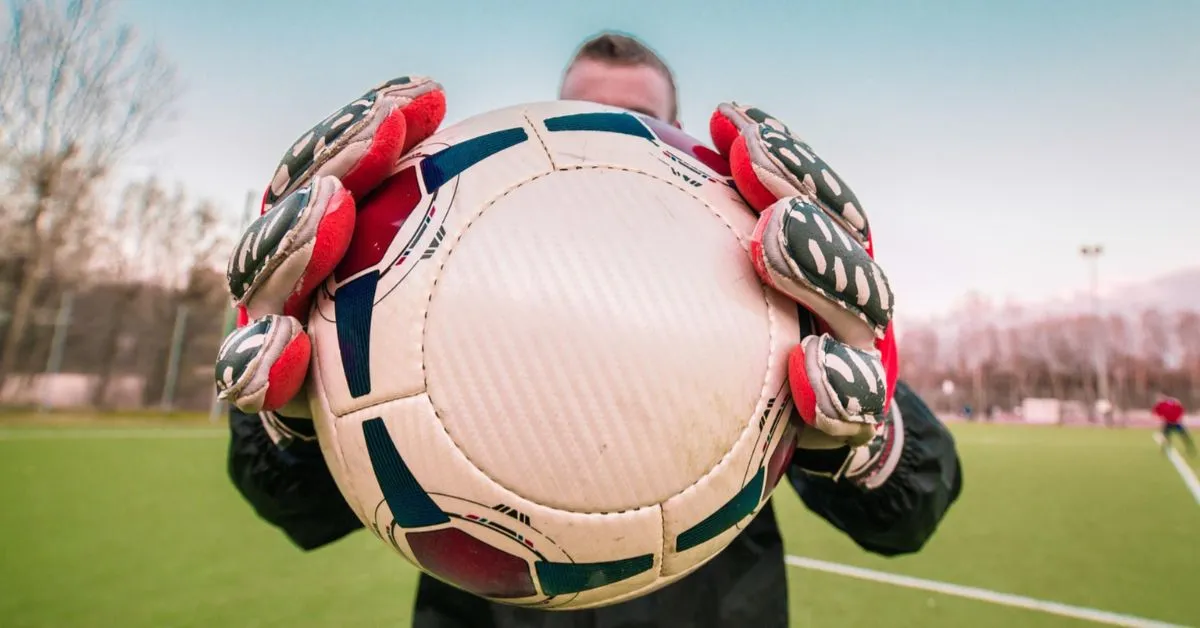
Most goalkeeper development plans list every attribute. Most players work on none of them consistently enough to improve.
By David Findlay, Founder of KiqIQ.
Quick Answer: To be a good goalkeeper in football, build your development plan around three high-signal priorities: shot-stopping mechanics, positional discipline, and distribution accuracy. Avoid spreading practice time across every attribute at once. Concentrated repetition in core technical areas delivers faster and more measurable improvement than a broad, unfocused plan.
Definition: A good goalkeeper in football is a player who consistently reduces the number and quality of opposition scoring opportunities through disciplined positioning, reliable handling, and decisive action under pressure. The modern goalkeeper also functions as the first phase of build-up play, requiring confident distribution, effective communication with the defensive line, and composure on the ball in tight situations.
While the definition is standard, the Workflow Misfit between lengthy coaching attribute lists and actual skill transfer on the training pitch is where most goalkeeper development programmes fail to find signal.
Key point: Goalkeeping improvement stalls when development plans are too broad. Focusing on three to four core technical skills at a time produces faster and more measurable progress than attempting to develop twelve attributes simultaneously.
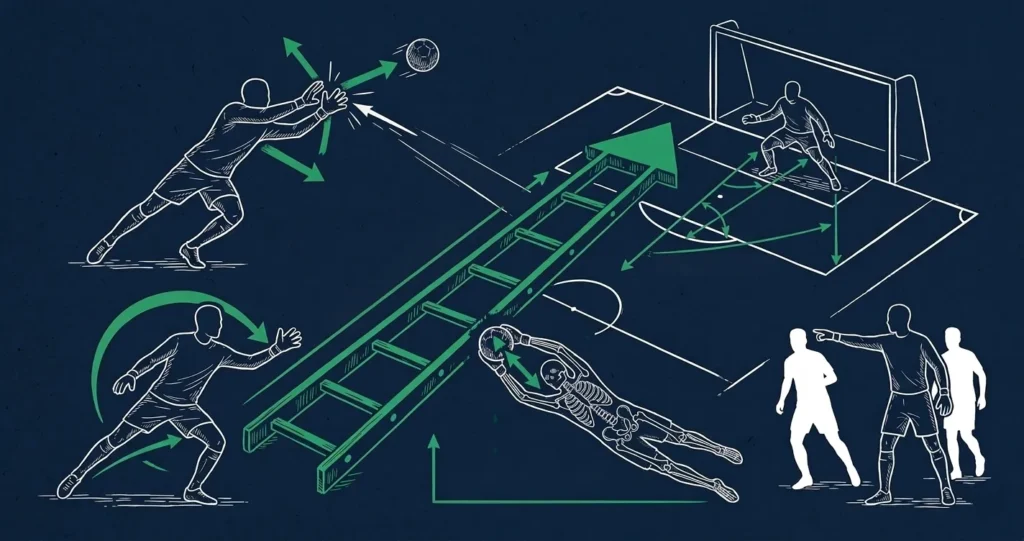
The Core Attributes of a Good Goalkeeper
Goalkeeping demands a combination of physical, technical, and psychological qualities. The strongest performers in the position do not necessarily excel in every area but build consistent reliability in the skills that appear most frequently in competitive match conditions.
The attributes that matter most can be grouped into four categories: shot-stopping, positioning, distribution, and decision-making. Each category contains specific sub-skills, but the development priority should always be placed on those with the highest match impact and the most accessible practice pathways.
Attempting to develop all attributes in parallel dilutes focus and slows measurable progress. The Minimum Viable Annotation principle, borrowed from data workflows, applies directly to player development. Identify the two or three skills that will most improve your save rate and command effectiveness, then build practice sessions around those before expanding your plan.
Shot-Stopping: The Non-Negotiable Foundation
Shot-stopping is the most visible and measurable responsibility of any goalkeeper. It encompasses hand positioning, body shape, reaction speed, and the ability to generate force across a wide range of shot types at varying heights and angles.
Strong shot-stopping begins with the ready stance. Feet should be shoulder-width apart, weight distributed slightly forward onto the balls of the feet, and hands positioned at waist height with palms facing the ball. This posture enables rapid movement in any direction without the delay of an awkward weight transfer.
The most common technical fault in youth goalkeepers is collapsing the body inward on contact. The hands and wrists must move to the ball’s path, not the other way around. Practising reactions from close range with a partner or rebounder builds the fast-twitch response required for low and mid-height shots.
For high shots, the W-grip creates a secure catching surface. Thumbs point inward, index fingers form the shape behind the ball, and the palms absorb impact rather than deflecting it. Consistent repetition of this grip under fatigue is a high-signal training investment with a low capture cost.
Positioning and Angle Play
Positioning is the attribute that separates good goalkeepers from average ones. Correct positioning reduces the size of the target a striker can aim at and eliminates sections of the goal from play before a save is even required.
The basic principle is that a goalkeeper should position themselves on the line between the ball and the centre of the goal. As the ball moves wider, the goalkeeper shifts toward the near post to narrow the angle. As the ball moves centrally and closer to goal, the goalkeeper moves forward and slightly off the line to close the shooting corridor.
A practical drill for angle work involves placing cones at various positions around the penalty area. The goalkeeper moves to each cone on command and adopts the correct position and body shape for an imagined shot from that location. Repeating this at pace builds the spatial awareness that makes positioning automatic in match conditions.
Off-the-line positioning also governs crosses and set pieces. A goalkeeper rooted on the goal line surrenders command of the six-yard box and reduces the team’s ability to defend deliveries into the danger area.
Distribution and Footwork
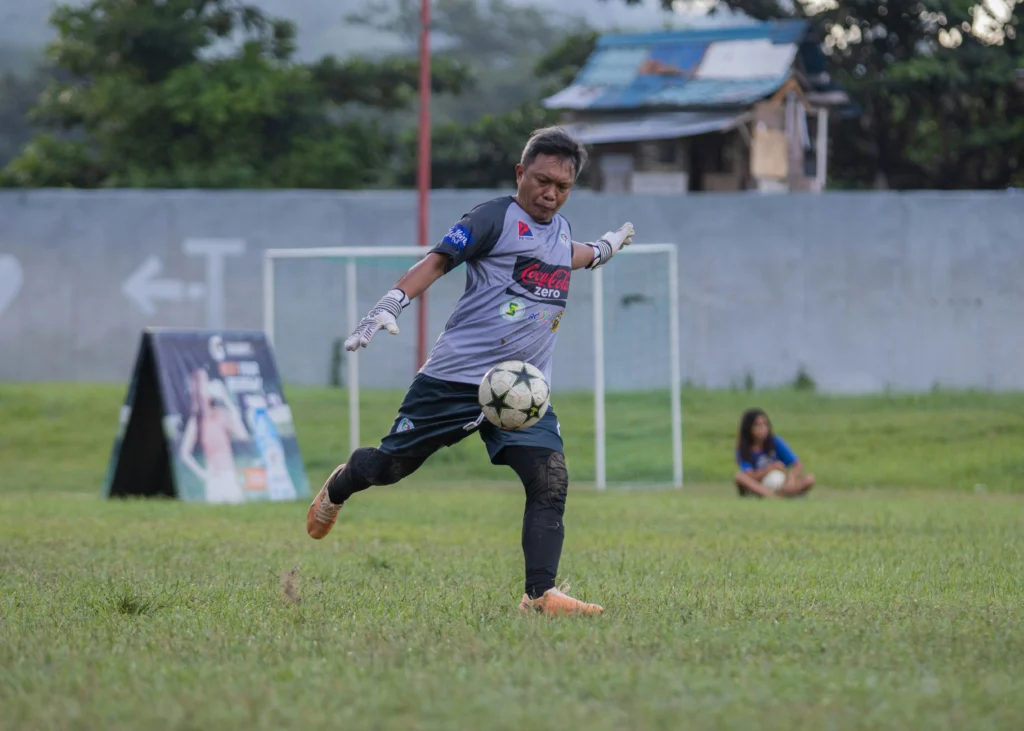
Modern goalkeepers are expected to contribute as a technical player, not simply a last line of defence. Distribution covers goal kicks, short passes, long throws, and footwork under press. The ability to recycle possession quickly and accurately has become a primary requirement at every level above recreational football.
Goal kicks present the most straightforward training opportunity. Practise both the driven short pass to a full-back or centre-back and the longer driven ball over a press line. Varying between instep drive, side-foot pass, and lofted delivery builds the range required to cope with different opposition pressing shapes.
Throwing is consistently underused as a distribution method. An accurate overarm throw to the flank or a low roll to a central midfielder is faster and more precise than a kicked ball in most short-range scenarios. Incorporating throw accuracy into regular sessions raises this skill to the level of reliability it needs to function as a genuine tactical option.
Footwork under pressure is best practised through small-sided games in which the goalkeeper is actively pressed. A lower-friction alternative is a two-zone rondo in which the goalkeeper must play through a pressing player to reach a target. This replicates the decision and execution without requiring a full team session, reducing capture cost while preserving development signal.
Commanding the Box
Commanding the box refers to a goalkeeper’s authority and effectiveness in dealing with aerial deliveries, set pieces, and crosses into the penalty area. It is a composite skill combining reading of flight, decision speed, jumping mechanics, and the communication required to organise defenders.
The primary decision for every cross is whether to claim the ball or hold the line and trust the defence to clear. The standard coaching rule is that if you can reach the ball first with both hands in a secure position, you claim it. If there is any doubt, you stay and organise.
Consistent claiming requires commitment. A goalkeeper who hesitates between claiming and holding creates uncertainty for the entire defensive unit and increases the probability of a defensive error. Build this through repetition of crossed balls from both flanks, progressing from a passive to an active attacker in the drill structure.
Communication and Organisation
Communication is a high-value skill with a near-zero capture cost. It requires no specialist equipment, no additional session time, and no data infrastructure. It is also one of the least practised attributes at youth level.
An effective goalkeeping communicator performs three core functions. First, they provide early warnings before the ball enters a dangerous area. Second, they give clear instructions during set pieces and defensive transitions. Third, they affirm or correct positioning in real time throughout the match.
Verbal instructions must be short, specific, and consistent. Calls such as “keeper” when claiming a cross, “away” when directing a defender to clear, and “turn” when the outfield player has time to play forward are standard in structured coaching environments. Establishing these calls in training so that all players understand and trust them is a straightforward high-signal habit to build from the first session.
The Mental Demands of Goalkeeping
Goalkeeping is disproportionately affected by individual error. A single mistake can directly determine a match result in a way that midfield errors rarely do. The psychological response to that exposure is a genuine performance variable that receives less coaching attention than it deserves at most levels.
Composure is built through controlled exposure to pressure scenarios in training. Penalty practice under observation, reactions from point-blank range under fatigue, and small-sided games in which the goalkeeper’s errors are logged and reviewed all increase the psychological tolerance for high-stakes situations.
Pre-performance routines are used at professional level and translate directly to youth and amateur environments. A consistent warm-up sequence, a brief reflective period after training errors, and a controlled reset process following a goal conceded in a match are low-cost mental tools with measurable impact on in-game consistency.
How to Be a Good Goalkeeper: Skill Development Priority Framework
The table below maps the core goalkeeping skill areas by signal value, practice accessibility, and development priority. Use it to structure a focused training plan rather than attempting to develop every attribute simultaneously.
| Skill Area | Signal Value | Practice Accessibility | Priority Level | Key Development Focus |
|---|---|---|---|---|
| Shot-Stopping Mechanics | High | High | Core | Ready stance and W-grip handling under match-speed repetitions |
| Positioning and Angle Play | High | High | Core | Cone-based angle drills against varied ball locations around the area |
| Distribution Accuracy | High | Medium | Build | Goal kick range work and two-zone rondo under simulated press |
| Box Command and Claiming | High | Medium | Build | Crossing repetitions progressing from passive to active attacker |
| Communication and Organisation | High | Very Low Capture Cost | Build | Consistent verbal call system established in every training session |
| Footwork Under Press | Medium | Medium | Develop | Two-zone rondo replicating press scenarios with two additional players |
| Reaction Training | Medium | Medium | Develop | Close-range reactions from realistic shot angles and distances only |
| Pre-Performance Routine | Medium | High | Develop | Error reset process applied in training before introducing to match use |
What to Cut from Your Goalkeeper Training
Most goalkeeper development plans are overloaded. Cutting low-signal activity is as important as adding high-signal practice. The most common time-wasting habits in goalkeeper training include:
- Repeated diving saves from outside the penalty area with no positional or angle context attached to the repetition
- Long handling sessions with no distribution or recovery movement integrated into the drill structure
- Reaction drills that do not replicate actual shot trajectories from realistic distances and angles
- Generic fitness circuits with no integration of goalkeeping-specific movement patterns or decision-making demands
Replacing any one of these with a structured angle-and-shot drill, a distribution rondo, or a crossing command scenario will produce a faster improvement signal from the same session time. This is the Minimum Viable Annotation applied to physical training.
How to Be a Good Goalkeeper in Football Through Consistent Practice
Consistent improvement as a goalkeeper requires structured repetition, honest feedback, and a willingness to prioritise technical basics over spectacular drills. The goalkeepers who improve fastest at every level share the same habit. They identify their two or three highest-priority skills, build them through deliberate repetition, and review performance objectively using match footage or coach feedback after every session.
England Football’s goalkeeper development resources provide structured session frameworks that map directly to the priority areas covered in this guide. Using an established external framework removes planning friction and allows more session time to be spent on actual practice rather than session design.
Video review of training and match footage is the highest-signal feedback tool available to goalkeepers without access to a dedicated goalkeeper coach. Reviewing two or three key moments per session, specifically positioning before a save or distribution choices under press, creates a reflective habit that accelerates skill development beyond what repetition alone achieves. The Blayze goalkeeper coaching framework offers a useful external reference for applying structured feedback to individual development at every level.
Frequently Asked Questions
How to be a good goalkeeper in football if you are a complete beginner?
Start with the ready stance, basic shot-stopping mechanics, and angle play. These three foundations underpin every other goalkeeper skill. Avoid advanced techniques until your positioning and handling mechanics are consistent under basic drill conditions.
What is the single most important skill for a goalkeeper?
Positioning delivers the highest return because it reduces the quality of chances before a save is even required. Correct angle play makes a goalkeeper more effective without needing to improve athleticism or reaction speed, which makes it the highest-priority starting point for most players.
How often should a goalkeeper train specifically?
Two dedicated goalkeeper sessions per week, each focused on no more than three skill areas, produces measurable improvement for most players. Generic team training alone, without goalkeeper-specific repetitions, does not build the technical habits required for consistent match performance.
What are the best goalkeeper tips for commanding the penalty area?
Commit fully when the decision to claim is made, establish clear and consistent communication calls with your defenders, and practise crossing scenarios with active defenders in the drill. Hesitation and unclear communication are the two primary causes of command failures at every level of the game.
Can a goalkeeper improve distribution without a full team session?
Yes. A two-zone rondo in which the goalkeeper plays through a single pressing player to reach a target replicates the core decision and execution demands of distribution under press. This is a low-capture-cost drill with a high development signal and requires only two additional players to run effectively.