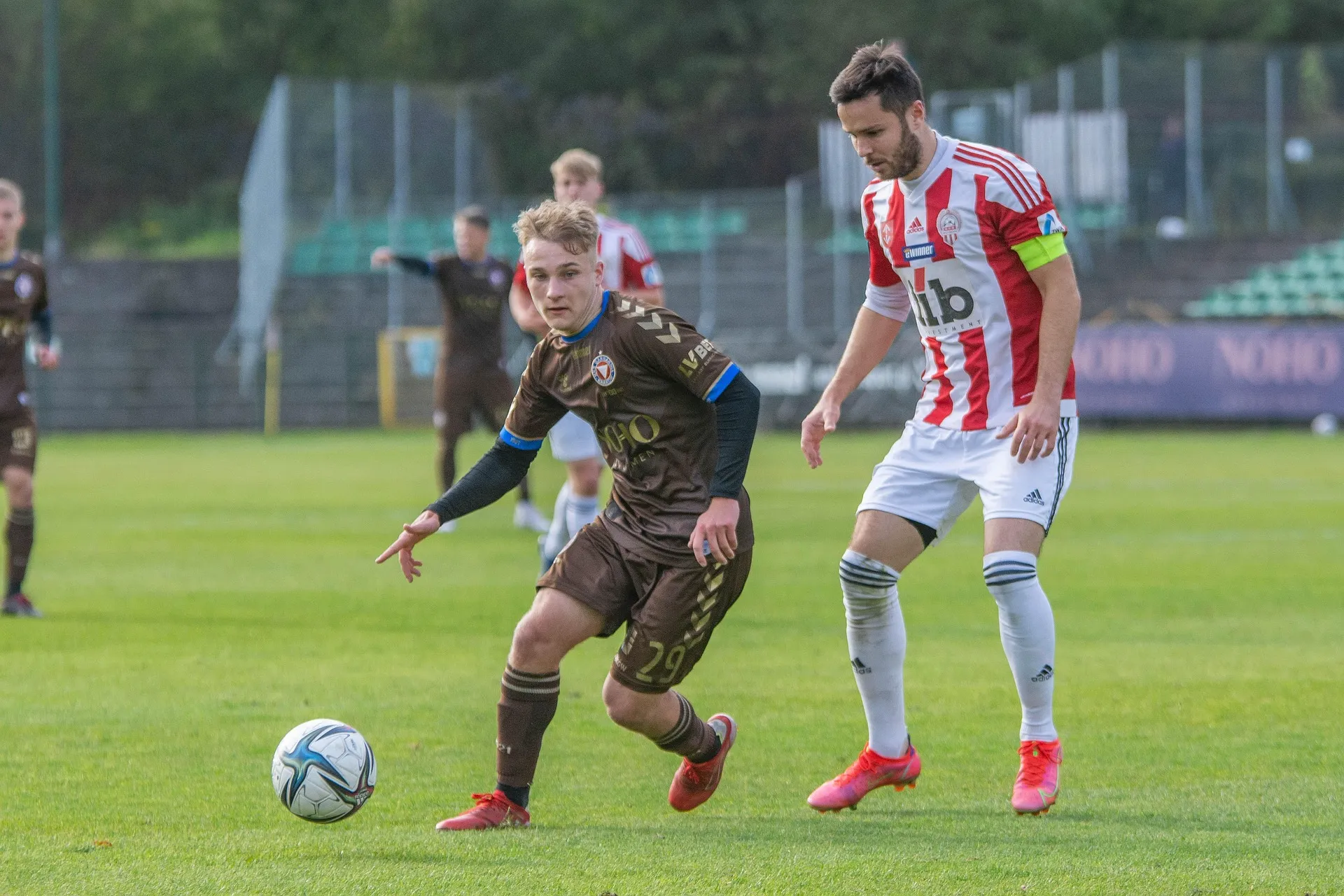
Possession percentage is one of the most-cited numbers in football analysis, yet the method used to produce it varies by provider, and its link to winning outcomes is far weaker than most coaching staff assume.
By David Findlay, Founder of KiqIQ.
Quick Answer: Possession in football is calculated by measuring the proportion of ball contact time or touch sequences attributed to each team during a match, then expressing that share as a percentage. The three main methods are touch-count ratio, time-in-possession tracking, and possession sequence frameworks. Each produces a different figure for the same match, which is why possession percentages vary between broadcast graphics, official league feeds, and independent data providers.
Definition: Possession in football is the proportion of total match time or recorded touch sequences during which one team controls the ball, expressed as a percentage of the combined total for both teams. Calculation methods vary across providers, ranging from manual touch-count ratios to automated time-based optical tracking, meaning the same match can yield different possession figures depending on the system and definitions applied by each supplier.
Key point: Possession percentage is a method-dependent figure, not a universal standard. Two providers tracking the same match can produce materially different numbers, and no single method reliably predicts which team wins.

While the definition is widely understood, the instrumentation friction is where most performance departments fail to extract reliable signal from possession data.
Why Possession Figures Differ Between Providers
FIFA governs the Laws of the Game but does not mandate a standardised data collection methodology for commercial match statistics. Each licensed provider applies its own event-tagging protocol, its own definition of a possession event, and its own treatment of contested duels, dead-ball periods, and goalkeeper distributions.
At the broadcast level, the possession figure shown during a live match originates from one of a small number of licensed data suppliers. Those suppliers use different criteria for what counts as ball contact, how long a sequence must be to qualify as possession, and whether clearances and deflections transfer possession between teams. Structural variance is built into the number before it reaches the screen.
The Three Primary Methods Used to Calculate Possession in Football
Understanding how possession is calculated in football requires separating the three distinct methodologies currently in use across professional and semi-professional environments.
Touch-Count Ratio
The touch-count method assigns each on-ball action to one team, totals the actions for both sides across the match, and calculates each team’s percentage share. This is the most widely deployed method in broadcast and lower-league settings because it can be produced from event data without optical tracking infrastructure.
The principal limitation is that not all touches are equal in duration or tactical value. A goalkeeper holding the ball for six seconds and a midfielder taking one controlling touch each register as a single event in many systems. The method flattens that distinction and produces a ratio that reflects frequency of ball contact rather than time or territorial control.
Time-in-Possession Tracking
Time-based possession tracking measures the actual seconds each team holds the ball during a match. This method requires player-tracking technology, whether GPS units, optical systems, or semi-automated tracking pipelines. The output is more precise than a touch-count ratio but substantially more expensive to produce at scale.
In a time-based system, a goalkeeper in possession for eight seconds contributes eight seconds to the team’s total. In a touch-count system, that same sequence contributes one event. The divergence between the two methods increases whenever teams employ deliberate ball-retention phases, slow build-up play, or extended set-piece preparation periods.
Possession Sequence Framework
StatsPerform introduced a possessions framework that defines possession as a connected sequence of on-ball events belonging to one team, separated by a turnover, a set-piece restart, or a goalkeeper distribution. Each sequence is treated as a discrete analytical unit, and possession share is derived from the proportion of sequences attributed to each team.
This approach addresses structural weaknesses in touch-count and raw time-based methods by introducing sequence-level analysis, allowing outcome tagging and quality scoring to be applied. It currently requires sophisticated data infrastructure and is largely limited to elite-level environments where provider-grade data pipelines are in place.

The Capture Cost Problem in Possession Tracking
For a performance analyst or product director operating below the top two professional tiers, possession calculation faces a practical barrier that most theoretical frameworks do not address. The capture cost, meaning the staff time, hardware, and tagging hours required to produce a reliable possession figure, frequently exceeds the decision-making value the metric delivers.
Manual touch counting from video is achievable but introduces tagger fatigue and inter-rater inconsistency across a full season of matches. Automated optical tracking is accurate but requires a capital investment that most academies and lower-league clubs cannot justify for a single percentage figure. GPS systems capture movement data effectively but are not natively designed to produce possession percentages without significant additional data processing layers.
The result is that many clubs operate with a possession figure they trust less than they acknowledge, while allocating tagging hours that could be redirected to higher-signal metrics such as press-break rate or progressive carry percentage.
Signal vs. Friction in Possession Tracking
The grid below compares the easy-to-track version of each possession-related metric against its higher-value alternative and identifies the capture cost at each level. Use this to prioritise tagging resource and identify where to simplify your annotation workflow.
| Metric | Easy-to-Track Version | High-Value Version | Capture Cost |
|---|---|---|---|
| Possession Percentage | Touch count ratio from event data | Time-in-possession via optical tracking | Low (manual) to High (optical system) |
| Press-break Rate | Manual video tag per press sequence | Automated GPS event with outcome link | Medium to High |
| Progression Rate | Pass count per third from event data | Zonal progression with pressure context | Medium |
| Possession Sequence Length | Total touch count per sequence | Quality-scored sequences with outcome tagging | High |
What to Remove From Your Possession Tracking Workflow
Minimum Viable Annotation means identifying which possession metrics consume analyst time without improving coaching decisions. The following grid identifies the low-signal data points that most performance departments should remove before the next workflow review cycle.
| Metric to Cut | Why It Is Low Signal | Replace With |
|---|---|---|
| Raw possession percentage as primary KPI | Does not distinguish territorial quality from lateral recycling | Progression rate with press-break context |
| Total touches per game | Counts all contact regardless of duration or tactical value | Touches in the final third under defensive pressure |
| Lateral pass percentage | Measures recycling activity not forward advancement | Progressive carry rate or line-breaking pass count |
| Possession percentage in own half | Indicates risk avoidance not territorial control | Possession share in the middle and final thirds only |
What Possession Data Tells You and What It Does Not
Once the mechanics of how possession is calculated in football are clear, the more important question is what the resulting number actually signals. Research across multiple seasons and competition levels consistently shows a weak positive correlation between possession share and winning percentage, but the relationship is not stable enough to use as a standalone performance indicator.
Teams that hold high possession shares and win tend to combine territorial control with strong progression rates and the ability to break opposition pressing structures. Teams that recycle the ball laterally in their own defensive third, or build slowly without advancing, regularly record 60 percent possession in losing performances. Possession measures control of the ball, not the quality of its use.
For analysts building defensible performance frameworks, possession percentage should serve as context for deeper metrics rather than as a primary KPI. StatsPerform’s possessions framework documentation argues that sequence-level analysis combined with outcome data produces substantially more actionable insight than an end-of-match percentage figure.
The operationally useful question for most departments is not how much possession a team had, but how often it broke the opposition press and progressed into the final third. That is the metric a performance director can defend to a board, act on with coaching staff, and replicate across a full season of analysis.

How Is Possession Calculated in Football: Frequently Asked Questions
Does a higher possession percentage mean a team is more likely to win?
Not reliably. Possession share shows a weak positive correlation with winning across large sample sizes, but individual match results vary significantly. Teams with 35 percent possession win regularly at elite level when their defensive structure and counter-attacking efficiency are strong.
Which method is used to calculate possession in the Premier League?
The Premier League uses data supplied by Opta, part of the StatsPerform group, which applies a possession-sequence methodology supported by player-tracking and event data. The broadcast possession figures shown during Premier League matches are derived from this feed.
Can possession percentage be misleading?
Yes. A team passing laterally across its defensive line for extended periods will accumulate high possession without generating territorial advantage or goal-scoring opportunities. This structural limitation is why progressive possession metrics and press-break rate are considered higher-signal alternatives by analysts working beyond surface-level statistics.
What is a more reliable metric than possession percentage?
For most practical performance environments, press-break rate and progression success rate provide higher signal at equivalent or lower capture cost. Both link directly to the phases of play where possession becomes strategically significant, specifically the transition from defensive shape into attacking territory.
How is possession calculated in football at grassroots and academy level?
At grassroots and academy level, possession is almost always calculated using a manual touch-count method applied from live observation or post-match video review. Statscore outlines the touch-count approach in detail and identifies where its practical limitations become most visible in lower-resource environments.