Amsterdam’s football culture is built on a competitive density that forced clubs to merge, disband, or fade into amateur ranks while one giant absorbed the city’s identity.
By David Findlay, Founder of KiqIQ.
Quick Answer: Football in Amsterdam is dominated by AFC Ajax, the only remaining professional club in a city that once supported four Eredivisie sides, with the Amsterdam derby now largely a historical or amateur-level fixture.
Definition: Football in Amsterdam refers to the competitive and cultural ecosystem of association football within the city, historically characterised by multiple professional clubs and local derbies, now centred on Ajax’s dominance and a network of amateur clubs.
Key point: Amsterdam’s football consolidation reflects the economic and structural pressures that eliminated competitive balance, leaving Ajax as the sole top-tier representative and reducing local rivalry to nostalgia or lower-league contests.
Historical Context and Structural Decline
Amsterdam once sustained four professional clubs in the Eredivisie: AFC Ajax, Blauw-Wit Amsterdam, AFC DWS, and AVV De Volewijckers. This density created genuine local rivalry and competitive tension. By the 1970s, financial pressures and poor attendance forced DWS and De Volewijckers to merge into FC Amsterdam in 1972, a club that dissolved by 1982. Blauw-Wit dropped to amateur status and eventually folded in 2015. RAP, an earlier champion club founded in 1887, ceased operations in 1914.
This consolidation is not unique to Amsterdam but reflects broader trends in Dutch football, where smaller clubs lacked the commercial infrastructure to compete with Ajax’s growing international profile. The KNVB’s restructuring in the 1950s and 1960s formalised professional tiers, but it also accelerated the collapse of clubs without sustainable revenue models.
AFC Ajax: Dominance and Infrastructure
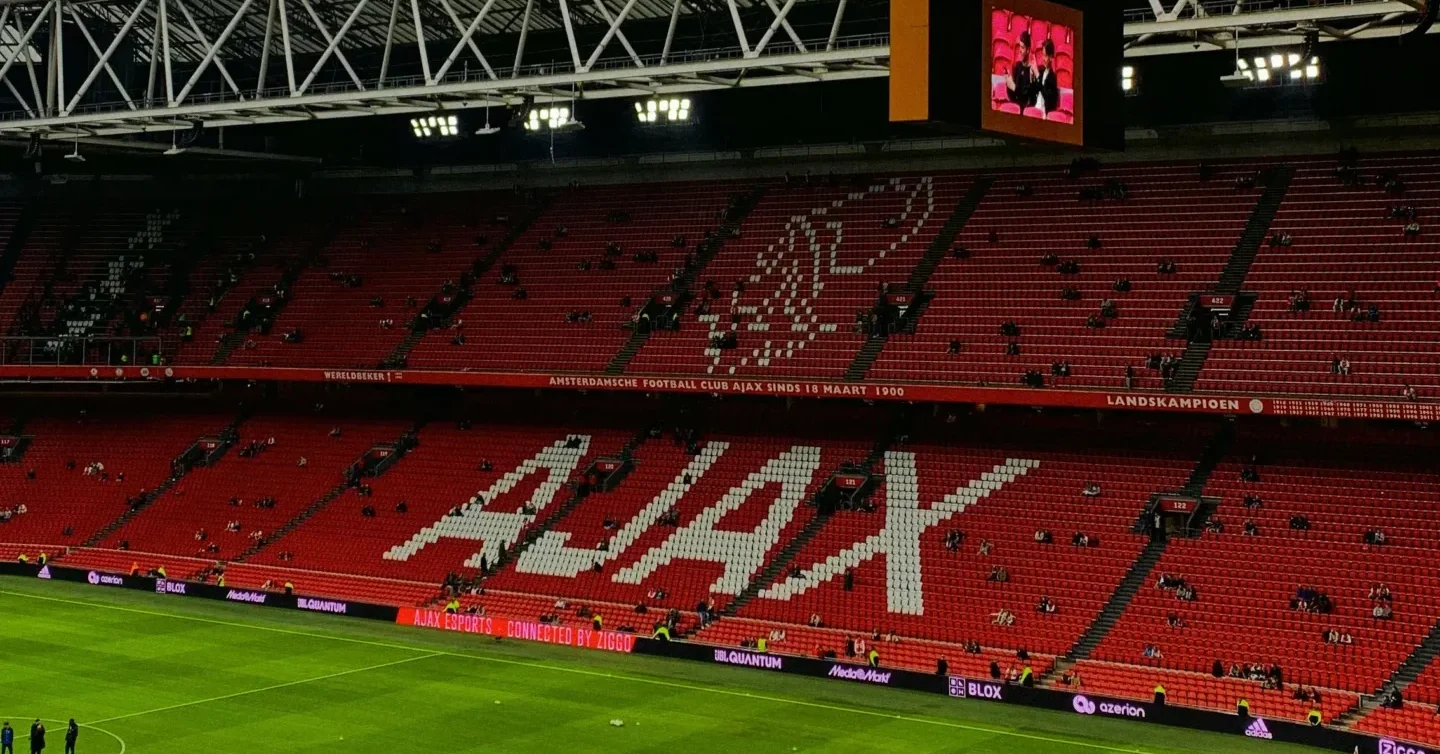
Ajax has won 34 Dutch league titles, far exceeding any other Amsterdam club. The club moved from De Meer Stadion to the Johan Cruyff Arena in 1996, a 55,000-capacity venue that also hosted the 1998 UEFA Champions League Final and the 2013 UEFA Europa League Final. The stadium’s location in Amsterdam Zuidoost, adjacent to Bijlmer ArenA railway station, positioned Ajax as a national rather than purely local institution.
Ajax’s youth academy, established in the 1970s under the influence of Rinus Michels and Johan Cruyff, became a model for talent development globally. The club’s total football philosophy, exported through coaching education and player pathways, shifted its identity from a city club to a cultural export. This success made it economically unviable for other Amsterdam clubs to compete for attention, sponsorship, or talent.
Amsterdam Derby: Definition and Current State
The Amsterdam derby traditionally involved fixtures between Ajax, DWS, Blauw-Wit, De Volewijckers, and other local clubs such as AFC, JOS Watergraafsmeer, Swift, VVA, and Zeeburgia. With no other professional clubs remaining in the city, the derby now exists only in amateur divisions or as a historical reference point.
DWS and De Volewijckers continue as amateur clubs, but their matches against Ajax are infrequent and lack competitive stakes. The term “Amsterdam derby” is occasionally applied to Ajax’s fixtures against clubs from the broader metropolitan area, but these lack the geographic and cultural specificity of traditional city derbies such as those in Madrid, Milan, or Buenos Aires.
Notable Footballers and Cultural Legacy
Rinus Michels, born in Amsterdam in 1928, developed total football at Ajax and later applied it with the Netherlands national team. Johan Cruyff, also Amsterdam-born, became the most visible embodiment of this philosophy. Both figures are central to Ajax’s identity and to Dutch football’s global influence.
Other Amsterdam-born players include Dennis Bergkamp, Clarence Seedorf, and Patrick Kluivert, all products of Ajax’s academy. Their careers reinforced the perception of Amsterdam as a talent hub, but this perception is inseparable from Ajax’s institutional dominance rather than a broader city-wide football culture.
Amateur Football and Grassroots Structure
Amsterdam retains a network of amateur clubs, including DWS, De Volewijckers, and Amsterdamsche FC (founded 1895). These clubs operate in lower divisions of the KNVB’s pyramid and serve local communities, but they lack visibility and financial support compared to professional football.
The KNVB’s district system organises amateur competition, but clubs face challenges in retaining players who are drawn to Ajax’s academy or other professional pathways. Youth football in Amsterdam is heavily centralised around Ajax’s scouting and development infrastructure, reducing the competitive independence of smaller clubs.
Defunct Clubs and Archival Significance
RAP, founded in 1887, won five national championships before disbanding in 1914. FC Amsterdam, formed in 1972, played in the Eredivisie for a decade before financial collapse. Blauw-Wit Amsterdam, founded in 1902, folded in 2015 after years in amateur leagues. These clubs are documented in Dutch football archives and local history projects, but they have no active legacy in the professional game.
The absence of these clubs removes narrative alternatives to Ajax’s dominance. In cities like Buenos Aires or Madrid, multiple clubs sustain competing identities and fanbases. Amsterdam’s football culture lacks this plurality, which reduces its competitive texture and cultural complexity.
Stadiums and Event Hosting
The Johan Cruyff Arena is the primary football venue in Amsterdam. It was originally named Amsterdam ArenA and rebranded in 2018 following Cruyff’s death. The stadium hosts Ajax home matches, Netherlands national team fixtures, and major UEFA finals. Its design and location reflect Ajax’s status as a national brand rather than a local club.
The Amsterdam Olympic Stadium, built for the 1928 Summer Olympics, hosted the 1962 European Cup Final but is no longer used for professional football. It serves as a historical site and occasional event venue. De Meer Stadion, Ajax’s former home, was demolished in 2018 and replaced with residential development.
Comparative Analysis: Amsterdam vs Other Football Cities
London supports 13 professional clubs across multiple tiers, sustaining numerous derbies and competitive identities. Madrid has two globally prominent clubs, Atlético and Real, with distinct cultural and political affiliations. Buenos Aires has over 20 professional clubs, many within close geographic proximity, creating intense local rivalry.
Amsterdam’s single-club dominance reduces its comparative significance as a football city. Ajax’s success is internationally recognised, but the city lacks the competitive density that defines football culture in London, Madrid, or Buenos Aires. This is a structural outcome of economic consolidation and league restructuring, not a reflection of fan engagement or historical interest.

Frequently Asked Questions
Why did Amsterdam’s other professional football clubs disappear?
Financial pressures, poor attendance, and Ajax’s growing dominance made it unsustainable for smaller clubs to compete professionally. DWS and De Volewijckers merged into FC Amsterdam in 1972, which folded in 1982. Blauw-Wit dropped to amateur status and dissolved in 2015. Economic restructuring in Dutch football favoured clubs with larger fanbases and commercial infrastructure.
Is there still an Amsterdam derby in professional football?
No. With only Ajax remaining in professional leagues, the Amsterdam derby now refers to amateur-level fixtures or historical matches. The term is occasionally applied to Ajax’s games against clubs from the broader region, but these lack the geographic and cultural specificity of traditional city derbies.
What is the significance of the Johan Cruyff Arena for Amsterdam football?
The Johan Cruyff Arena is Ajax’s home stadium and a major UEFA event venue, hosting two European finals. Its 55,000 capacity and location in Amsterdam Zuidoost position Ajax as a national institution. The stadium’s naming honours Johan Cruyff, reinforcing his legacy and Ajax’s identity as the dominant force in Amsterdam football.
How does Ajax’s youth academy affect other Amsterdam clubs?
Ajax’s academy centralises talent identification and development, drawing the best young players from across the city and region. This reduces the competitive independence of smaller clubs, which struggle to retain talent or build sustainable pathways. The academy’s success reinforces Ajax’s dominance and limits the growth of alternative football identities in Amsterdam.