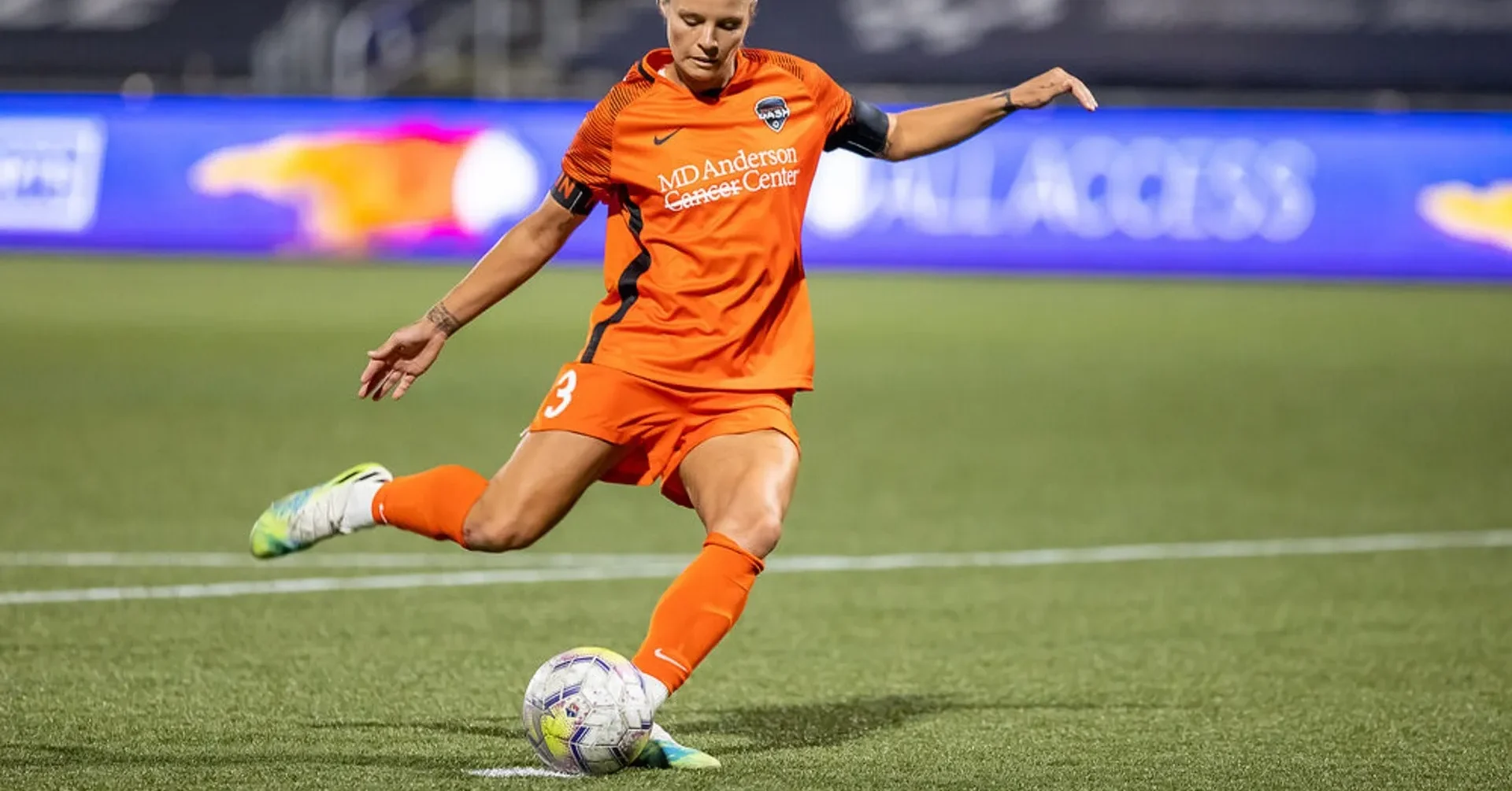
Penalty decisions are among the most disputed moments in football. Law 14 is precise. Interpretations of it are not.
By David Findlay, Founder of KiqIQ.
Quick Answer: A penalty kick is awarded when a defending player commits a direct free kick offence inside their own penalty area while the ball is in play. The kick is taken from the penalty spot, 11 metres from the goal line, with the goalkeeper required to remain on the goal line until the ball is kicked. Any breach of Law 14 can result in a retake or the disallowance of a goal.
Definition: A penalty kick in football is awarded when a defending player commits a direct free kick offence inside their own penalty area. Governed by Law 14 of the Laws of the Game, the kick is taken from the penalty spot, 11 metres from goal. Only the opposing goalkeeper may stand between the kicker and the goal. All other players must remain outside the penalty area and arc until the ball is in play.
Key point: Law 14 governs every positional and procedural requirement for a penalty kick, and failure by any player to comply can result in the kick being retaken or a goal being disallowed.
What Triggers a Penalty Kick in Football
Understanding football penalty rules begins with Law 14 of the Laws of the Game, as published by IFAB.
A penalty kick is awarded when the referee determines that a direct free kick offence has been committed by a defending player inside their own penalty area. The ball must be in play at the time of the offence.
Under IFAB Law 12, direct free kick offences include careless, reckless, or excessive force challenges, handball offences, and holding or pushing an opponent. The location of the offence, not the location of the ball, determines whether a penalty is awarded.
The penalty area is the rectangular zone extending 16.5 metres from each goalpost and 16.5 metres into the field of play. Any direct free kick offence by a defending player within this zone results in a penalty kick, regardless of where the ball is positioned at the moment of the infringement.
The Penalty Spot and Goal Setup
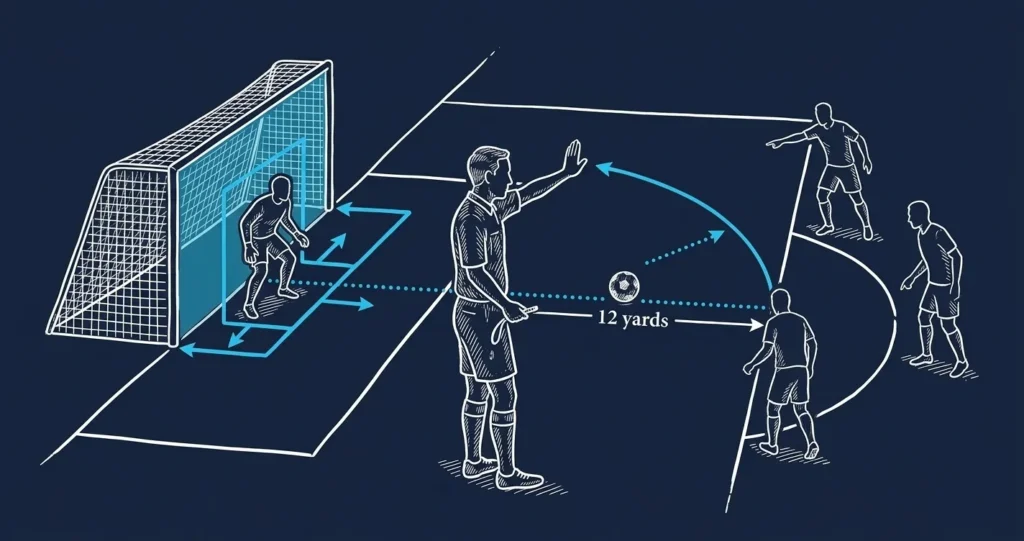
The penalty spot is a marked point positioned exactly 11 metres from the midpoint of the goal line. The ball must be placed on or directly behind the spot and must be stationary when the kick is taken.
The goal at a standard 11-a-side match measures 7.32 metres wide and 2.44 metres high. The penalty arc, the curved line outside the penalty area, is drawn at a radius of 9.15 metres from the penalty spot. Its function is to keep all players the required minimum distance from the spot during the kick, not to define the penalty area itself.
The table below summarises the key rule elements of a penalty kick under Law 14.
| Rule Area | Requirement | Consequence of Breach |
|---|---|---|
| Penalty Spot Distance | 11 metres from midpoint of goal line | Kick retaken if spot incorrectly placed |
| Ball Condition | Stationary and placed on or behind the spot | Kick retaken |
| Goalkeeper Position | Must remain on goal line facing the kicker | Retake if penalty missed after encroachment |
| Kicker Feinting | Permitted during run-up only | Caution and indirect free kick if feinting after run-up is complete |
| Other Players | Outside penalty area and arc, at least 9.15 metres from spot | Retake conditions depend on outcome of kick |
| Ball Direction | Must move clearly forward from the spot | Kick retaken if not clearly forward |
| Double Touch | Kicker cannot play ball again until another player touches it | Indirect free kick to opposing team |
| Simultaneous Encroachment | Both teams encroach at the same time | Goal stands if scored, retake if missed or saved |
Player Positioning During a Penalty Kick
Strict positional requirements apply to all players other than the designated kicker and the opposing goalkeeper.
All other players must be:
- Inside the field of play
- Outside the penalty area
- Outside the penalty arc
- At least 9.15 metres from the penalty spot
Players must hold their positions until the ball is in play. The ball is in play once it is kicked and moves clearly forward.
If an attacking player encroaches and the penalty is missed, the kick is retaken. If a defending player encroaches and the penalty is saved, the kick is also retaken. If players from both teams encroach simultaneously and the penalty is scored, the goal stands. If both teams encroach and the penalty is missed or saved, the kick is retaken.
Goalkeeper Rules Under Law 14
The goalkeeper has specific obligations throughout the penalty procedure. Non-compliance constitutes a breach of Law 14 and can lead to a retake.
The goalkeeper must:
- Remain on the goal line between the posts until the ball is kicked
- Face the kicker at the time of the kick
- Not touch the goalposts, crossbar, or net before the ball is struck
Goalkeepers are permitted to move laterally along the goal line before the kick is taken. They are not required to keep both feet stationary. The requirement is that they do not advance beyond the line before the ball is struck.
If the goalkeeper moves off the line before the kick and the penalty is missed or saved, the referee may order a retake. If the goalkeeper encroaches and the penalty is scored, the goal stands. VAR protocols in professional football now routinely check goalkeeper position at the moment of contact, which has increased the frequency of retakes at the top level of the game.
Rules for the Penalty Taker
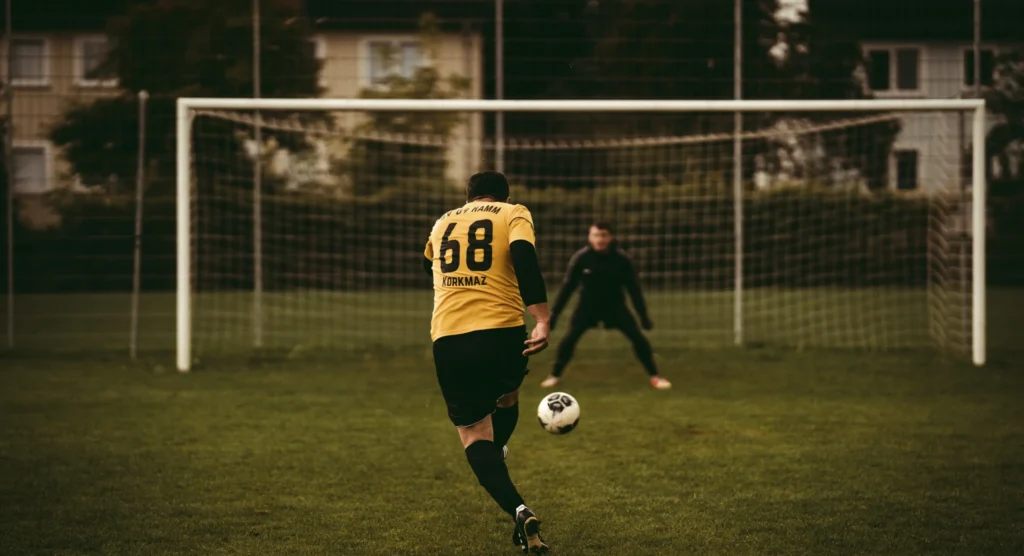
The player taking the penalty must be clearly identified to the referee before the kick is taken.
The kicker must:
- Approach the ball and kick it clearly forward
- Not feint in a way that deceives the goalkeeper after the run-up is complete
- Not play the ball again until it has been touched by another player
Feinting during the run-up is permitted. Feinting after the run-up is complete is a violation. The FA confirms under Law 14 that if the kicker feints once the run-up is finished, the referee will caution the kicker and award an indirect free kick to the defending team.
The ball must move forward from the spot. A kick that does not clearly travel forward is not considered to be in play and the kick must be retaken.
What Happens After the Penalty Kick Is Taken
Several outcomes are possible once the kick has been struck.
If the ball enters the goal, a goal is awarded provided no rule infringement occurred before the ball crossed the line. If the ball rebounds from the post or crossbar and remains in play, the match continues. Any player may play the ball at this point, with the exception of the original kicker, who must wait for another player to touch it first before playing it again.
If the goalkeeper saves the ball and it remains in play, the match continues normally. If the ball goes out of play directly from the kick, no goal is awarded and play restarts in the standard manner based on which team last touched the ball.
Penalty Shootout Rules in Football
A penalty shootout is a separate procedure used to determine the outcome of a match when the scores are level after extra time in a knockout competition. It is governed by the IFAB procedures for kicks from the penalty mark, which are distinct from Law 14.
Key distinctions between a shootout penalty and a match penalty include:
- A different player must take each of the first five kicks before any player may kick a second time
- The match goalkeeper is permitted to take kicks during the shootout
- The goalkeeper may be substituted after all five kicks if the team still has substitutions available
- Sudden death applies if scores remain level after five kicks each
The positional rules for the kicker, goalkeeper, and all other players during a shootout kick mirror those of a match penalty under Law 14. The same encroachment logic applies in both contexts.
Common Misconceptions About Football Penalty Rules
The goalkeeper must keep both feet on the line. This is not correct. The goalkeeper must not advance in front of the line before the ball is kicked, but lateral movement and a one-footed stance are both permitted.
A goal cannot stand if the goalkeeper encroaches. This is not correct. If the goalkeeper encroaches but the penalty is scored, the goal stands. A retake is only ordered when the penalty is missed or saved following the encroachment.
The kicker can score from a rebound off the goalkeeper. This is correct, provided no other player has touched the ball and the kicker allows another player to make contact first. The kicker cannot play the ball a second time in immediate succession.
Encroachment always results in a retake. This is not correct. If both teams encroach simultaneously and the penalty is scored, the goal stands. The outcome of the kick determines the consequence of the infringement in every case.
Frequently Asked Questions
What are the football penalty rules for the goalkeeper?
The goalkeeper must remain on the goal line, face the kicker, and must not move in front of the line before the ball is kicked. Lateral movement along the line is permitted. If the goalkeeper advances before the kick and the penalty is missed, a retake is ordered.
What is the penalty spot distance in football?
The penalty spot is positioned 11 metres from the midpoint of the goal line in association football. This measurement is specified in IFAB Law 14 and applies to all standard 11-a-side matches worldwide.
What are the penalty rules in football regarding encroachment?
Encroachment occurs when a player other than the kicker and goalkeeper enters the penalty area or arc before the ball is in play. The consequence depends on the outcome of the kick. If only an attacking player encroaches and the penalty is missed, it is retaken. If only a defending player encroaches and the penalty is saved, it is retaken. If both teams encroach and the penalty is scored, the goal stands. If both teams encroach and the penalty is missed, it is retaken.
Can the penalty taker feint before a penalty kick?
The kicker may feint during the run-up to the ball. Once the run-up is complete, any deliberate feint to deceive the goalkeeper constitutes a violation of Law 14. The referee will caution the kicker and award an indirect free kick to the defending team.
What happens if a penalty hits the post in football?
If the ball rebounds from the post or crossbar and remains in play, the match continues. Any player may play the ball except the original kicker, who must wait for another player to make contact first. If the rebound goes out of play, a goal kick or corner kick is awarded in the normal way depending on which player last touched the ball.