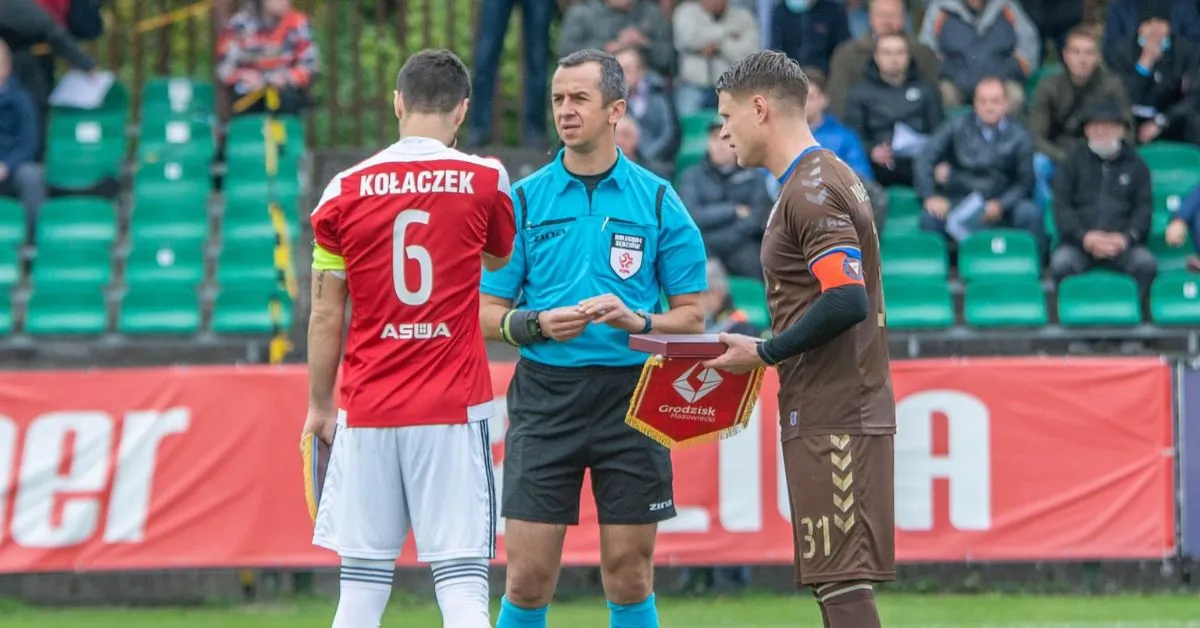
Most players call heads or tails without knowing what the winning captain is actually entitled to choose.
By David Findlay, Founder of KiqIQ.
Quick Answer: The football coin toss is conducted by the referee before kick-off and before extra time. The captain who wins the toss selects either which goal to attack in the first half or to take the kick-off. The captain who loses receives whichever option was not chosen.
Definition: The football coin toss is a random selection procedure used at the start of a match to allocate end selection and kick-off between both teams. The referee conducts the toss with both captains present. The winning captain selects either which goal to attack or to take kick-off. The procedure is governed by Law 8 of the Laws of the Game.
Key point: The winning captain selects either which end to attack or whether to take kick-off. These are two distinct choices, and the losing captain automatically receives whichever option remains.
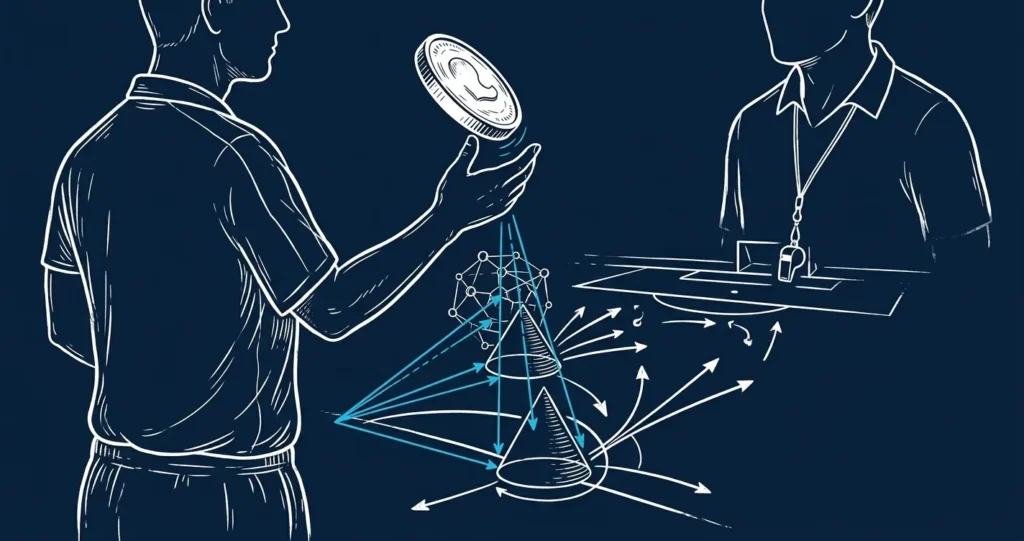
How the Football Coin Toss Works Under Law 8
The coin toss takes place in the centre circle immediately before the match begins. Both team captains attend alongside the match officials. The referee produces the coin and nominates which captain makes the call. The calling captain declares heads or tails before the coin lands. Both captains verify the result before the winner makes their selection.
Under Law 8 of the Laws of the Game, the winning captain has two options. They may choose which goal to attack in the first half, or they may choose to take the kick-off. Whichever option the winning captain does not select passes automatically to the opposing captain. There is no third option and no deferral permitted under the laws.
At the start of the second half, both teams switch ends and attack the opposite goals. The team that did not take kick-off to open the first half kicks off to begin the second half. This reversal is automatic and requires no further toss.
A further coin toss is conducted before extra time when a match proceeds to additional periods. The same two options apply. Any advantage held by either captain in the pre-match toss does not carry forward to the extra time procedure.
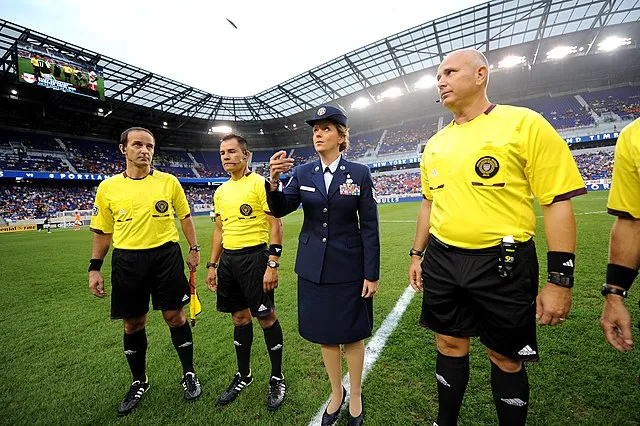
What Happens When You Win the Coin Toss in Football
Winning the toss presents a genuine tactical decision. End selection and kick-off carry different values depending on ground conditions, wind direction, sun angle, and team approach. The table below summarises the decisions available at each stage.
| Stage | Procedure | Who Decides |
|---|---|---|
| Pre-match coin toss | Referee tosses. Winning captain chooses which goal to attack or to take kick-off. Losing captain receives the other option. | Winning captain selects. Referee adjudicates. |
| First half | Teams play toward their allocated ends. The nominated team takes kick-off from the centre circle. | Coin toss outcome |
| Second half | Teams switch ends automatically. The team that did not kick off in the first half takes the second-half kick-off. | Automatic reversal under Law 8 |
| Extra time | A new coin toss is conducted before extra time begins. The same two options apply to the new winning captain. | New coin toss result |
Choosing which end to attack allows a team to take advantage of a strong wind, a slope, or low sun in the first half. Many coaches prefer to play with a favourable condition early, accepting that the advantage reverses at half time. Others prefer to manage a difficult condition in the first half and use the advantage to close out the match.
Choosing kick-off gives the winning team the first touch but does not guarantee territorial advantage. At the senior professional level, captains and managers rarely select kick-off over end selection unless conditions are neutral or there is a clear strategic rationale for doing so.
The Football Coin Toss Coin
No governing body mandates a specific coin for professional matches. In most cases, the referee uses a standard coin from the host nation. Some governing bodies produce commemorative coins for major finals and international fixtures, though these carry no regulatory distinction from a standard coin.
The coin must produce a clear and visible result. Both captains must be able to confirm the outcome before the winner makes their selection. The referee holds final authority over the result if any dispute arises between the captains.
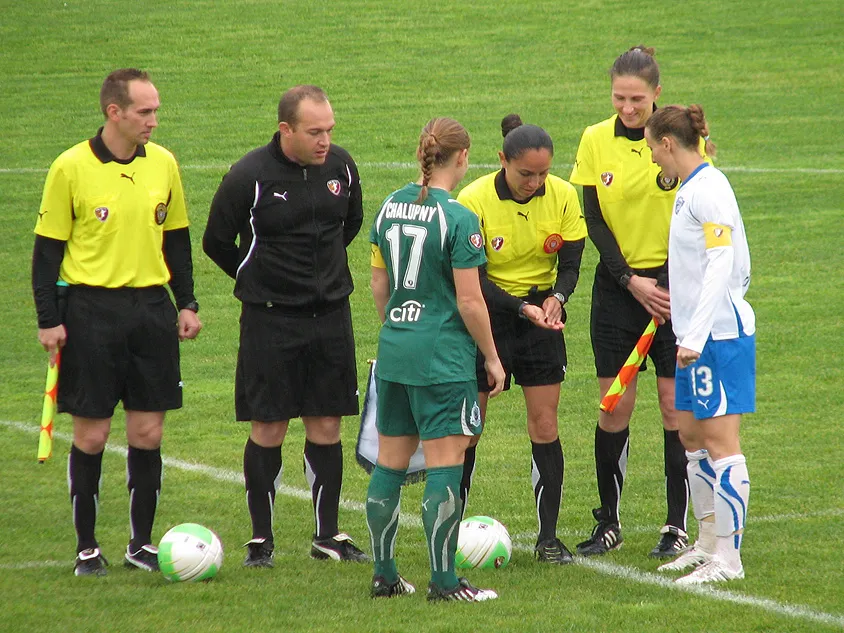
Football Coin Toss History and the Match-Deciding Toss
The coin toss as a mechanism for allocating kick-off and end selection has been part of football since the codification of the game in the nineteenth century. Its role within Law 8 has remained consistent across multiple revisions to the Laws of the Game.
A separate and more contentious use of the coin toss was its application as a match-deciding mechanism in knockout competition. Before the penalty shootout became standard practice, a coin toss could determine which team progressed after a tied match. The 1968 European Championship semi-final between Italy and the Soviet Union was resolved by a coin toss, with Italy advancing after the match finished level following extra time.
UEFA introduced the penalty shootout as a direct replacement for the coin toss in 1970. FIFA progressively standardised penalty shootouts for World Cup knockout rounds through the 1970s. The coin toss as a match-deciding mechanism no longer features in any major senior competition framework.
Can a Coin Toss Decide a Football Match Today
In senior professional and international football, a coin toss cannot be used to decide a match. Knockout matches that remain level after extra time are resolved by a penalty shootout under current FIFA and UEFA regulations.
In amateur, youth, and some regional competitions, the rules vary. Certain non-professional competition formats retain a coin toss as a final resolution mechanism when all other tie-breaking procedures have been exhausted. Players and coaches should verify the specific rules that apply to their competition before assuming a shootout is the only alternative to a replay.
Frequently Asked Questions About the Football Coin Toss
What is a football coin toss?
A football coin toss is the random selection procedure conducted by the referee before kick-off. Both captains attend, one calls heads or tails, and the winner selects either which end to attack or to take kick-off. The procedure is governed by Law 8 of the Laws of the Game.
How does the coin toss work in football?
The referee tosses a coin and the winning captain chooses from two options: which goal to attack in the first half, or to take the kick-off. The losing captain receives whichever option was not selected. A separate toss is conducted before extra time if the match reaches that stage.
What happens when you win the coin toss in football?
The winning captain selects either which end to attack or whether to take kick-off. In most professional matches, captains prioritise end selection when conditions such as wind direction or sun angle offer a meaningful advantage in the first half.
Has a coin toss ever decided a football match?
Yes. Before penalty shootouts became standard, a coin toss could determine which team progressed in a knockout tie. The 1968 European Championship semi-final between Italy and the Soviet Union is the most widely cited example at senior international level.
Is the coin toss covered by the Laws of the Game?
Yes. The football coin toss procedure is governed by Law 8 of the Laws of the Game, which covers the start and restart of play. Law 8 specifies the toss procedure, the two options available to the winning captain, and the automatic allocation of the remaining option to the opposing captain.