Football club badges are more than decoration; they are the compressed identity of a team, worn by millions and recognised instantly across borders.
By David Findlay, Founder of KiqIQ.
Quick Answer: Football club badges are embroidered or printed emblems that represent a team’s history, location, and values, used on kits, merchandise, and branding materials.
Definition: A football club badge is a visual symbol, typically featuring heraldic devices, local landmarks, founding dates, or club mottos, that identifies a professional or amateur football team.
Key point: Most badge redesigns fail because clubs prioritise modern aesthetics over the symbolic weight that supporters have carried for decades.
Why Football Club Badges Matter
Badges encode identity. A crest on a shirt signals allegiance, geography, and continuity. Liverpool Football Club’s Liver Bird, Barcelona’s St George’s Cross and Catalan flag, and Leeds United’s white rose all compress decades of history into a single mark. These symbols are not arbitrary; they are chosen, defended, and occasionally fought over when redesigns are proposed.
English Premier League badges and British soccer team logos follow a consistent pattern: heraldic shields, local iconography, and founding years. Rangers Football Club incorporates royal symbolism, while English football team badges often reference civic crests or historical guilds. The badge is the first thing a supporter learns and the last thing they forget.
Common Elements in Football Club Badges
Most badges share recurring components. Understanding these helps decode the visual language of football identity.
Heraldic Shields
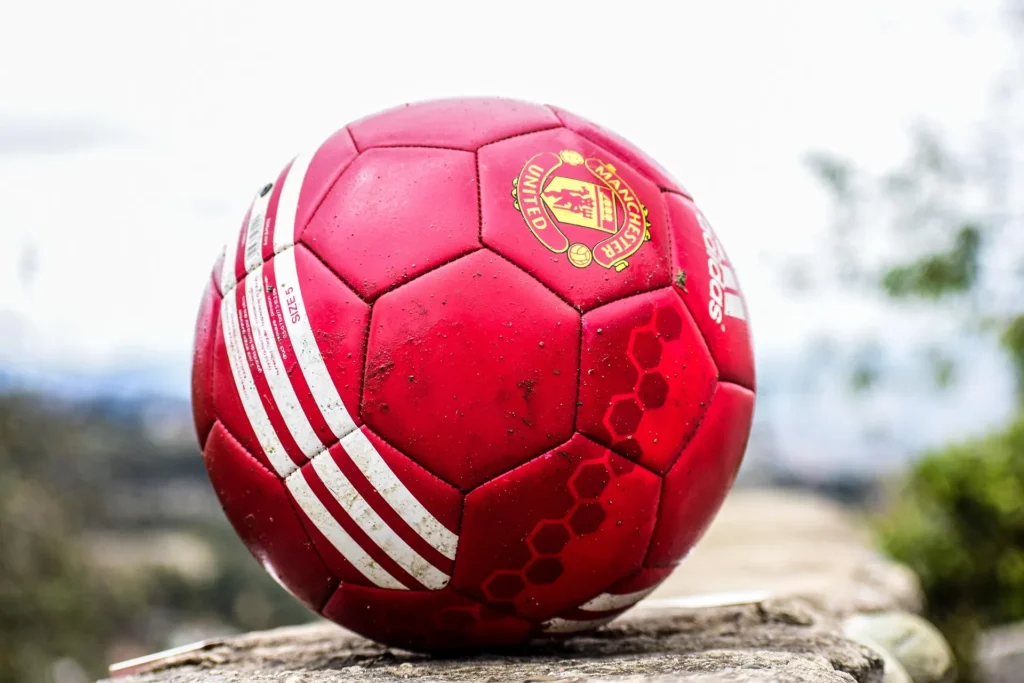
The shield shape dominates European football. It conveys tradition, defence, and civic pride. Manchester United, Arsenal, and Tottenham all use shield-based designs, rooted in medieval heraldry.
Local Landmarks and Symbols
Clubs embed their geography. Liverpool’s Liver Bird, Newcastle’s seahorses, and Brighton’s seagulls all reference local fauna or civic symbols. Barcelona’s badge includes the Cross of Saint George and the Catalan flag, making political and regional identity explicit.
Founding Dates
Many badges display the year of establishment. This anchors legitimacy and seniority. Celtic, Rangers, and Nottingham Forest all feature founding dates prominently.
Mottos and Latin Phrases
Club mottos reinforce values. Tottenham’s “Audere est Facere” (To Dare Is to Do) and Everton’s “Nil Satis Nisi Optimum” (Nothing but the best is good enough) are embedded in the badge structure, repeated on scarves, flags, and tattoos.
English Premier League Badges
Premier League badges are among the most scrutinised in global sport. Clubs balance heritage with commercial appeal, and redesigns are met with immediate supporter feedback, sometimes hostile.
Manchester City modernised their badge in 2016, removing the eagle and returning to a circular design with a ship, referencing Manchester’s industrial past. Leeds United reverted to their 1970s badge in 2018 after supporter backlash against a minimalist redesign. These cases show that badge equity is not negotiable.
English football team badges often feature roses (Lancashire, Yorkshire), lions (England, royalty), or shipbuilding references (coastal clubs). Premier league badges are now managed as brand assets, but their emotional value far exceeds their commercial function.
British Soccer Team Logos and Licensing
Badges are licensed assets. Clubs control reproduction, and counterfeit merchandise is a persistent issue. Official badges appear on kits, training wear, and stadium signage. Licensing revenue funds smaller clubs, making the badge a commercial instrument as well as a symbol.
Barcelona Football Club Badge
Barcelona’s badge is one of the most politically loaded in world football. It features the Cross of Saint George, the Catalan flag, and the club’s initials. The design has evolved, but the core elements remain: Catalan identity, civic pride, and a rejection of centralist Spanish symbolism.
The badge is worn by supporters as a statement of regional autonomy. It is not just a football emblem; it is a political marker. This makes any redesign extremely sensitive. Barcelona’s badge is a case study in how visual identity carries ideology.
Liverpool Football Club Badge
Liverpool’s badge centres on the Liver Bird, a mythical creature that represents the city. The current design includes the Shankly Gates and the eternal flames, memorialising the Hillsborough disaster. The badge is not static; it has been updated to reflect tragedy, memory, and community.
The Liver Bird is instantly recognisable globally. It appears on everything from official kits to supporter tattoos. Liverpool’s badge is a lesson in how symbols absorb history and become inseparable from collective identity.
Leeds United Football Club Badge
Leeds United returned to their classic badge in 2018 after a failed rebrand. The original design, used during their 1970s dominance, featured a stylised white rose and the club name in bold letters. The 2018 reversion was a direct response to supporter anger over a minimalist redesign that stripped away historical detail.
The Leeds badge is now protected by supporter sentiment. Any future changes will require consultation. This case illustrates the risk of treating a badge as a logo rather than a relic.
Rangers Football Club Badge
Rangers’ badge includes a lion rampant, referencing Scottish royalty, and the letters RFC. The design is simple but loaded with unionist symbolism. The badge is worn by supporters as a marker of identity within Glasgow’s sectarian divide.
Rangers redesigned their badge in 1999, then reverted elements after supporter feedback. The badge is now stable, but its meaning extends far beyond football. It is a symbol of cultural and political allegiance.
Badge Redesigns and Supporter Backlash
Redesigns are high risk. Clubs attempt modernisation to appeal to global audiences or simplify reproduction, but supporters resist changes that erase historical detail. Cardiff City’s 2012 rebrand, which changed the badge colour from blue to red, triggered protests and was eventually reversed.
Everton’s 2013 redesign removed the motto and traditional crest elements, prompting a supporter revolt. The club reinstated the original design. These cases show that badge equity is earned over generations and cannot be reset by committee.
The Complexity Wall in Badge Redesigns
Clubs often fail to measure the emotional cost of change. Surveys and focus groups cannot capture the depth of attachment. Supporters inherit badges from family members, tattoo them, and mourn under them. Redesigns that ignore this ritual weight fail immediately.
How Badges Are Used in Branding
Badges appear on kits, scarves, flags, stadium facades, and digital platforms. They are the anchor of all club branding. Licensing agreements govern reproduction, and clubs enforce trademark protection aggressively.
Badges are also used in co-branding partnerships. Sponsors integrate club crests into limited-edition products, leveraging supporter loyalty. The badge is the most valuable asset a club owns, surpassing individual players in longevity and recognition.
Football Club Logos vs Badges
The terms are often used interchangeably, but there is a distinction. A badge is traditionally embroidered or affixed to a shirt. A logo is a broader brand mark used across media. Most clubs now use their badge as their logo, but some maintain separate marks for commercial use.
This convergence reflects the professionalisation of football branding. Clubs are now media properties, and the badge must work at every scale, from mobile screens to stadium banners.
Frequently Asked Questions
What is the purpose of a football club badge?
A football club badge identifies the team and encodes its history, location, and values. It serves as a visual anchor for supporters, appearing on kits, merchandise, and branding. Badges are symbols of allegiance and continuity, often inherited across generations and defended against redesigns.
Why do English football team badges often include animals?
Animals on English football team badges usually reference local heraldry, civic crests, or regional fauna. Liverpool’s Liver Bird, Newcastle’s seahorses, and Brighton’s seagulls all connect the club to its geography. These symbols reinforce place-based identity and differentiate clubs within crowded leagues.
What happened when Leeds United changed their badge?
Leeds United introduced a minimalist badge in 2018 that removed historical detail, triggering immediate supporter backlash. The club reverted to the classic 1970s design within months. The episode demonstrated that badge equity cannot be reset by design committees and that supporter consultation is essential.
How do football clubs protect their badges legally?
Clubs register badges as trademarks and enforce licensing agreements to control reproduction. Counterfeit merchandise is pursued through legal channels. Badges are intellectual property assets, and clubs generate revenue by licensing them to manufacturers, retailers, and partners. Unauthorised use risks trademark infringement litigation.
Why is the Barcelona badge politically significant?
Barcelona’s badge features the Catalan flag and the Cross of Saint George, symbolising regional identity and resistance to centralist Spanish politics. The badge is worn as a political statement, not just a football emblem. Any redesign is sensitive because it risks diluting the club’s role as a symbol of Catalan autonomy.