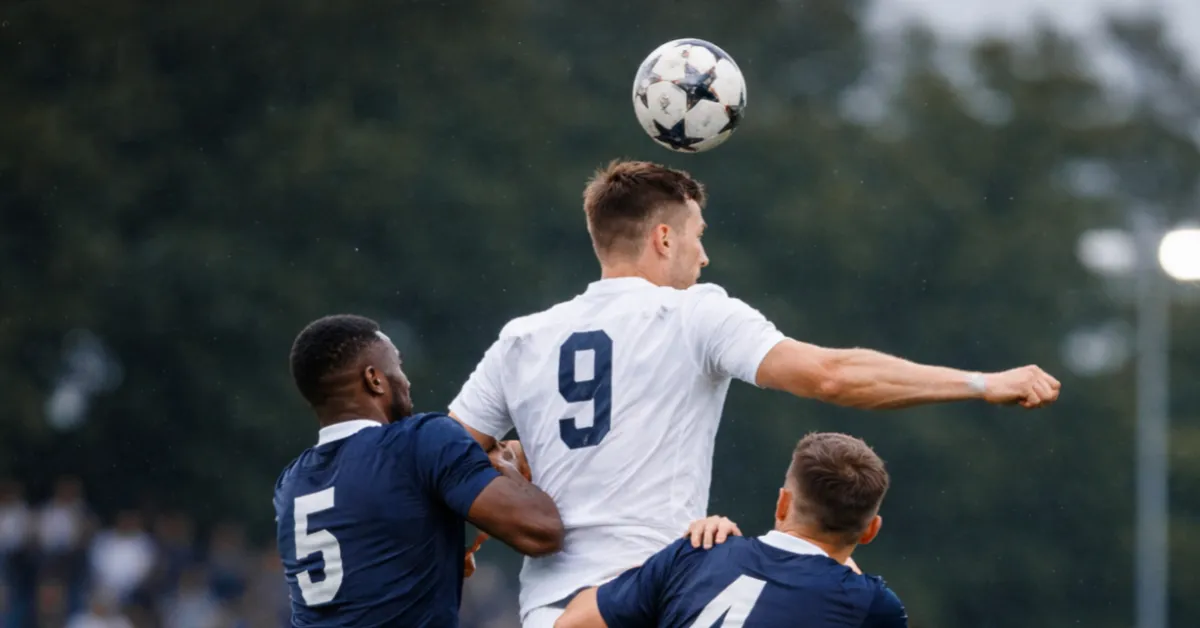
Not every tall player is an aerial threat. Understanding who wins headers and why separates tactical clarity from lazy labelling.
By David Findlay, Founder of KiqIQ.
Quick Answer: An aerial threat in football is a player with the physical attributes, timing, and positional intelligence to win headers consistently in attacking, defensive, or midfield situations. The term applies to outfield players across all positions and is used by coaches, analysts, and commentators to describe a player whose aerial ability creates or prevents scoring opportunities.
Definition: Aerial threat in football describes a player who poses a consistent danger in headed duels due to a combination of height, jump timing, neck strength, positional reading, and movement off the ball. The designation applies across all positions and identifies players whose aerial ability has a measurable impact on match outcomes in both attacking and defensive phases of play.
Key point: Aerial threat is not a height descriptor. It combines physical attributes with timing, anticipation, and tactical positioning to determine a player’s genuine impact in contested aerial duels across all phases of the game.
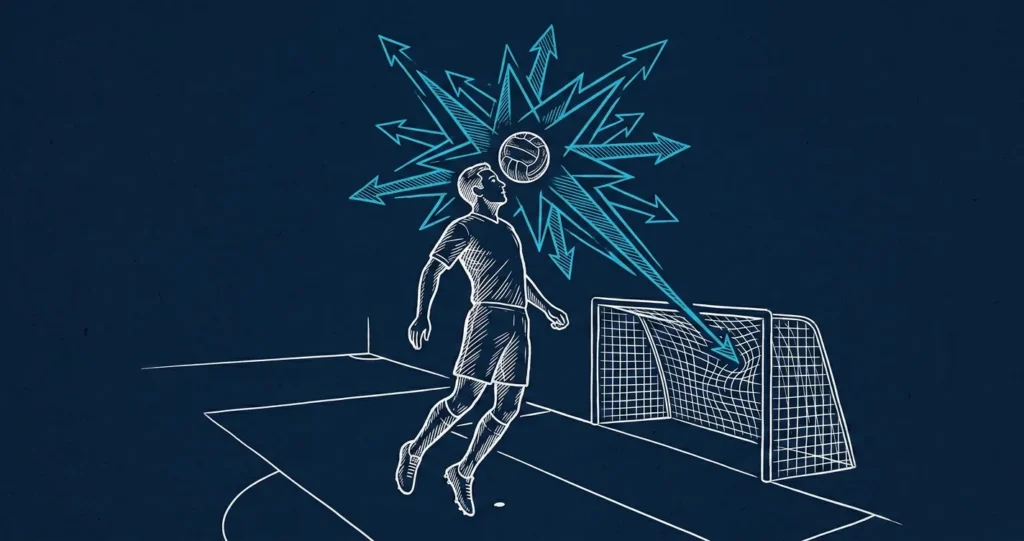
What Makes a Player an Aerial Threat in Football
The phrase aerial threat in football appears in scout reports, match commentary, and tactical briefings, but its meaning is often applied loosely. A player labelled an aerial threat must demonstrate consistent output in contested header situations, not merely win the occasional duel due to a height advantage over a smaller opponent.
The components that define a genuine aerial threat include:
- Height and reach: Taller players generate a natural physical advantage in aerial duels, but height alone does not create an aerial threat without the supporting attributes below.
- Jump timing: The ability to time a run and leap to meet the ball at its highest point, rather than simply jumping earliest or highest in the group.
- Neck and upper body strength: Power at the point of contact determines the direction and distance of a headed delivery or clearance.
- Positional intelligence: Reading the flight of the ball and arriving in the correct zone before opponents reduces the physical contest to a more manageable level.
- Movement off the ball: Creating space through intelligent runs to receive aerial deliveries without close defensive interference is a key differentiator at higher levels.
Analysis of the most surprising aerial threats in football consistently identifies players who ranked highly in aerial duel win rates despite not matching the physical stereotype, reinforcing that the combination of attributes matters more than any single trait.
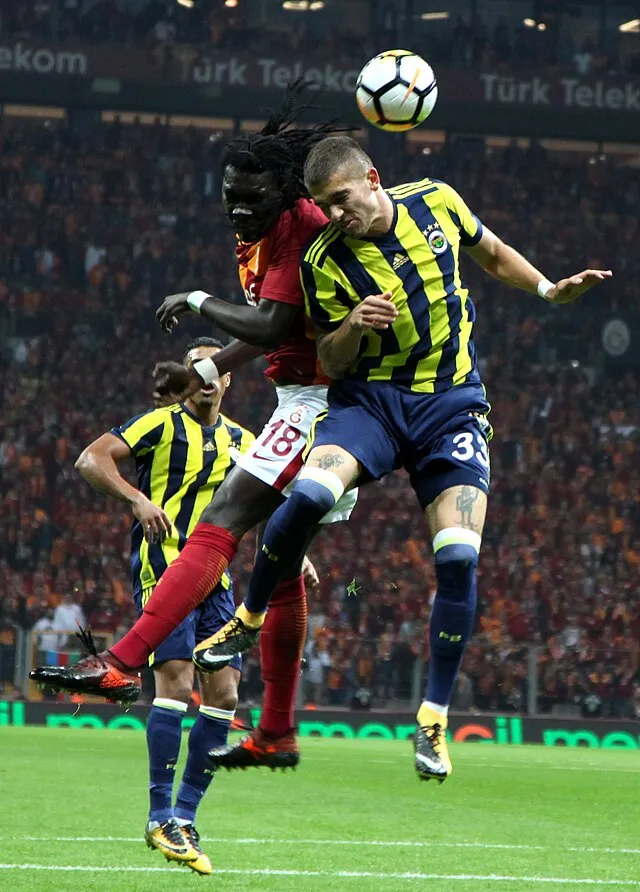
Aerial Threat by Position in Football
The meaning of aerial threat in football shifts depending on the position under discussion. A striker’s aerial threat is measured by chances created and goals scored from headers. A centre-back’s aerial threat is measured by duels won and clearances made in defensive situations. The table below summarises how aerial threat presents across six key positions.
| Position | Primary Aerial Role | Key Attributes | Context |
|---|---|---|---|
| Centre-Forward (Target Striker) | Winning headers to score or hold up play | Height, jump timing, neck strength | Open play and set pieces |
| Centre-Back | Clearing headers and winning defensive aerial duels | Positioning, physical dominance, aerial reach | Set pieces and open play defending |
| Attacking Midfielder | Late-arriving headers in the attacking box | Timing of runs and reading ball trajectory | Corners and wide deliveries |
| Central Midfielder | Contesting aerial second balls in midfield | Upper body strength and positional awareness | Transitions and long ball situations |
| Wide Forward | Near-post flick-ons and headed assists | Movement off the ball and anticipation | Wide deliveries and corner routines |
| Defensive Midfielder | Competing for long balls played into midfield | Physical presence and aerial reading | Direct opposition build-up play |
Aerial Threat in Set Pieces
Set pieces are the context in which aerial threat carries the highest tactical value. Corners, free kicks, and long throws place headed duels at the centre of the game plan for both the attacking and defending side.
Coaches designing set piece routines around aerial threats structure runs to free their most dangerous header of the ball from close-marking attention. This may involve block runs, decoy movements, or near-post flick-on routines designed to redirect the ball toward the primary aerial target in a less congested area.
Defensively, identifying the opposition’s aerial threat from set pieces is a core part of pre-match preparation. Managers assign their strongest aerial defender to mark the opponent’s principal header, while zonal marking systems attempt to remove the individual aerial duel from the equation by occupying zones rather than tracking runners.
Research into what constitutes being good in the air highlights how set piece design has elevated the tactical importance of aerial duels beyond the physical act of heading itself, turning aerial threat identification into a preparation discipline rather than an in-game observation.
How Coaches Identify an Aerial Threat
Scouting for aerial threat involves more than noting a player’s height in a database. Coaches and analysts assess aerial threat through a combination of live observation and data output, focusing on the following indicators:
- Aerial duel win percentage in open play compared to set piece situations
- Volume of aerial duels contested per 90 minutes at the relevant level of competition
- Headed shots on target and headed goals recorded per season
- Positioning under high balls, particularly in crossing and long-ball situations
- Contribution to defensive headers as well as attacking headers in the final third
A player with a high aerial duel win rate but a low volume of duels contested may not represent a true aerial threat at the required standard. Volume and quality together determine genuine aerial impact. A player winning seven out of ten aerial duels but contesting only three per 90 minutes is less influential than a player winning six out of ten but contesting twelve.
Aerial Threat and Defensive Responsibility
The concept of aerial threat is not limited to attacking situations. In defensive phases, teams without a strong aerial presence are vulnerable to long balls, second balls, and set piece deliveries targeting their weaker headers.
Premier League data on headed goals shows that certain clubs consistently concede from aerial situations, pointing to a structural weakness in their aerial defensive coverage rather than individual errors. This makes aerial threat assessment relevant to both recruitment and tactical preparation at every level of the professional game.
A team’s aerial defensive profile is shaped by the centre-back pairing’s combined aerial duel win rate, the goalkeeper’s decision-making when claiming high balls, and the midfield’s ability to contest second balls that drop after initial headers are cleared. Aerial play exercises that develop these skills across a squad address both the physical and positional elements of contested aerial situations at training level.
Aerial Threat Meaning in Football Versus General Heading Ability
A useful distinction exists between a player with general heading ability and a player classified as an aerial threat in football. General heading ability describes a technical skill. A player can head the ball cleanly and accurately when it arrives within comfortable range. Aerial threat implies something more demanding, specifically the capacity to impose that skill in contested, high-pressure duels against physically capable and tactically prepared opponents.
A technically capable header of the ball who is regularly beaten in contested duels does not represent an aerial threat at the level under analysis. The designation carries an implied competitive standard that is context-dependent. A player may be a genuine aerial threat in the fifth tier of English football but fail to impose that same quality at Championship level due to the improved physicality and tactical organisation of opponents at that standard.

Frequently Asked Questions
What does aerial threat mean in football?
Aerial threat in football means a player who consistently wins or contests headed duels through a combination of height, jump timing, neck strength, and positional intelligence. The term is used in scouting, commentary, and tactical analysis to identify players whose aerial ability creates or prevents scoring opportunities in competitive match situations.
Is aerial threat only about height in football?
No. Height provides an initial physical advantage but does not determine aerial threat on its own. Timing, movement, strength, and positional reading are all required for a player to consistently impose aerial dominance in competitive match situations against organised opposition.
Which positions are most associated with aerial threat in football?
Strikers and centre-backs are most commonly described as aerial threats, but the term applies to any outfield position. Target forwards, central midfielders with defensive duties, and attacking midfielders arriving late into the box can all qualify depending on their aerial output data and their specific tactical function within the team shape.
How is aerial threat measured in football analysis?
Aerial threat is measured using aerial duel win percentage, volume of aerial duels contested per 90 minutes, headed shots on target, headed goals per season, and positional tracking of a player’s behaviour under high balls. No single statistic fully captures aerial threat, so analysts use a combination of these indicators to build a complete picture.
Can a short player be an aerial threat in football?
Yes. Several players below average height have demonstrated high aerial duel win rates due to exceptional timing, anticipation, and physical strength relative to their frame. The football record consistently shows examples of shorter players who perform effectively in aerial situations against taller opponents because of superior positional intelligence and jump timing.