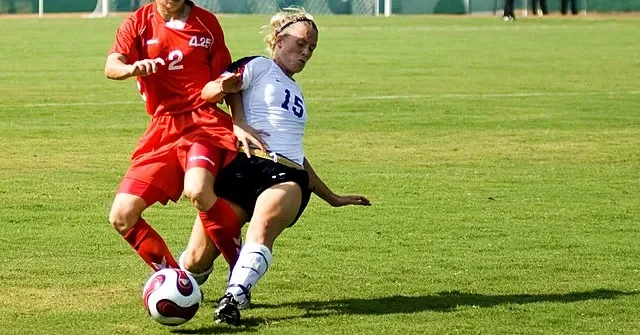
The modern centre back is required to defend one-on-one at the edge of the box, organise a back four under a high press, carry the ball into midfield to create numerical overloads, and switch play to a far-side winger in a single match. Developing one of those skills without the others produces a limited defender, regardless of how dominant they are in the air.
By David Findlay, Founder of KiqIQ.
Quick Answer: To be a better centre back, players need to develop decision-making under pressure, defensive positioning, aerial and 1v1 defending, ball distribution, wide-area coverage, communication, and leadership. Each skill area requires specific and repeated practice in match-realistic conditions.
Definition: A centre back is a central defensive position responsible for preventing the opposition from scoring, organising the defensive structure, and increasingly for initiating attacks through accurate passing and ball-carrying from deep positions.
Key point: According to The FA’s coaching guidance, centre backs must develop judgment on when to press, drop off, squeeze, engage, or delay. That decision tree, applied correctly under match pressure, is the foundation of effective defending. Physical attributes support it. They do not replace it.
1. Decision-Making Under Pressure
The FA’s coaching guidance for developing central defenders identifies decision-making as the central developmental priority. Specifically, the guidance emphasises that players must build judgment on when to press, when to drop off, when to squeeze, when to engage, and when to delay. These are not instinctive reactions. They are trained responses developed under repeated, realistic pressure.
The recommended training format, according to The FA Bootroom, uses overload scenarios: 2v1, 3v2, and 4v3 situations in which the centre back is outnumbered and must make decisions quickly. Small-sided games that allow easy recovery are less effective for this purpose. The pitch areas need to be large enough to create genuine space-behind threats that replicate the conditions where decision errors occur in matches.
The practical application is to create a mental library of defensive scenarios. A centre back who has practised dealing with a striker dropping short while a runner goes in behind will recognise that situation in a match and respond to it automatically. One who has only practised in closed drills will hesitate.
2. Defensive Positioning and Line Management
Positioning determines whether a centre back defends with control or under pressure. A defender in a correct position before the ball arrives can intercept, shepherd, or delay. A defender in the wrong position is already recovering when the ball arrives.
The core principles, as outlined in coaching analysis by Coaches Voice covering elite defenders including Virgil van Dijk and Ruben Dias, include maintaining a body shape that allows vision of both the ball and the attacker, positioning relative to the defensive line rather than relative to an individual striker, and adjusting that line in coordination with teammates rather than individually.
Ruben Dias, analysed in Coaches Voice material on modern centre-back tactics, is cited for his ability to read the game early and adjust his positioning before an attacking move develops. That anticipation, which shortens the gap between the moment an attacker receives the ball and the moment a defensive challenge is made, is a learned skill, not a physical attribute.
3. Aerial Ability and 1v1 Defending
Aerial dominance in a centre back involves timing the jump, attacking the ball at its highest point, and making contact with the forehead rather than the top of the skull. These are technical elements that improve with specific practice. Height provides an advantage but does not substitute for correct technique.
In 1v1 situations, the coaching principle from The FA’s guidance is to manage the duel by controlling distance and angle rather than committing to a challenge. The goal is to delay the attacker, reduce the space behind, and buy time for teammates to recover. A committed tackle that misses leaves the attacker through on goal. A disciplined delay that compresses space while maintaining defensive cover is the lower-risk option in most positions on the pitch.
Sergio Ramos is referenced in Coaches Voice analysis as an example of a centre back with strong 1v1 ability, particularly for his pressing aggression in the wide areas and his willingness to engage attackers high up the pitch rather than waiting for them to approach the defensive line.
4. Ball Distribution and Build-Up Play
The ball-playing aspect of the modern centre back role is now a technical requirement at most levels of the game. Coaches Voice’s analysis of Leonardo Bonucci describes his deep-lying passing range as producing quarterback-like deliveries from deep positions, breaking lines with disguised and reversed passes that progression the ball through opposition blocks.
The technical skills required for effective distribution include:
- Short passing under pressure: Receiving the ball while being pressed and playing it accurately to a nearby teammate at the correct weight and angle.
- Switching play: Diagonal passes to far-side wingers or full-backs that shift the defensive block and create space on the weak side.
- Line-breaking passes: Through balls played between or over opposition lines to connect with midfielders or forwards who have dropped into pockets of space.
- Ball-carrying from deep: Dribbling forward when space is available to draw out a press and create a numerical overload in midfield. Virgil van Dijk is noted in Coaches Voice material for his ability to drive into space and trigger attacking moves from defensive positions.
The risk is significant. Turnovers near the goal, as Coaches Voice notes, create dangerous counter-attacking opportunities for the opposition. Distribution must be accurate, and the decision to carry or pass is as important as the execution.
5. Wide-Area Capability
Centre backs in modern defensive systems are regularly required to cover the wide channels, particularly when full-backs push forward. The FA’s coaching guidance identifies wide-area capability as a specific developmental priority: stepping into channels during transitions, marking correctly relative to the ball position, and managing 1v1 confrontations in exposed areas on the flank.
The challenge in wide positions is different from central defending. Attackers have the touchline as a boundary on one side, but they also have angles that a central defender is less accustomed to covering. Practising coverage of wide channels in training, including marking relative to a ball position out on the opposite flank, develops the positional instincts needed to handle these situations without waiting for a coaching instruction during the match.
6. Communication and Leadership
The centre back is the defensive organiser in most systems. That organisational role is expressed through verbal communication: calling the defensive line up or back, alerting teammates to runners they cannot see, directing the press, and managing transitions between defensive phases.
Coaches Voice identifies communication as a core leadership quality in elite centre backs, specifically citing how effective communication allows the defensive structure to adjust as a unit rather than as a collection of individuals responding separately to the same situation. A back four that shifts as a block compresses space. Four defenders each reacting individually leave gaps between them.
Communication under pressure is a trainable skill. It requires players to maintain awareness of teammates’ positions while under pressure from an attacker. Training scenarios that remove verbal communication, then reintroduce it, can highlight to players how much their defensive organisation degrades without it.
7. Developing Through Position Versatility
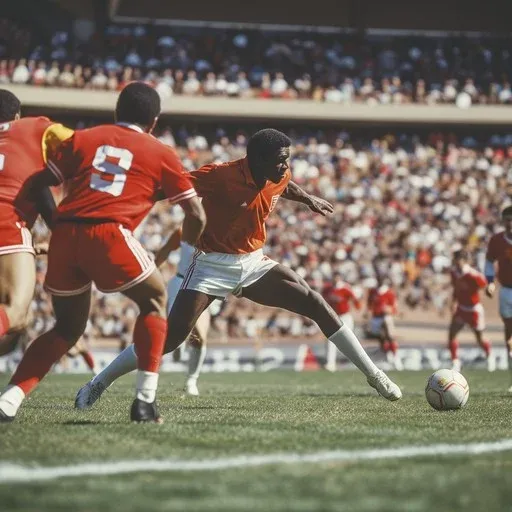
The FA Bootroom guidance cites an observation from its coaching staff that several established centre backs developed their positional awareness by playing in other positions earlier in their careers. Examples referenced in the guidance include Micah Richards, Jamie Carragher, and Colin Hendry, all of whom played as strikers at some stage before becoming central defenders.
The coaching argument is that playing in forward or midfield positions builds a different perspective on space, movement, and attacking patterns. A centre back who has played as a striker understands the runs they are being asked to defend. A centre back who has played in midfield understands the passing angles that opposition midfielders are looking for. That experience is difficult to replicate through coaching alone.
Young players who are fixing their position at 14 or 15 may be limiting the game-reading library they develop. The FA guidance recommends creating realistic match scenarios rather than early specialisation, allowing defenders to encounter and solve a wide range of problems before their positional habits become fixed.
The KiqIQ Angle
The centre back is the position where the gap between perception and reality is widest in player development. Coaches and parents prioritise the wrong attributes: height, physicality, and the ability to head the ball. The FA’s own guidance prioritises decision-making, and there is a specific reason for that. Physical tools are difficult to develop after a certain age. Decision-making, positioning instincts, and reading the game are coachable across a career. A centre back who makes the right decision in a 3v2 scenario at 16 will make a better version of that decision at 25. A centre back whose development has focused exclusively on aerial duels will spend their career being exposed in the spaces between their decisions. The modern game requires both. The training emphasis should reflect that.
Frequently Asked Questions
What is the most important skill for a centre back?
According to The FA’s coaching guidance for developing central defenders, decision-making under pressure is the foundational skill: specifically, knowing when to press, drop off, squeeze, engage, or delay. Physical attributes support that decision-making but do not replace it.
How can a centre back improve their positioning?
Positioning improves through repeated practice in match-realistic scenarios, not closed drills. Training exercises such as 2v1, 3v2, and 4v3 overloads, conducted on large enough pitch areas to replicate match conditions, develop the instinctive positioning responses that transfer to matchday performance, as outlined in The FA Bootroom coaching guidance.
What ball skills does a modern centre back need?
Modern centre backs need short passing under pressure, long switches of play, line-breaking passes, and the ability to carry the ball forward into midfield space. Coaches Voice analysis of elite defenders including Virgil van Dijk and Leonardo Bonucci identifies these as core technical requirements at the highest level.
Does playing other positions help a centre back develop?
The FA’s coaching staff cite examples of established centre backs who played as strikers in their formative years. Playing in other positions builds a broader understanding of attacking patterns, space creation, and movement that informs defensive decision-making later in a player’s career.
How important is communication for a centre back?
Communication is identified as a core leadership quality for centre backs in Coaches Voice analysis of modern defensive play. A back four communicating as a unit adjusts its defensive structure as a block. Without communication, individual defenders react separately to the same situation, creating gaps in the defensive shape.