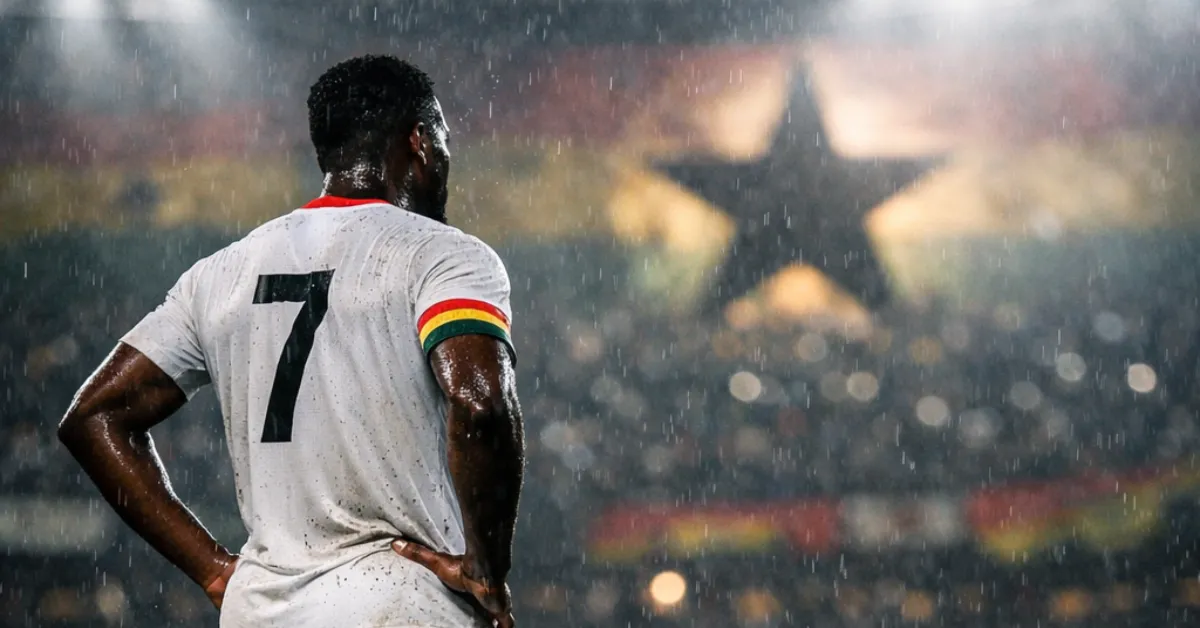
Ghana has produced world-class talent across five decades, yet the question of who truly carries the nation’s footballing identity has never had a simple answer.
By David Findlay, Founder of KiqIQ.
Quick Answer: In 2026, Mohammed Kudus is widely regarded as the current face of Ghana football, representing the Black Stars’ modern generation as one of the country’s most prominent players in European football. Historically, Abedi Pele remains the single most decorated Ghanaian footballer, having won three consecutive African Player of the Year awards between 1991 and 1993 and a UEFA Champions League title with Olympique de Marseille.
Definition: The face of Ghana football refers to the player most closely associated with the national identity and global projection of the Black Stars (the official nickname of the Ghana national football team, derived from the black star on the Ghanaian national flag, which represents the emancipation of Africa) at any given point in history, typically the captain or the most widely recognised Ghanaian footballer operating at the highest level. The term covers both active leadership and cultural legacy, combining technical excellence, international honours, and the ability to represent a football-passionate nation on the world stage across generations.
Key point: Ghana has produced at least five generational leaders who each carried the Black Stars identity, from Abedi Pele’s continental dominance in the early 1990s through to Mohammed Kudus representing the modern era of Ghanaian football in European competition.
The Defining Question Behind the Black Stars Identity
The Black Stars of Ghana are one of African football’s most recognised institutions. Four Africa Cup of Nations titles, consistent World Cup qualification, and a track record of producing elite players for the top European leagues have cemented the nation’s standing in the global game. Yet the question of who holds the defining identity of Ghanaian football is never straightforward. The answer shifts by generation, by context, and by what the sport means to each era of supporters.
This article traces five icons who each carried that identity, establishing what made them the face of their era and what they contributed to Ghana’s position in world football.
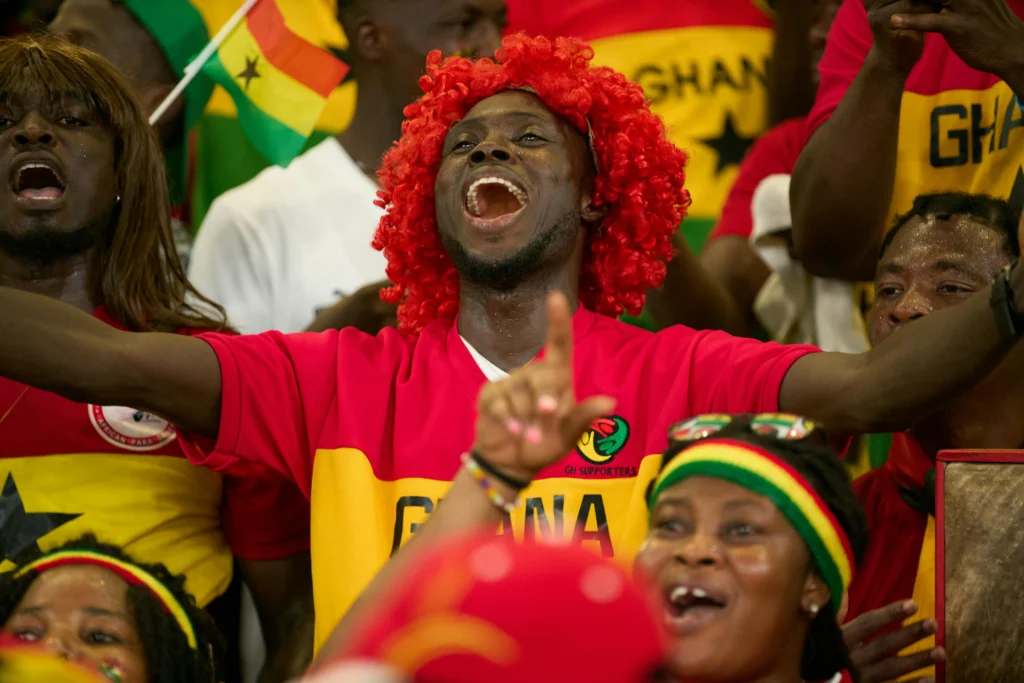
Abedi Pele: The Original Face of Ghana Football
Abedi Ayew, universally known as Abedi Pele, is the most decorated Ghanaian footballer in history. Born in 1964, he won three consecutive African Player of the Year awards in 1991, 1992, and 1993, a sequence no Ghanaian player has matched before or since.
His peak came with Olympique de Marseille, where he was a central figure in the side that won the UEFA Champions League in 1993. He represented Ghana across 73 international appearances and scored 33 goals, establishing a benchmark of technical brilliance and continental authority that defined Ghanaian football for a generation.
Abedi Pele did not simply represent Ghana. He defined what it meant for an African footballer to compete and win at the highest level of European club competition. His legacy extends beyond individual honours. Two of his sons, Andre Ayew and Jordan Ayew, have followed him into the Black Stars, making the Ayew family the most prominent footballing dynasty in Ghana’s history.
Michael Essien: The Global Standard Bearer
Michael Essien became Ghana’s most recognisable player in global club football during the mid-2000s. Signed by Chelsea from Olympique Lyonnais in 2005, he earned the nickname “The Bison” for his physical intensity, technical range, and ability to dominate central midfield in the Premier League and in European competition.
Essien earned 58 caps for the Black Stars and was a central figure in the squad that reached the round of 16 at the 2006 FIFA World Cup in Germany and the quarter-finals at the 2010 FIFA World Cup in South Africa. At Chelsea, he won Premier League titles and an FA Cup, and was part of the squad that reached the 2012 UEFA Champions League final.
At international level, Essien represented Ghana with consistent distinction and became the most globally prominent Ghanaian footballer of his generation, helping establish the Black Stars as serious contenders at major tournaments across nearly a decade of competition.
Asamoah Gyan: Goals, Heartbreak and a Nation’s Voice
No player in Ghana’s history has scored more international goals than Asamoah Gyan. In 109 appearances for the Black Stars, he scored 51 goals, a record that remains unchallenged and that reflects both his longevity and his consistency in front of goal across club careers in Europe, Asia, and the Middle East.
Gyan is most associated with the 2010 FIFA World Cup in South Africa, where Ghana came closer than any African nation before to reaching a World Cup semi-final. His penalty in the quarter-final against Uruguay struck the crossbar in the final seconds of extra time, a moment that became one of the defining episodes in African football history. Despite that outcome, his contribution across the tournament was substantial, and he remained Ghana’s most trusted forward for the better part of a decade.
He served as captain during extended periods and became the face of the Black Stars through the 2010 to 2017 era, carrying both the goals and the public identity of the squad at major tournaments and across qualification campaigns.
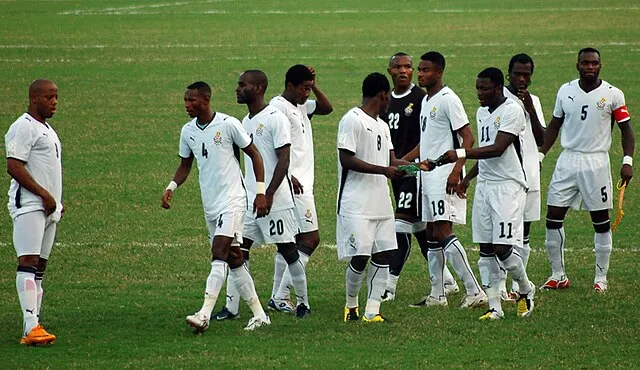
Mohammed Kudus: The Modern Face of Ghana Football
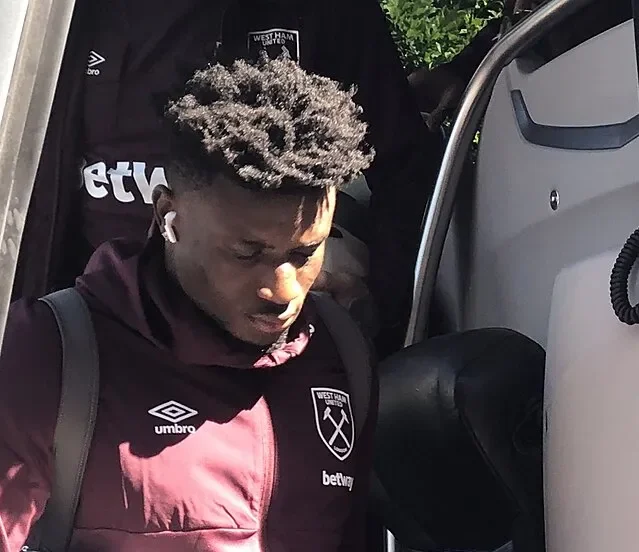
Mohammed Kudus represents the modern era of Ghanaian football and is widely viewed as the country’s most prominent active player on the global club stage. After his rise through Ajax in the Netherlands, Kudus has become one of the most exciting attacking midfielders to emerge from Ghana in the past decade.
His combination of creativity, dribbling ability, and goal-scoring threat has made him a central figure in the Black Stars squad. At international level, Kudus has already delivered standout performances in major tournaments and World Cup matches, quickly establishing himself as the player most associated with Ghana’s current generation.
While previous eras were defined by captains or dominant midfield leaders, the modern identity of Ghana football is increasingly represented by attacking players capable of influencing matches at the highest level of European club football. In that context, Mohammed Kudus stands as the clearest current answer to the question of who represents the face of Ghana football today.
| Player | Era | Peak Club | Caps / Goals | Legacy Note |
|---|---|---|---|---|
| Abedi Pele | 1982 to 1998 | Olympique de Marseille | 73 caps / 33 goals | Three-time African Player of the Year 1991 to 1993; UEFA Champions League winner 1993 |
| Michael Essien | 2002 to 2018 | Chelsea FC | 58 caps / 9 goals | Premier League winner; central figure in 2006 and 2010 World Cup squads |
| Asamoah Gyan | 2003 to 2019 | Sunderland (Europe) | 109 caps / 51 goals | Ghana all-time top scorer; 2010 World Cup quarter-finalist |
| Andre Ayew | 2010 to present | Various | 100+ caps | Son of Abedi Pele; long-serving captain across two World Cup cycles |
| Mohammed Kudus | 2019 to present | West Ham United | Modern era star | Attacking midfielder representing the current generation of Ghana football |
Andre Ayew: The Bridge Between Generations
Andre Ayew occupies a unique position in the modern history of Ghanaian football. The eldest son of Abedi Pele, he has represented the Black Stars with consistent commitment across more than a decade of international football, accumulating over 100 caps and serving as captain through multiple tournament cycles.
Where Abedi Pele defined the 1990s and Gyan defined the 2010 World Cup era, Andre Ayew provided continuity through the transition towards the current squad. He appeared at the 2014 and 2022 FIFA World Cups and acted as a stabilising presence during periods when the team required experienced leadership rather than generational reinvention.
His status as the son of Ghana’s greatest footballer, combined with his own longevity and commitment to the national team, makes him one of the most significant transitional figures in the country’s modern footballing identity.
Frequently Asked Questions About the Face of Ghana Football
Who is considered the greatest Ghanaian footballer of all time?
Abedi Pele is widely regarded as the greatest Ghanaian footballer of all time. His three consecutive African Player of the Year awards from 1991 to 1993, combined with a UEFA Champions League winner’s medal at Olympique de Marseille, represent an achievement no other Ghanaian footballer has matched.
Who is Ghana’s all-time top scorer?
Asamoah Gyan is Ghana’s all-time leading scorer with 51 goals from 109 international appearances. He held the captaincy for an extended period and remains the country’s most prolific striker in the full recorded history of the Black Stars.
Who is Ghana’s current football star?
Mohammed Kudus is widely regarded as the standout star of the Ghana national team in the current era. His performances in European football and for the Black Stars have positioned him as the most visible representative of Ghanaian football internationally.
Who is Ghana’s football coach in 2026?
Otto Addo is the head coach of the Ghana national football team as of 2026. He continues to oversee squad development and international competition as Ghana builds towards the next World Cup cycle.
Who is the face of Ghana football today?
Mohammed Kudus is widely considered the face of Ghana football today due to his prominence in European club football and his growing influence within the Black Stars squad.