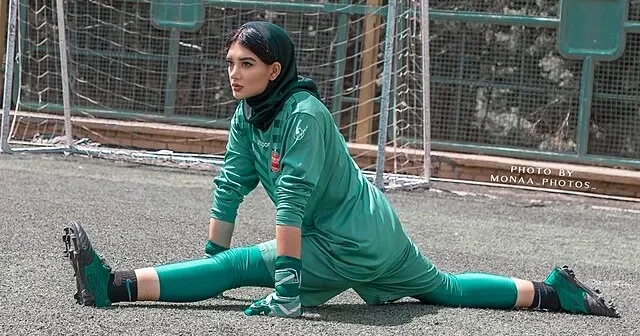
Most pre-training stretching routines last under two minutes. The research on soft tissue injury incidence suggests that is rarely sufficient to shift the physical qualities that matter across a full season.
By David Findlay, Founder of KiqIQ.
Quick Answer: Flexibility is important in football because it increases joint range of motion, reduces soft tissue injury risk, and directly supports sprint mechanics and positional movement across all roles. Goalkeepers depend on dynamic hip and shoulder flexibility for diving reach and ground impact absorption. Without structured flexibility programming, players accumulate movement restrictions that compound injury exposure across a season.
Definition: Flexibility in football is the capacity of a player’s muscles and connective tissues to allow a joint to move through its full functional range of motion without restriction or pain. It is a trainable physical quality that contributes directly to injury prevention, movement efficiency, and positional performance across all outfield roles and in goal.
Key point: Flexibility is not a warm-up filler. It is a measurable physical quality that affects sprint biomechanics, soft tissue injury incidence, and goalkeeper reach, and it requires structured, evidence-based programming to develop effectively.
What Flexibility Actually Means in a Football Context
While the definition is standard, the gap between how most clubs programme flexibility work and what the evidence actually supports is where many training departments lose meaningful ground on injury prevention.
Flexibility in sport is distinct from general mobility and hypermobility. In a football context, it refers specifically to the functional range a player can access and control under match conditions. That distinction matters because passive flexibility gained through prolonged static stretching does not automatically translate to the dynamic range required during a sprint, a change of direction, or a diving save.
Two types of flexibility are directly relevant to football performance. Static flexibility is the maximum range a joint can achieve when held in a controlled position. Dynamic flexibility is the range a player can produce and control during active, fast movement. Both have roles in a comprehensive physical development programme, but dynamic flexibility carries stronger relevance for competitive match performance.
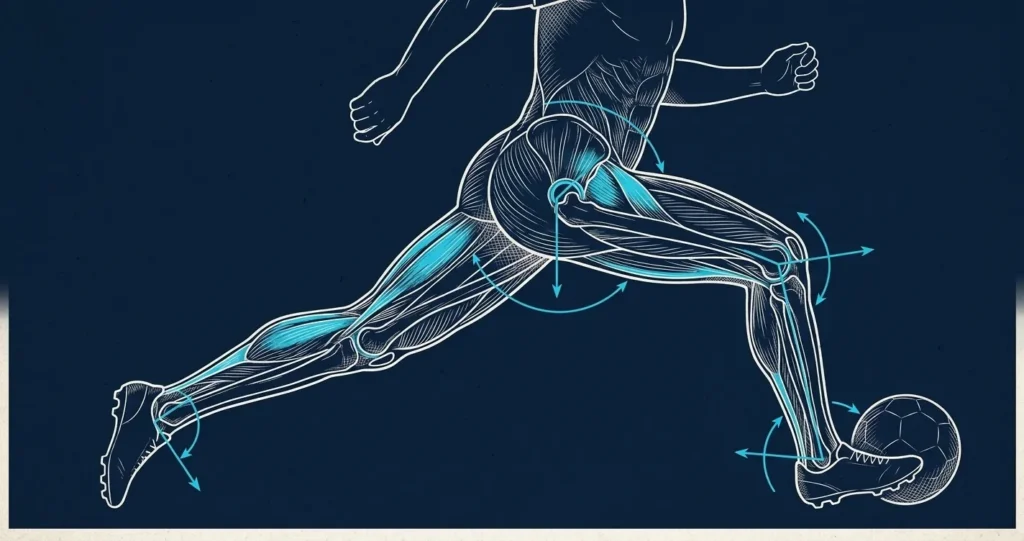
Research consistently identifies the hamstrings, hip flexors, adductors, and ankle dorsiflexors as the primary flexibility-limiting structures in football players. Restrictions in any of these areas alter movement mechanics, increase compensatory loading on adjacent tissues, and raise injury risk across a range of sprint, cutting, and kicking actions.
Why Flexibility Reduces Injury Risk in Football
Soft tissue injuries remain the most common category of harm in professional and semi-professional football. Hamstring strains, adductor injuries, and hip flexor tears collectively account for a significant proportion of missed training days and match absences at every level of the game.
The relationship between flexibility deficits and injury incidence is well established in the sport science literature. Reduced hamstring flexibility increases the mechanical demand placed on the muscle during the terminal swing phase of sprinting, when the hamstring must decelerate the extending leg. A muscle working at or near the limit of its available range under high-velocity loads carries substantially greater risk of structural failure than one with adequate functional length.
Hip flexor tightness introduces a secondary mechanism. When the iliopsoas is chronically shortened, typically through high volumes of sitting and insufficient recovery-phase stretching, the pelvis tilts anteriorly. This alters lumbar spine positioning, changes glute activation patterns, and increases compressive load across the lower back. Over time, the cumulative effect raises injury exposure well beyond the hip flexor itself.
Ankle dorsiflexion is a less commonly discussed but equally important flexibility variable in football. Restricted dorsiflexion alters landing mechanics after aerial challenges, affects deceleration biomechanics, and changes the loading pattern through the knee during cutting movements. Studies examining lower limb injury risk consistently identify dorsiflexion restriction as a modifiable risk factor that responds well to targeted intervention.
The evidence does not suggest that flexibility training eliminates injury risk. It suggests that identified flexibility deficits are addressable physical risk factors that, when corrected, reduce injury incidence across the population of players carrying those deficits.
How Flexibility Supports Sprint Mechanics and Movement Efficiency
Beyond injury prevention, flexibility directly influences the biomechanical efficiency of the movements that define football performance. Sprint speed, acceleration quality, change of direction, and striking mechanics all rely on adequate range of motion at specific joints.
Hip flexor flexibility is the primary limiter of stride length during maximal sprinting. A player with restricted hip extension cannot fully extend the trailing leg during the drive phase, reducing the mechanical power output available per stride. Over a 40-metre sprint, the cumulative effect on time is measurable. In a sport where fractions of a second determine whether a player wins a foot race to the ball, hip flexor flexibility is a direct performance variable, not merely a health metric.
Hamstring flexibility influences the arc and power of kicking actions. The classic striking motion requires rapid hip flexion combined with knee extension. A hamstring with insufficient functional length limits the range and speed of that extension, reducing both kicking power and accuracy at the outer limits of range.
Thoracic spine flexibility affects a player’s ability to rotate the upper body during turning, heading, and shielding. Stiffness through the thoracic region forces compensatory rotation through the lumbar spine, which is anatomically poorly suited to that demand. Players with good thoracic mobility rotate more efficiently, recover balance faster after contact, and produce heading actions with lower axial loading.
Why Is Flexibility Important in Football for Goalkeepers
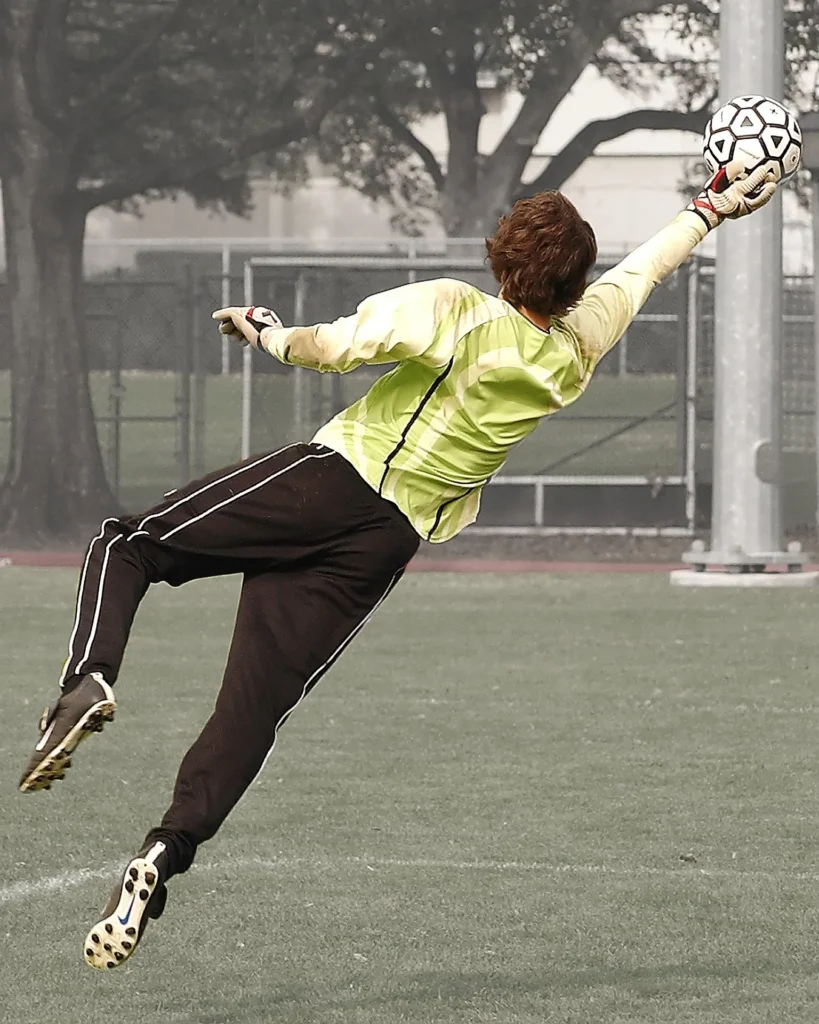
Goalkeepers face a specific set of flexibility demands that differ substantially from outfield requirements. The diving save requires a combination of explosive lateral power and sufficient hip, groin, and shoulder flexibility to achieve the range needed to reach shots close to the post or at ground level. A goalkeeper with restricted hip abduction or shoulder mobility cannot access positions that a more flexible counterpart can reach, regardless of equal explosive power output.
Ground impact absorption is a second goalkeeper-specific concern. On every diving save, landing roll, and ground collection, the goalkeeper absorbs force through the shoulder, hip, and ankle. A player with adequate flexibility distributes that force more effectively across a greater range of motion, reducing the peak load experienced at any single joint. Over the course of a season involving dozens of training-ground and match diving repetitions, this difference accumulates into meaningful protection against overuse and acute injury.
Overhead reaching and cross collection require shoulder and thoracic flexibility that outfield players rarely need to the same degree. Programmes designed for outfield players typically underserve goalkeepers in these areas, and position-specific flexibility screening is warranted at the academy and professional levels.
Static vs Dynamic Flexibility: What the Evidence Supports
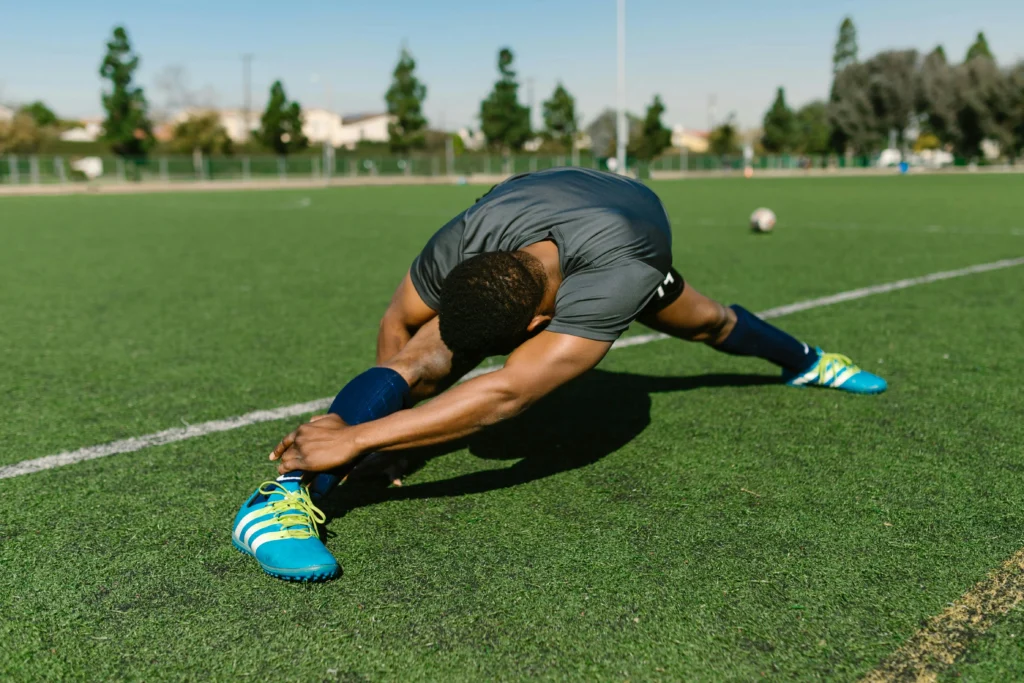
The debate around pre-match and pre-training stretching protocols has shifted considerably in the evidence base over the past two decades. Early sport science literature emphasised prolonged static stretching as the primary flexibility intervention. More recent research identifies acute static stretching immediately before explosive activity as a risk factor for transient reductions in power output, with effects lasting up to 60 minutes post-stretch when durations exceed 60 seconds per muscle group.
The current evidence-supported approach separates flexibility work into two distinct phases. Static stretching and longer-duration holds are most effective when performed in dedicated recovery and development sessions, typically the day after a match or in post-training cool-down windows. Dynamic flexibility work, involving movement through progressively increasing ranges, is more appropriate in the pre-training and pre-match activation phase.
Proprioceptive neuromuscular facilitation stretching, commonly referred to as PNF, produces the largest acute and chronic improvements in range of motion across the available literature. However, it requires a partner or resistance band, takes longer to deliver correctly, and is most commonly applied in clinical or rehabilitation contexts. For development academies and lower-league environments, a structured progressive dynamic warm-up combined with post-session static holds represents the most practical balance between evidence quality and delivery feasibility.
Signal vs. Friction: Flexibility Metrics Worth Tracking
Measuring flexibility in a squad environment involves navigating a trade-off between tests that are easy to implement at scale and those that carry the strongest evidence-based signal. The table below identifies the five most relevant flexibility metrics for football, the simplified version available to most clubs, and the higher-value clinical equivalent where practical.
| Flexibility Metric | Easy to Track | High-Value Version | Capture Cost |
|---|---|---|---|
| Hamstring Flexibility | Sit-and-reach test | Active Knee Extension test | Low - goniometer and trained assessor required |
| Hip Flexor Length | Visual squat observation | Thomas Test | Low to Medium - physiotherapist or S&C coach recommended |
| Ankle Dorsiflexion | Visual gait observation | Weight-Bearing Lunge Test | Low - tape measure and wall only |
| Goalkeeper Shoulder Mobility | Overhead reach observation | Apley Scratch Test | Low - no equipment required |
| Thoracic Rotation | Visual rotation check | SFMA Rotation Screen | Medium - SFMA-trained practitioner required |
How to Programme Flexibility Training in Football
Effective flexibility programming in football requires clarity on three variables: what to measure, when to work on flexibility within the weekly training cycle, and what minimum dose produces meaningful chronic adaptation.
Measurement should focus on the primary risk sites identified in the literature, including hamstring length, hip flexor length, ankle dorsiflexion, and, for goalkeepers, shoulder mobility. A brief screening protocol targeting these four areas takes under 15 minutes per player and can be administered at the start of pre-season to establish individual baselines. Players identified as deficient in one or more areas should receive targeted flexibility prescriptions rather than generic squad stretching.
Chronic flexibility improvements require consistent application across weeks, not days. Studies examining hamstring flexibility adaptation consistently find that significant range improvements require a minimum of four to six weeks of regular stretching at adequate session duration. A single 10-second stretch performed twice per week will not shift hamstring length in a meaningful way.
The weekly periodisation of flexibility work should align with the physical load cycle. Recovery days are the most appropriate window for longer static holds and PNF work. Sessions two and one day before a match should use dynamic flexibility protocols only. Flexibility work inserted into match-day warm-ups must remain within the sub-60-second per muscle group threshold to avoid acute reductions in power output.
Individual flexibility profiles should be reviewed at the mid-point of pre-season and again at mid-season. Players returning from hamstring or hip flexor injuries require specific flexibility reassessment before return to full training. A return-to-function criteria that includes a flexibility benchmark alongside strength and sprint testing reduces the risk of re-injury during the vulnerable early return phase.
Frequently Asked Questions
Why is flexibility important in football for a goalkeeper specifically?
Goalkeepers require dynamic hip, groin, and shoulder flexibility to reach diving positions and absorb ground impact. Without adequate range of motion in these areas, a goalkeeper cannot access the positions needed to stop shots close to the post, and the repetitive loading of diving and landing increases injury exposure over a full season.
What is the definition of flexibility in sport?
Flexibility in sport is the ability of a muscle or group of muscles to lengthen sufficiently to allow a joint to move through its full functional range of motion. In football, it is classified as either static or dynamic, with dynamic flexibility carrying greater relevance for match performance and injury prevention.
Does flexibility training prevent football injuries?
Flexibility training reduces injury risk for players who present with identified flexibility deficits, particularly at the hamstring, hip flexor, and ankle. It does not eliminate injury risk, but it addresses a modifiable physical risk factor that the evidence links to soft tissue injury incidence in football populations.
How often should football players train flexibility?
A minimum of three dedicated flexibility sessions per week, integrated into post-training cool-downs or recovery days, is supported by the evidence for producing chronic range of motion improvements. Pre-training dynamic flexibility work should be performed daily as part of the activation protocol. Prolonged static stretching should be avoided immediately before explosive training or matches.
Sources
- British Journal of Sports Medicine: Hamstring injury and flexibility research in football
- PubMed: Sport science literature on flexibility and soft tissue injury prevention
- National Strength and Conditioning Association: Flexibility programming and conditioning guidelines
- Physio-Pedia: Clinical flexibility definitions and assessment methods