
Stoke City Football Club, 1863, bet365 Stadium, the Potters
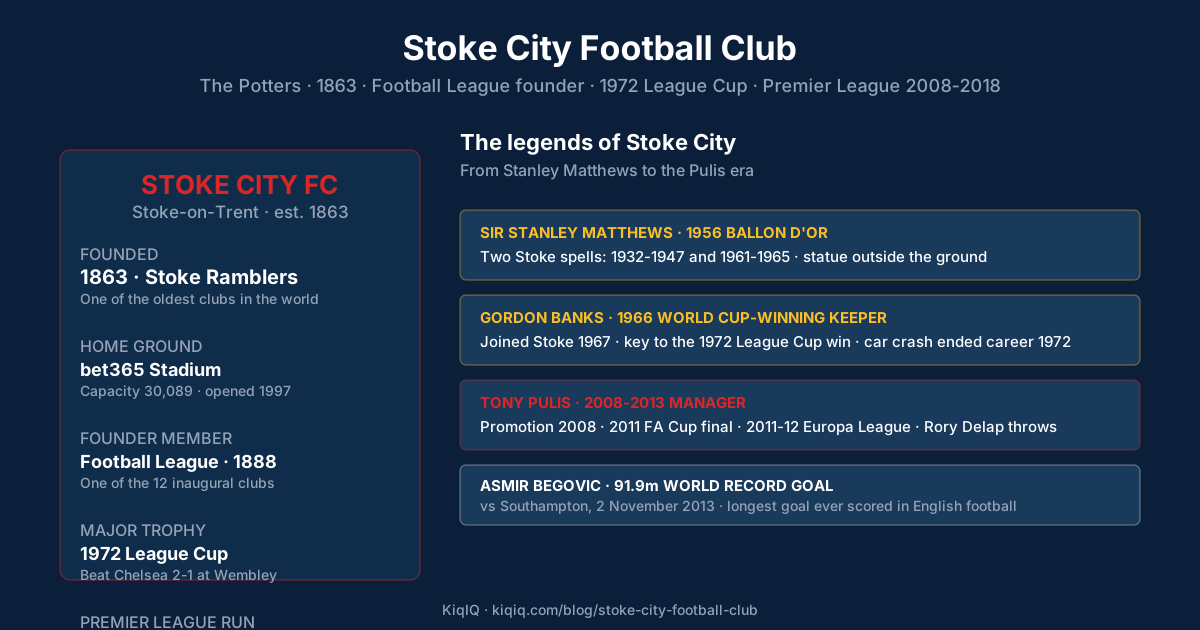
Stoke City Football Club, founded in 1863, is one of the oldest football clubs in the world and a founder member of the Football League in 1888. The Potters play at the bet365 Stadium (capacity 30,089) in Stoke-on-Trent and are best known for the Premier League era under Tony Pulis (2008-2013).
 Tap to enlarge
Stoke City Football Club, founded in 1863, is one of the oldest professional football clubs in the world and a founder member of the Football League in 1888. The Potters play at the bet365 Stadium (capacity 30,089) in Stoke-on-Trent, Staffordshire. Their major modern era was a decade in the Premier League from 2008 to 2018 under manager Tony Pulis and his successors, including a run to the 2011 FA Cup final. The club's only major trophy is the 1972 Football League Cup.
Where is Stoke City Football Club
Stoke City play their home matches at the bet365 Stadium on Stanley Matthews Way in Stoke-on-Trent, Staffordshire (ST4 4EG). The ground sits about two miles south of Stoke-on-Trent city centre, off the A50. Capacity is 30,089.
The stadium opened in 1997 as the Britannia Stadium: the club's first permanent home after leaving the historic Victoria Ground (Stoke's home from 1878 to 1997). The naming rights changed to bet365 Stadium in 2016 following sponsorship from the gambling company founded and headquartered in Stoke. The bet365 Group's Coates family also owns Stoke City, the only major sponsorship deal in English football where the sponsor and the owner are the same entity.
bet365 Stadium · capacity 30,089 · opened 1997 (as the Britannia Stadium) · renamed 2016.
An 1863 founding: among the oldest in the world
Stoke City was founded in 1863 as Stoke Ramblers by Henry James Almond, a former Charterhouse School pupil, and a group of apprentices at the North Staffordshire Railway works in the city. The 1863 founding date makes Stoke one of the oldest football clubs in the world, older than every Football League founder except Notts County (1862).
The club shortened to Stoke FC in 1878 and became Stoke City FC in 1925 when the city of Stoke-on-Trent itself was granted city status. Stoke was a founder member of the Football League in 1888, one of the 12 clubs to play in the inaugural Football League season, alongside Preston, Aston Villa, Wolves, Blackburn, Bolton, Burnley, Derby, Everton, Notts County, West Brom, and Accrington.
Quick question
What is Stoke City's place in football history?
The 1972 League Cup, the club's only major trophy
Stoke City's only major domestic trophy is the 1971-72 Football League Cup. The Potters beat Chelsea 2-1 in the Wembley final on 4 March 1972, with goals from Terry Conroy and a famous George Eastham winner, Eastham himself was already 35 by then and the goal sealed his only major club trophy.
The 1972 squad was managed by Tony Waddington, the longest-serving manager in the club's history (1960-1977). Waddington built the team around Gordon Banks (the 1966 World Cup-winning goalkeeper, who signed for Stoke in 1967), George Eastham (a midfielder who had previously won the Bosman-era player-mobility test case in 1963), and Jimmy Greenhoff. The same side reached two FA Cup semi-finals in 1971 and 1972, narrowly losing both to Arsenal.
The Pulis Premier League era (2008-2013)
Stoke's defining modern era is the 2008-2013 Premier League years under Tony Pulis. Promoted in 2008 after 23 years out of the top flight, Pulis built a Stoke side around physical defensive structure, set-piece dominance (especially the long Rory Delap throw-in), and direct attacking play. The Britannia Stadium became one of the toughest atmospheres in the Premier League, wind, noise, and a low-block Stoke side that beat almost every visiting club at least once.
The peak came in 2011, when Stoke reached the FA Cup final (lost 1-0 to Manchester City) and qualified for the 2011-12 Europa League: the only European campaign in the club's modern history. The squad of that era included Robert Huth, Ryan Shawcross, Glenn Whelan, Peter Crouch, Rory Delap, Charlie Adam, and Asmir Begović (who scored a record 91.9-metre goal against Southampton in 2013).
Pulis left in May 2013 and was succeeded by Mark Hughes, who shifted the playing style toward more possession-based football while keeping Stoke in the Premier League until 2018. Relegation in 2018 ended a 10-year top-flight run.
Honours and notable history
Stoke City's major honours and distinctions:
- Football League Cup: 1: 1971-72.
- Football League Second Division champions: twice: 1932-33 and 1962-63.
- Premier League decade: 2008 to 2018, the club's longest unbroken top-flight run since the 1980s.
- FA Cup runners-up: 1: 2010-11.
- Founder member of the Football League: 1888.
- Stanley Matthews: 1956 Ballon d'Or winner, played for Stoke from 1932 to 1947 and again from 1961 to 1965. The road outside the bet365 Stadium is named for him; a statue of him stands outside the ground.
- Gordon Banks: 1966 World Cup-winning goalkeeper, joined Stoke in 1967 and played the rest of his career there until a car crash ended it in 1972.
How to visit the bet365 Stadium
Three practical visit tips:
- Train. Stoke-on-Trent is the closest mainline station, about a 25-minute walk or a quick bus / taxi to the ground. London Euston direct services run roughly hourly.
- Match-day demand. Championship attendances at the bet365 are consistently in the 22-26k range; sell-outs happen for top-of-the-table fixtures. The Boothen End is the supporter-singing block.
- Stadium tours. Self-guided and guided tours cover the dressing rooms, the press conference room, the Sir Stanley Matthews Suite, and the tunnel. Book via stokecityfc.com.
Frequently asked questions
- Where is Stoke City Football Club based?
- Stoke City Football Club plays at the bet365 Stadium on Stanley Matthews Way in Stoke-on-Trent, Staffordshire (ST4 4EG). The ground opened in 1997 as the Britannia Stadium and was renamed in 2016 following a sponsorship deal with bet365, the gambling company that is also owned by the same Coates family that owns Stoke City. Capacity is 30,089. The nearest mainline station is Stoke-on-Trent.
- When was Stoke City Football Club founded?
- Stoke City was founded in 1863 as Stoke Ramblers by Henry James Almond and a group of apprentices at the North Staffordshire Railway works. The 1863 founding makes Stoke one of the oldest football clubs in the world, older than every Football League founder member except Notts County (1862). The club was a founder member of the Football League in 1888 and became Stoke City FC in 1925 when the city was granted city status.
- What is Stoke City's biggest trophy?
- Stoke City's biggest major trophy is the 1971-72 Football League Cup, won 2-1 against Chelsea at Wembley on 4 March 1972 under manager Tony Waddington. Terry Conroy and George Eastham scored the goals. The squad featured Gordon Banks in goal and is the only Stoke side ever to win a major domestic cup. The Potters also reached the FA Cup final in 2011, losing 1-0 to Manchester City.
- Why are Stoke City called the Potters?
- Stoke City are called the Potters in reference to Stoke-on-Trent's history as the centre of the British pottery industry. The Staffordshire Potteries (the six towns that make up modern Stoke-on-Trent) were the home of Wedgwood, Spode, Royal Doulton and many other major ceramic manufacturers from the 18th century onwards. The nickname has been in use since the 19th century and is part of the club's badge tradition.
References
- Stoke City FC, Official Site · Stoke City FC
- EFL, Stoke City · EFL
- BBC Sport, Stoke City · BBC Sport
- RSSSF historical English tables · RSSSF
Key terms in this article
Ask KiqIQ a follow-up
Get a live, data-driven answer powered by our live data feeds + KiqIQ's Poisson model. Try one of these prompts or write your own.
Part of pillar
Football Culture
See every article in this knowledge pillar →
Related
Reviewed by a KiqIQ editor before publication. Spotted an error? Email editor@kiqiq.com. We follow our Corrections Policy.