
Bristol Rovers Football Club, 1883, the Gas, Memorial Stadium
Bristol Rovers Football Club, founded in 1883, plays at the Memorial Stadium in north Bristol. The Gas (as supporters are universally known) contest the Bristol Derby with Bristol City and have one of the most distinctive supporter cultures in English football.
 Tap to enlarge
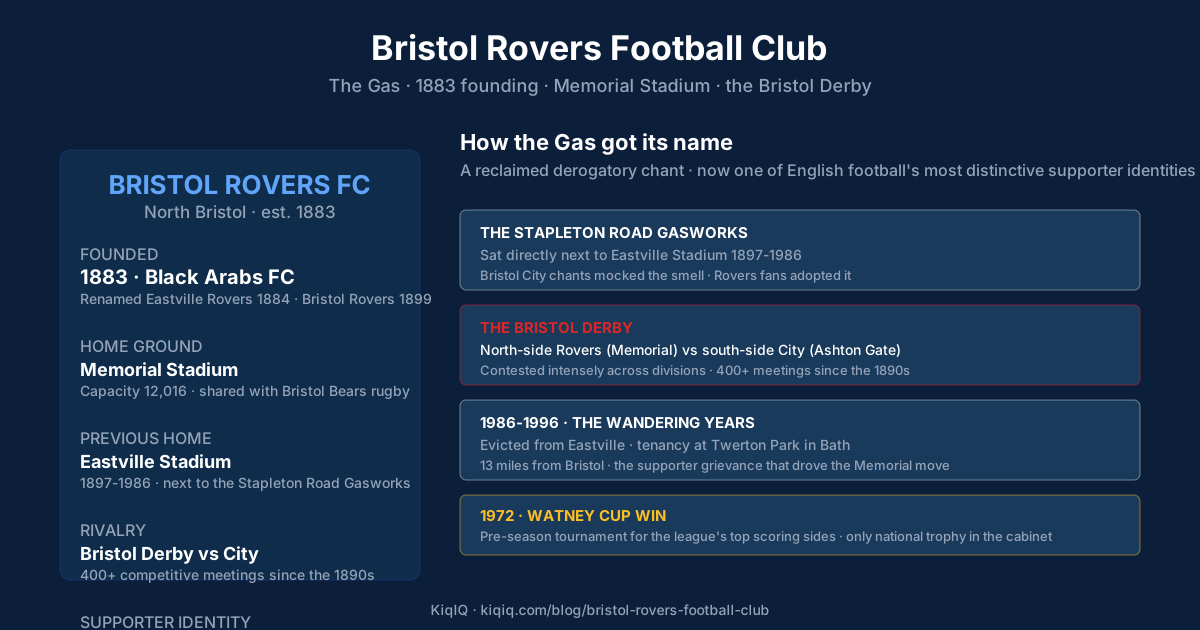
Bristol Rovers Football Club was founded in 1883 in Bristol, south-west England. The club plays at the Memorial Stadium (capacity 12,016) in the Horfield district of north Bristol, having moved there in 1996 after sharing several previous grounds. Universally known as The Gas: after the gas works that used to sit next to the historic Eastville Stadium: Rovers contest the Bristol Derby with Bristol City, one of the most-played English-football rivalries (~400+ competitive meetings since the late 19th century).
Where is Bristol Rovers Football Club
Bristol Rovers play their home matches at the Memorial Stadium on Filton Avenue in the Horfield district of north Bristol (BS7 0BF). The stadium has a capacity of 12,016 and is shared with Bristol Rugby Club (Bristol Bears). Rovers have been the primary tenant since 1996, when the club moved north from their historic east-Bristol home at Eastville Stadium.
The ground sits about three miles north of Bristol Temple Meads railway station, with frequent buses along Gloucester Road. Many supporters arrive via the A38 corridor north of the city. The Memorial Stadium was originally built as a rugby ground in 1921 as a memorial to local rugby players killed in the First World War, hence the name.
Memorial Stadium · capacity 12,016 · shared with Bristol Bears rugby · home of Bristol Rovers since 1996.
An 1883 founding and the Gas nickname
Bristol Rovers was founded in 1883 as Black Arabs FC at a meeting at the Eastville Restaurant in east Bristol. The Black Arabs name lasted only one season; the club was renamed Eastville Rovers in 1884 and finally Bristol Rovers in 1899 after turning professional. The 1883 founding makes Rovers one of the oldest established football clubs in the West Country.
The 'Gas' nickname (for supporters and the club generally) derives from the Stapleton Road Gasworks that adjoined the old Eastville Stadium (Rovers' home from 1897 to 1986). The phrase 'the Gas' was originally a derogatory chant from Bristol City supporters about the smell carrying onto the pitch; Rovers fans adopted it defiantly and it has been the supporter identity ever since. Rovers also use the alternative nickname 'the Pirates' in a nod to Bristol's maritime history.
Quick question
Where does the Bristol Rovers nickname, the Gas, come from?
The Bristol Derby, one of English football's oldest rivalries
Bristol Rovers' deepest rivalry is the Bristol Derby with Bristol City. The two clubs have met 400+ times competitively since the late 19th century, making it one of the most-played local derbies in English football outside the Old Firm.
Bristol City (founded 1894 as Bristol South End) play at Ashton Gate south of the River Avon, while Bristol Rovers play in north Bristol, the geographical split divides the city's supporter base. Historically Rovers were the senior club (founded earlier, with deeper east-Bristol working-class roots), but Bristol City have spent more time in the higher divisions in the modern era. The derby is contested with intensity even when the two clubs are in different divisions (which has been the case for much of the past two decades).
Eastville Stadium and the wandering years
Rovers played at Eastville Stadium in east Bristol from 1897 to 1986: almost 90 years at one ground. Eastville was unusual for hosting both football and greyhound racing concurrently; the Stapleton Road Gasworks sat directly adjacent. Financial difficulties in the 1980s forced the club to sell the ground to the greyhound racing operators and become tenants on a short-term lease.
After eviction from Eastville in 1986, Rovers spent the next decade as tenants at Twerton Park in Bath: a humiliating 13-mile-away ground share that became a permanent supporter grievance. The 1996 move to the Memorial Stadium returned the club to Bristol itself, though the rugby-club tenancy arrangement remains unusual. Plans for a purpose-built Rovers-only stadium at various sites in north Bristol have been mooted repeatedly without delivery.
Honours and notable history
Bristol Rovers' major honours and distinctions:
- Football League Third Division (South) champions: 1: 1952-53.
- Football League Third Division play-off winners: 1: 1989-90.
- EFL Trophy runners-up: 1: 2006-07.
- Watney Cup winners: 1: 1972 (a short-lived pre-season tournament for the Football League's top scoring sides).
- Highest league finish: Tier 2 (Football League Second Division), reached most recently in the 1980s.
- Marcus Stewart: Rovers academy graduate, scored 60+ league goals at Eastville/Memorial before sales to Huddersfield and Ipswich.
- Geoff Bradford: only Rovers player to win an England cap (one appearance vs Denmark, 1955).
- 1973-74 Cup run: Rovers were a Third Division side and beat First Division Burnley 2-1 at home in the FA Cup fourth round (the most-cited modern giant-killing).
How to visit the Memorial Stadium
Three practical visit tips:
- Train + bus. Bristol Temple Meads is the closest mainline station, ~30 minutes from the ground via the no.73 bus along Gloucester Road, or ~10 minutes by taxi.
- Match-day demand. League One / League Two home games typically run at 6-10k attendance; sell-outs occasional for derby fixtures and promotion-pushing visits. The Thatchers End (south end) is the supporter-singing block.
- Drink the gas. The pre-match pub circuit on Gloucester Road and around the ground is one of the most active in the EFL, pubs like the Memorial, the Wellington, and the Drapers Arms are the established matchday gathering points.
Frequently asked questions
- Where is Bristol Rovers Football Club based?
- Bristol Rovers Football Club plays at the Memorial Stadium on Filton Avenue in the Horfield district of north Bristol (BS7 0BF). The ground has a capacity of 12,016 and is shared with Bristol Bears rugby club. Rovers have been the primary tenant since 1996, when the club moved north from their historic east-Bristol home at Eastville Stadium. Bristol Temple Meads railway station is about three miles south, accessible by frequent buses along Gloucester Road.
- Why are Bristol Rovers called the Gas?
- Bristol Rovers are called the Gas because the Stapleton Road Gasworks sat directly adjacent to the club's old Eastville Stadium (1897-1986) in east Bristol. The phrase 'the Gas' was originally a derogatory chant from Bristol City supporters about the smell carrying onto the pitch. Rovers fans adopted it defiantly and the Gas has been the supporter identity ever since. Rovers also use 'the Pirates' as a secondary nickname in a nod to Bristol's maritime history.
- When were Bristol Rovers founded?
- Bristol Rovers were founded in 1883 as Black Arabs FC at a meeting at the Eastville Restaurant in east Bristol. The Black Arabs name lasted only one season; the club was renamed Eastville Rovers in 1884 and Bristol Rovers in 1899 after turning professional. The 1883 founding makes Rovers one of the oldest established football clubs in the West Country, predating their cross-city rivals Bristol City (founded 1894) by 11 years.
- What is the Bristol Derby?
- The Bristol Derby is the rivalry between Bristol Rovers (founded 1883, north Bristol) and Bristol City (founded 1894, south Bristol). The two clubs have met over 400 times competitively since the late 19th century, making it one of the most-played local derbies in English football outside the Old Firm. The geographical split (Rovers in north Bristol at the Memorial Stadium, City in south Bristol at Ashton Gate) divides the city's supporter base. The derby remains intensely contested even when the two clubs are in different divisions.
References
- Bristol Rovers FC, Official Site · Bristol Rovers FC
- EFL, Bristol Rovers · EFL
- BBC Sport, Bristol Rovers · BBC Sport
Ask KiqIQ a follow-up
Get a live, data-driven answer powered by our live data feeds + KiqIQ's Poisson model. Try one of these prompts or write your own.
Part of pillar
Football Culture
See every article in this knowledge pillar →
Related
- The oldest football club in the world →
- Most successful English football clubs →
- Pillar: Football Culture →
- Stoke City Football Club, 1863, bet365 Stadium, the Potters →7 min read
- Reading Football Club, 1871, the Royals, Select Car Leasing Stadium →6 min read
- Where Is Charlton Athletic Football Club? Location, History, Stadium →6 min read
Reviewed by a KiqIQ editor before publication. Spotted an error? Email editor@kiqiq.com. We follow our Corrections Policy.