
What Is a Clean Sheet in Football? Definition and Records
A clean sheet in football is when a team finishes a match without conceding a goal. We explain the term, the records, the goalkeeper's role, and how it differs from related stats like shutouts.
 Tap to enlarge
A clean sheet in football is when a team finishes a match without conceding a goal. The term comes from the goalkeeper's traditional sheet on which goals were tallied — a clean sheet meant no goals against. It's commonly attributed to the goalkeeper but is earned by the whole team. Clean sheets correlate strongly with match wins and draws, and are a primary scouting metric for goalkeepers and centre-backs.
Where the term comes from
The phrase "clean sheet" comes from the historic practice of goalkeepers (or score-keepers) tallying goals against on a literal sheet of paper. A sheet with no entries — a "clean sheet" — meant no goals had been conceded. The term predates modern record-keeping and likely dates to the late 19th century.
The American sports equivalent is "shutout" — used in baseball, ice hockey, and (less commonly) US soccer. Both mean the same thing.
Quick question
Where does the phrase clean sheet come from?
Why clean sheets matter
Three reasons clean sheets are statistically and tactically important:
- Strong correlation with results. Teams that keep clean sheets win or draw approximately 95%+ of those matches. The remaining 5% are 0-0 draws.
- Defensive performance benchmark. Clean-sheet rate is the most-cited single defensive performance metric.
- Goalkeeper recruitment. A goalkeeper's clean-sheet rate is a starting point for scouting evaluations.
- Team-wide reflection. A clean sheet reflects work across the whole team — pressing intensity, midfield screening, set-piece organisation, defensive shape — not just goalkeeper save-making.
Clean sheet records
Notable clean-sheet records in football:
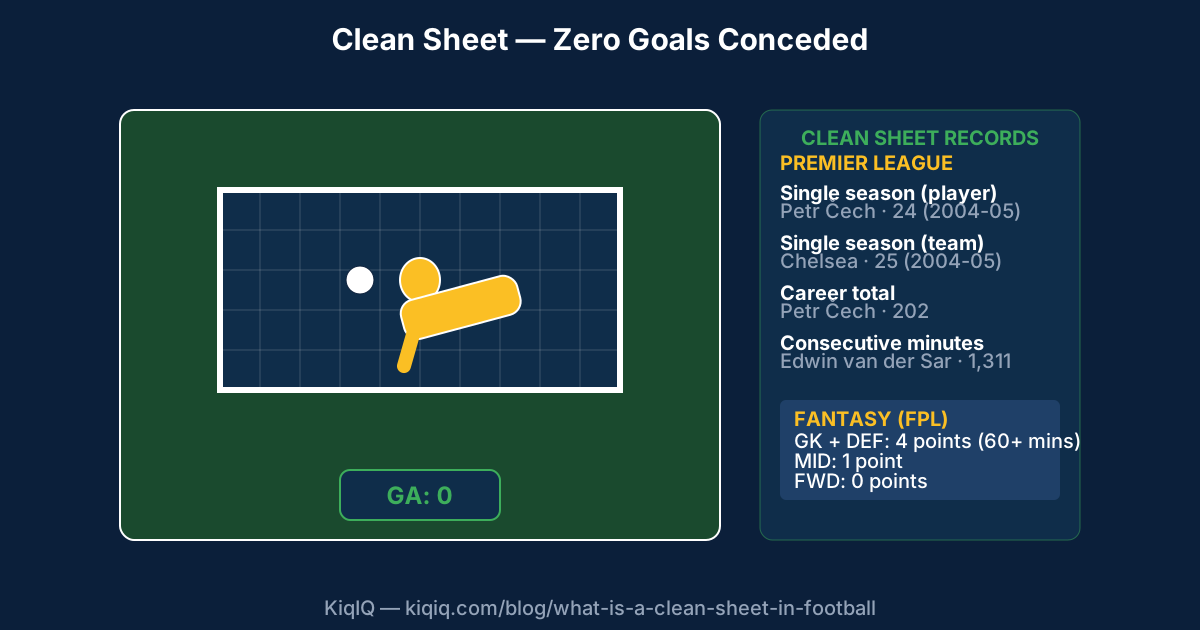
- Premier League single-season clean-sheet record (team). Chelsea 2004-05 with 25 clean sheets in 38 matches under José Mourinho.
- Premier League single-season clean-sheet record (goalkeeper). Petr Čech with 24 clean sheets in 2004-05.
- Most consecutive clean-sheet minutes. Edwin van der Sar (Manchester United) — 1,311 minutes (2008-09 Premier League).
- Premier League career clean-sheet record. Petr Čech with 202 clean sheets across his career.
- Goalkeeper cumulative clean sheets. David Seaman, Edwin van der Sar, Peter Schmeichel all rank among the top 10 in Premier League history.
How clean sheets are calculated in fantasy / betting
Two important contexts where clean sheets have specific definitions:
- Fantasy Premier League (FPL). Goalkeepers and defenders earn 4 points for a clean sheet (only counted if the player plays at least 60 minutes); midfielders earn 1 point.
- Betting markets. "Clean sheet" markets allow bets on whether one or both teams will avoid conceding. Different from "no goal" or "0-0" markets.
Clean sheet vs related stats
Clean sheets are sometimes confused with related defensive metrics. The differences:
- Clean sheet. Zero goals conceded across the full match.
- Shutout. Same meaning — used in American sports terminology.
- xGA (expected goals against). A model-based estimate of goals conceded based on shot quality. A team can keep a clean sheet despite high xGA if the goalkeeper has a strong day.
- Save percentage. Saves divided by shots-on-target faced. Different from clean sheet — a goalkeeper can have a 100% save rate and still concede a deflection.
- Goals against (GA). Total goals conceded across a match / season. The cumulative version of clean-sheet rate.
Modern clean sheet trends
How clean-sheet rates have evolved:
- Decreasing in modern football. Clean-sheet rate per match has declined slightly over the past 20 years as attacking play has become more sophisticated.
- Increased away clean sheets. Modern away tactical play (low blocks, counter-attacks) has improved away clean-sheet rate at the expense of overall scoring.
- Top clubs have higher rates. Clean-sheet rate is heavily concentrated at top clubs because they dominate possession + lead matches more often.
- International tournaments. Clean-sheet rates spike in knockout-stage international football due to defensive caution.
Frequently asked questions
- What is a clean sheet in football?
- A clean sheet is when a team finishes a match without conceding a goal. The phrase comes from historic goalkeepers' tally sheets — a sheet without entries meant no goals had been conceded. The American sports equivalent is "shutout." Clean sheets correlate strongly with match wins and draws.
- Who holds the Premier League clean sheet record?
- Petr Čech holds the single-season goalkeeper record with 24 clean sheets in 2004-05 for Chelsea. Chelsea also hold the team record with 25 clean sheets that season under José Mourinho. Edwin van der Sar holds the consecutive minutes-without-conceding record (1,311 minutes for Manchester United in 2008-09). Čech retired with 202 career Premier League clean sheets — the all-time record.
- What is the difference between a clean sheet and a shutout?
- Nothing — they mean the same thing in football contexts. "Clean sheet" is the standard British / European term; "shutout" is used in American sports (and occasionally in MLS). Both refer to a match ending with one team conceding zero goals.
- How are clean sheets scored in fantasy football?
- In Fantasy Premier League (FPL): goalkeepers and defenders earn 4 points for a clean sheet (must play at least 60 minutes). Midfielders earn 1 point for a clean sheet. Forwards get 0 points for clean sheets. Other fantasy platforms (DraftKings, Yahoo) use slightly different scoring but follow the same general structure.
References
- Premier League · Statistics Hub · Premier League
- IFAB Laws of the Game · IFAB
- FIFA · Goalkeeping Statistics · FIFA
- BBC Sport · Football Records · BBC Sport
Key terms in this article
Ask KiqIQ a follow-up
Get a live, data-driven answer powered by our live data feeds + KiqIQ's Poisson model. Try one of these prompts or write your own.
Part of pillar
Fundamentals
See every article in this knowledge pillar →
Related
Reviewed by a KiqIQ editor before publication. Spotted an error? Email editor@kiqiq.com. We follow our Corrections Policy.