
Football Shooting Drills with Equipment: A Practical Drill Catalogue
A catalogue of shooting drills organised by equipment requirement: full goal, mini-goal, target zones, rebound nets and solo practice with a portable net. Mechanics, progression, and where each fits in a session.
 Tap to enlarge
Shooting is the technical skill most resistant to game-realistic training, the moment a defender or goalkeeper changes the conditions, the rehearsed technique disappears. The drills below are organised by what equipment they need, from a full pitch with a goalkeeper down to a solo player and a portable net. None of them replace match repetition; all of them build technical components that translate to the match when paired with progressive opposition.
Finishing zones with full goal and goalkeeper
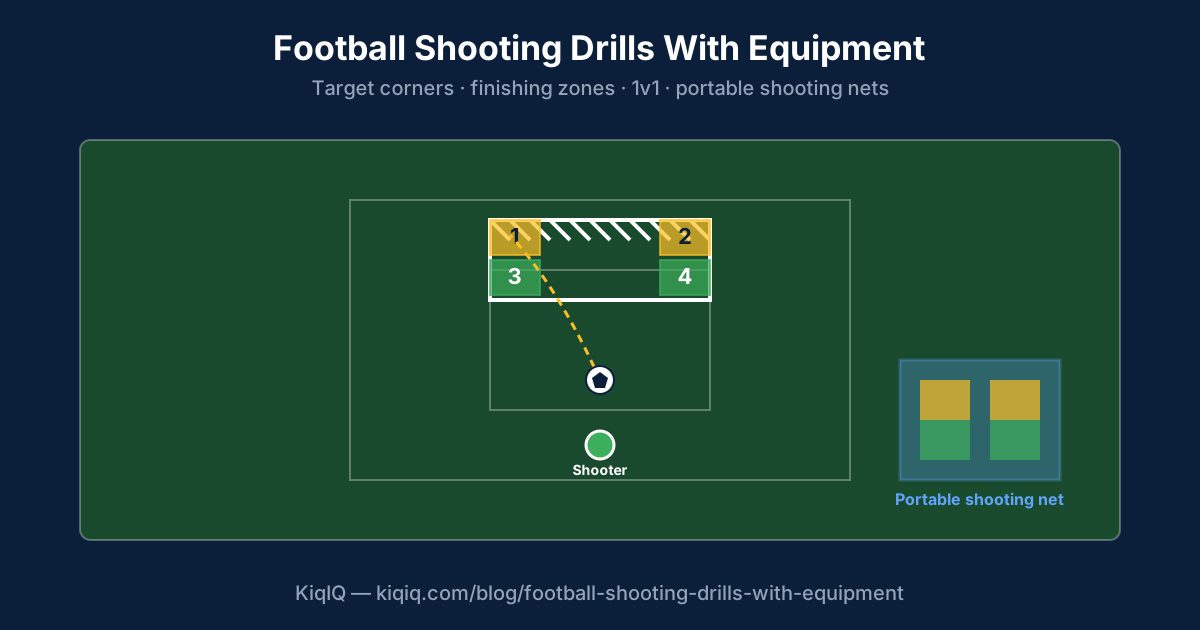
The closest-to-match drill format. A coach divides the attacking third into 3-4 finishing zones, plays a ball into each in sequence, and the striker finishes from that zone. The goalkeeper is live, defending the goal as in a match. Progressions: start with the ball stationary and the striker arriving on the run; progress to a moving ball played in from a feeder; progress to a moving ball with a passive defender; progress to a moving ball with a live defender starting two metres behind.
Equipment requirement: full goal, goalkeeper, 6-8 cones to mark zones. Best fit: striker-specific session block or full-team session with finishing as the primary objective. Repetition target is 30-50 finishes per player per session: high enough volume to grease the neural pattern, low enough that the goalkeeper doesn't become a passive bystander from fatigue. Where neither a full goal nor a keeper is realistic (players practising between team sessions, smaller academies sharing a single pitch), a freestanding catch-and-return setup like the Football Training portable shooting practice net folds out in a garden or local park in under a minute and lets a motivated player rack up 50-100 strikes in a focused 20-minute session, which is the kind of repetition volume team training rarely allows.
Quick question
Why does rehearsed finishing technique disappear in matches?
Mini-goal possession-to-finish
A possession game played to mini-goals, typically 4v4 to four mini-goals (two at each end), or 6v6+2 to two mini-goals. The format encourages first-time finishing because the goalkeeper element is removed: scoring depends on placement and weight of pass into the small target rather than beating a keeper.
Equipment requirement: 4 pop-up or free-standing mini-goals, 12-15 cones for a 40 × 30 metre pitch, bibs. Best fit: small-group session block where the coaching points are decision-making (when to shoot vs when to recycle) and quick finishing under pressure. The drill loses fidelity for technical shooting because the absence of a keeper changes the technique players use; pair it with a separate full-goal finishing block in the same session.
Target-practice with corner discs
A precision-focused drill: place flat discs in the four corners of a full-size goal (or use target sleeves clipped to the crossbar and posts) and award points for finishes that hit specific corners. The drill rewards placement over power and is useful for players who instinctively hit the keeper or aim for the middle of the goal under pressure.
Equipment requirement: full goal, four flat discs or target sleeves, 6-8 balls. Best fit: technical block at the start of a session before fatigue dulls precision, or an individual development time slot. The drill can be run without a goalkeeper for pure precision focus; adding a live goalkeeper introduces the secondary decision (where the keeper is leaning) which most players need exposure to as well.
Volley and half-volley drills with a feeder
Specialist drills for the technique that most academy and grassroots players under-practice. A feeder throws or chips the ball into the striker's path; the striker connects with a volley, half-volley, or chest-control-and-volley. Variations include first-time strike, set-and-strike, and back-to-goal turn-and-volley.
Equipment requirement: full goal, 10-15 balls, a competent feeder (player or coach). Best fit: technical session block once basic instep-driven shooting is reliable; volley technique is fragile and benefits from a dedicated 15-20 minute block once every 2-3 weeks rather than a brief addition to every session.
Solo shooting practice with a portable net
For players who want to practise outside team sessions, a portable shooting net allows striking repetition without a goalkeeper and without the ball travelling further than the net itself. The format is most useful for the technique components of shooting (striking through the ball, body shape over the ball, follow-through) that benefit from high-volume isolated repetition.
A typical portable shooting net folds to a flat carry size, sets up in under a minute, and catches and returns the ball so the player isn't spending the session retrieving balls from the next garden. The net is not a substitute for a session against a live goalkeeper (it strips out the decision-making and the timing pressure), but it builds the technique foundation that those sessions then apply under pressure.
- Striker body shape: non-kicking foot beside the ball, head over the ball, hips square to the target.
- Strike point: laces for power, instep for placement, outside of the foot for swerve.
- Follow-through: kicking leg ends pointing at the target, no falling away from the strike.
- Volume: solo shooting practice tolerates 50-100 strikes per session; full-goal sessions cap at 30-50 to preserve quality.
How to sequence shooting work across a week
A typical weekly plan for a serious player or academy strikers group: one technical block on volley and half-volley work earlier in the week, one finishing-zone block with a live goalkeeper closer to matchday, and one decision-making block (mini-goal possession-to-finish) as part of a small-sided game session. Solo work with a portable net or rebound board fills the gaps between team sessions for players who want additional repetition without needing teammates and a coach.
Avoid the common pattern of finishing every team session with the same 10-minute "shooting drill" tacked on the end. Tired players develop bad habits (falling away from the ball, snatched strikes, hopeful efforts), and the volume is too low and the variety too narrow to drive real technical improvement. Better to design 2-3 dedicated shooting blocks per week with specific aims, and protect them from the end-of-session fatigue effect.
Frequently asked questions
- How many shots should a striker take per training session?
- A focused finishing session with a live goalkeeper should target 30-50 finishes per player, high enough to groove the neural pattern, low enough that fatigue does not erode technique. Solo shooting practice with a rebound net or portable goal tolerates higher volume, 50-100 strikes, because the technical demand is lower and the goalkeeper is not part of the load.
- What is the best shooting drill for academy players?
- A progression that starts with stationary-ball finishing from a defined zone, moves to a moving-ball pass-and-finish, then adds a passive defender, then a live defender. The progression preserves the technical demand at each step while incrementally adding the match-realistic decision-making that pure technical drills strip out.
- Can you practise shooting alone at home?
- Yes, a portable shooting net or a wall with a target zone allows high-volume isolated repetition of the technical components of shooting (body shape, strike point, follow-through). Solo work doesn't replace finishing sessions with a goalkeeper, but it builds the technique foundation that those sessions then apply under pressure. 20-minute sessions of 50-100 strikes are realistic for a motivated player.
- How often should a team practise shooting?
- Two to three dedicated shooting blocks per week is a reasonable plan for an academy strikers group, one technical block on a fragile technique like volleying, one finishing-zone block with a live goalkeeper closer to matchday, one decision-making block in a small-sided game. Tacking 10 minutes of shooting on the end of every session is less effective because fatigue undermines technique and the volume per drill is too low.
References
Key terms in this article
Ask KiqIQ a follow-up
Get a live, data-driven answer powered by our live data feeds + KiqIQ's Poisson model. Try one of these prompts or write your own.
Part of pillar
Player Development
See every article in this knowledge pillar →
Related
Reviewed by a KiqIQ editor before publication. Spotted an error? Email editor@kiqiq.com. We follow our Corrections Policy.